Friends of NASA (FoN) is an independent non-governmental organization (NGO) dedicated to building international support for peaceful space exploration, commerce, scientific discovery, and STEM education.
By starlight this eerie visage shines in the dark, a crooked profile evoking its popular name, the Witch Head Nebula. In fact, this entrancing telescopic portrait gives the impression that the witch has fixed her gaze on Orion's bright supergiant star Rigel. More formally known as IC 2118, the Witch Head Nebula spans about 50 light-years and is composed of interstellar dust grains reflecting Rigel's starlight. The blue color of the Witch Head Nebula and of the dust surrounding Rigel is caused not only by Rigel's intense blue starlight but because the dust grains scatter blue light more efficiently than red. The same physical process causes Earth's daytime sky to appear blue, although the scatterers in Earth's atmosphere are molecules of nitrogen and oxygen. Rigel, the Witch Head Nebula, and gas and dust that surrounds them lie about 800 light-years away.
The island nation of the Bahamas is pictured from the International Space Station as it orbited 263 miles above the Atlantic Ocean. Astronauts of Expedition 66 captured this image.
The Bahamas, officially the Commonwealth of the Bahamas, is an island country of the Lucayan Archipelago consisting of more than 700 islands, cays, and islets in the Atlantic Ocean; north of Cuba and Hispaniola (Haiti and the Dominican Republic); northwest of the Turks and Caicos Islands; southeast of the U.S. state of Florida and east of the Florida Keys. Its capital is Nassau on the island of New Providence. (Source: Wikipedia)
"The overview effect is a cognitive shift in awareness reported by some astronauts during spaceflight, often while viewing the Earth from outer space. It is the experience of seeing first-hand the reality of the Earth in space, which is immediately understood to be a tiny, fragile ball of life, 'hanging in the void', shielded and nourished by a paper-thin atmosphere. The effect may also invoke a sense of transcendence and connection with humanity as a whole, from which national borders appear petty." The term and concept were coined in 1987 by American author, Frank White, who explored the theme in his book The Overview Effect — Space Exploration and Human Evolution." [available in paperback and ebook formats]
Hubble Gazes Sidelong at Barred Spiral Galaxy NGC 3568
In this image, the NASA/ESA Hubble Space Telescope captures a side-on view of NGC 3568, a barred spiral galaxy roughly 57 million light-years from the Milky Way in the constellation Centaurus. In 2014 the light from a supernova explosion in NGC 3568 reached Earth—a sudden flare of light caused by the titanic explosion accompanying the death of a massive star. Whilst most astronomical discoveries are the work of teams of professional astronomers, this supernova was discovered by amateur astronomers from the Backyard Observatory Supernova Search in New Zealand. Dedicated amateur astronomers often make intriguing discoveries—particularly of fleeting astronomical phenomena such as supernovae.
This Hubble observation comes from a hoard of data built up to pave the way for future science with the upcoming NASA/ESA/CSA James Webb Space Telescope. By combining ground-based observations with data from Hubble’s Advanced Camera for Surveys and Wide Field Camera 3, astronomers have built a treasure trove of data on the connections between young stars and the clouds of cold gas in which they form. One of Webb’s key science goals is to explore the life cycle of stars—particularly how and where stars are born. Since Webb observes at infrared wavelengths, it will be able to peer through the clouds of gas and dust in stellar nurseries and observe the fledgling stars within. Webb’s superb sensitivity will even allow astronomers to directly investigate faint protostellar cores—the earliest stages of star birth.
Young Graduate Trainee Opportunities | European Space Agency
Dream. Dare. Do! Apply now for the 2022 Young Graduate Trainee (YGT) opportunities at the European Space Agency (ESA). Are you on the final year of a Master’s degree or have just graduated in engineering, science, IT or business services? This is your opportunity to work on inspiring space missions at the heart of European space activities. Apply today to be a part of this mission. See details here:👉 ESA YGT Opportunities
Join ESA's team of scientists, engineers and business professionals from all over Europe working together in an international and friendly environment.
ESA's mission is the peaceful exploration and use of space for the benefit of everyone.
The European Space Agency (ESA) is Europe’s gateway to space. Its mission is to shape the development of Europe’s space capability and ensure that investment in space continues to deliver benefits to the citizens of Europe and the world.
YGT opportunities are open to citizens of one of the following ESA Member States: Austria, Belgium, the Czech Republic, Denmark, Estonia, Finland, France, Germany, Greece, Hungary, Ireland, Italy, Luxembourg, the Netherlands, Norway, Poland, Portugal, Romania, Spain, Sweden, Switzerland, and the United Kingdom. Nationals from Latvia, Lithuania and Slovenia, as Associate Members, or Canada as a Cooperating State, can apply as well as those from Bulgaria, Cyprus, and Slovakia as European Cooperating States.
What's Up: February 2022 Skywatching Tips | NASA JPL
What are some skywatching highlights in February 2022?
Jupiter is the lone planet lingering in twilight skies after sunset in February. It exits the evening sky this month leaving no bright planets there until August (save for a brief appearance from Mercury in April). Also Venus is at peak brightness for the year in the a.m., and it's a great time to view the Orion Nebula.
International Space Station: View from SpaceX Crew Dragon | NASA
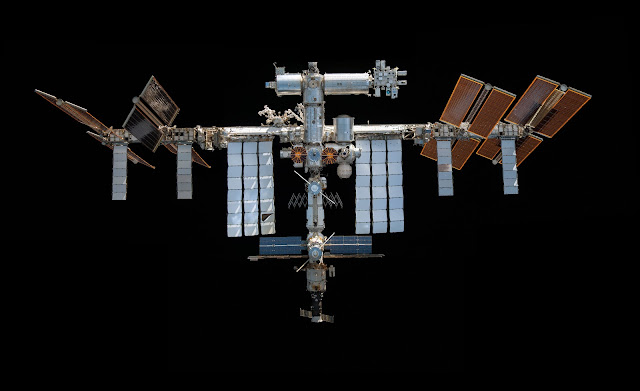
This mosaic depicts the International Space Station (ISS) pictured from the SpaceX Crew Dragon Endeavour during a fly around of the orbiting lab that took place following its undocking from the Harmony module’s space-facing port on Nov. 8, 2021.
The four NASA SpaceX Crew-2 astronauts on board were Shane Kimbrough and Megan McArthur of NASA, Akihiko Hoshide of JAXA (Japan Aerospace Exploration Agency) and Thomas Pesquet of ESA (European Space Agency).
Thomas Pesquet was the fourth European astronaut to command the ISS and the first French astronaut to command the orbital laboratory.
The International Space Station (ISS) Program’s greatest accomplishment is as much a human achievement as it is a technological one—how best to plan, coordinate, and monitor the varied activities of the Program’s many organizations.
An international partnership of space agencies provides and operates the elements of the ISS. The principals are the space agencies of the United States, Russia, Europe, Japan, and Canada. The ISS has been the most politically complex space exploration program ever undertaken.
China’s Mars Mission: Tianwen-1 Orbiter Video Captures Ice Caps on Red Planet
- China's space agency publishes videos of its spacecraft against backdrop of polar caps made from a mixture of frozen carbon dioxide and water
- By Monday, China's Zhu Rong rover had driven more than 1.5km (0.9 miles) on the planet’s surface
Jan. 31, 2022: China has published videos showing its Mars orbiter Tianwen-1 circling above the northern ice caps of the red planet taken using its “selfie stick” on Monday, the eve of Lunar New Year.
In a pink-tinted video, the spacecraft can be seen flying against a landscape sprinkled with frost patches, which the China National Space Administration (CNSA) identified as ice caps. Unlike the ice on the Earth’s polar regions, Martian ice is a mixture of frozen carbon dioxide and water.
The video also shows a moving shadow cast by the sun as the solar wings of the orbiter rotate.
The orbiter is equipped with an extendable arm to monitor the key components on its surface, according to the CNSA, which said its engine, propellant tank and attitude control engine were in sound condition.
The “selfie stick” is made of a shape memory material that unfurls straight to 1.6 metres (5.2 feet) long when it reaches a certain temperature after entering Mars’ orbit. The arm, which has a camera attached at the end, was folded before launch.
The Tianwen mission–those name translates to “heavenly questions”–is a milestone for China’s ambitious space programme. It was launched on July 23, 2020, and went into orbit around Mars seven months later. In May last year Zhu Rong, named after the Chinese god of fire, landed on the planet.
The space agency said both the Tiawen-1 orbiter and Zhu Rong rover were in “good condition”.
The rover had driven more than 1.5km (0.9 miles) on the Mars surface in 255 Martian days by Monday. A Martian day is about 40 minutes longer than a day on Earth.
The feat means China is only the second country after the United States to successfully land an operating spacecraft on Mars.
Its mission is to explore the surface and geology of the planet as well as its magnetic field, soil composition and atmosphere.
Zhang Rongqiao, chief designer of the Tianwen-1 mission, said China was also working on another mission–likely to be known as Tianwen-2 -to collect rock samples from the red planet and return them to Earth in 2030.
The dwarf galaxy NGC 1705 is featured in this image from the NASA/ESA Hubble Space Telescope. This diminutive galaxy lies in the southern constellation Pictor, and is approximately 17 million light-years from Earth. NGC 1705 is a cosmic oddball—it is small, irregularly shaped, and has recently undergone a spate of star formation known as a starburst.
Despite these eccentricities, NGC 1705 and other dwarf irregular galaxies like it can provide valuable insights into the overall evolution of galaxies. Dwarf irregular galaxies tend to contain few elements other than hydrogen or helium, and are considered to be similar to the earliest galaxies that populated the Universe.
The data shown in this image come from a series of observations designed to unveil the interplay between stars, star clusters, and ionised gas in nearby star-forming galaxies. By observing a specific wavelength of light known as H-alpha with Hubble’s Wide Field Camera 3, astronomers aimed to discover thousands of emission nebulae — regions created when hot, young stars bathe the clouds of gas surrounding them in ultraviolet light, causing them to glow.
This is not the first time that NGC 1705 has been imaged by Hubble—astronomers peered into the heart of the galaxy in 1999 using Hubble’s workhorse camera at the time, the Wide Field Planetary Camera 2. This instrument was replaced with the Wide Field Camera 3 during the fifth and final Space Shuttle mission to Hubble in 2009, and the newer instrument has provided a richer and far more detailed portrait of NGC 1705 than the 1999 observation.
National Aeronautics and Space Administration (NASA)
The Great Carina Nebula, featuring the Gabriela Mistral Nebula, as well as other nebulae and star clusters.
The Great Carina Nebula is home to strange stars and iconic nebulas. Named for its home constellation, the huge star-forming region is larger and brighter than the Great Orion Nebula but less well known because it is so far south—and because so much of humanity lives farther north. The featured image shows in great detail the northern-most part of the Carina Nebula. Visible nebulas include the semi-circular filaments surrounding the active star Wolf-Rayet 23 (WR23) on the far left. Just left of center is the Gabriela Mistral Nebula consisting of an emission nebula of glowing gas (IC 2599) surrounding the small open cluster of stars (NGC 3324). Above the image center is the larger star cluster NGC 3293, while to its right is the relatively faint emission nebula designated Loden 153. The most famous occupant of the Carina Nebula, however, is not shown. Off the image to the lower right is the bright, erratic, and doomed star star known as Eta Carinae—a star once one of the brightest stars in the sky and now predicted to explode in a supernova sometime in the next few million years.
Chinese Astronauts Organize Traditional Spring Festival Celebration in Space
Jan. 31, 2022: Chinese astronauts, or taikonauts, are about to celebrate their first Spring Festival in China's space station, 400 kilometers up above Earth, as they are halfway through their six-month mission. It seems the Shenzhou-13 crew decided to keep Chinese festive traditions alive even in space and is ready to enjoy the night. A video released by China Media Group (CMG) shows taikonauts have already decorated the inside of the space station with balloons and traditional red paper squares. The Chinese character "福" (meaning good fortune) is written on the paper squares, meaning happiness has arrived.
Zhai Zhigang, one of the crew members, wrote antithetical couplets on red paper scrolls with a brush pen and showed his calligraphy via camera to the ground, sending new year's blessing to all: "Happy new year to everyone, with good health and best luck in the Year of the Tiger!" Dumplings are one of the iconic foods for the special night when Chinese people embrace a new year according to the lunar calendar and say goodbye to the past year; the taikonauts will have them for dinner. The dumplings with three different kinds of stuffing are on their menu for dinner.
They will also stick to the tradition as most Chinese people do at night – watching Spring Festival Gala – the most-watched TV show. They will also participate in the show via video to send their greetings to all the viewers.
Credit: China Global Television Network (CGTN)/China Media Group (CMG)
In February, the Winter Triangle is your guide to the night sky: The northern hemisphere is treated to views of the stars Procyon, Sirius, and Betelgeuse. Keep watching for the awe-inspiring space-based views of the Orion Nebula, which is sculpted by the stellar winds of central bright stars.
About this Series
“Tonight’s Sky” is a monthly video of constellations you can observe in the night sky. The series is produced by the Space Telescope Science Institute, home of science operations for the Hubble Space Telescope, in partnership with NASA’s Universe of Learning. This is a recurring show, and you can find more episodes—and other astronomy videos—at https://hubblesite.org/resource-gallery/learning-resources/tonights-sky
This video is based on work supported by NASA under award numbers NNX16AC65A to the Space Telescope Science Institute, working in partnership with Caltech/IPAC, Jet Propulsion Laboratory, Smithsonian Astrophysical Observatory, and Sonoma State University. Any opinions, findings, and conclusions or recommendations expressed in this material are those of the author(s) and do not necessarily reflect the views of the National Aeronautics and Space Administration.
Waxing Crescent Moon Above Pacific Ocean | International Space Station
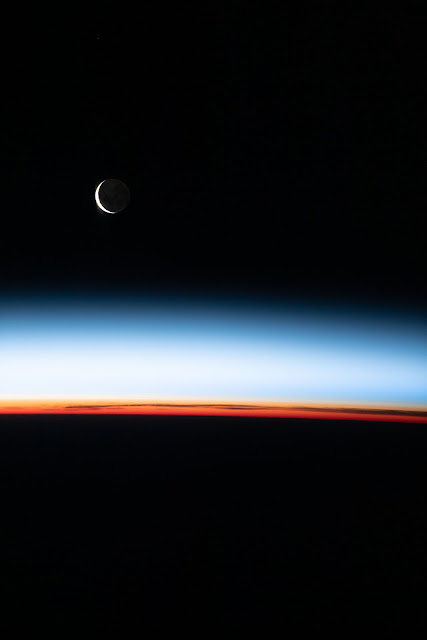
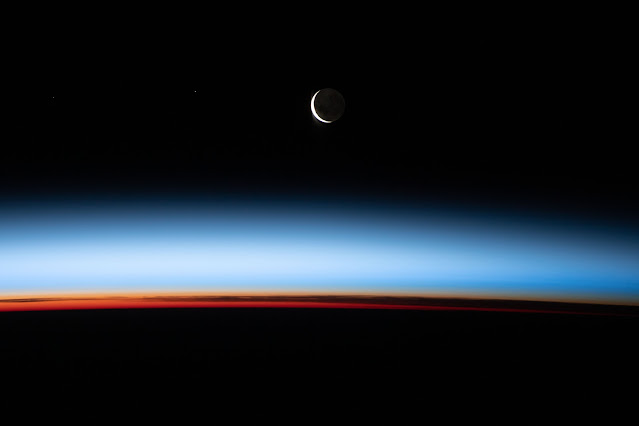
A waxing crescent Moon during is pictured from the International Space Station during an orbital sunset as it flew 268 miles above the Pacific Ocean east of New Zealand.
The International Space Station (ISS) Program’s greatest accomplishment is as much a human achievement as it is a technological one—how best to plan, coordinate, and monitor the varied activities of the Program’s many organizations.
An international partnership of space agencies provides and operates the elements of the ISS. The principals are the space agencies of the United States, Russia, Europe, Japan, and Canada. The ISS has been the most politically complex space exploration program ever undertaken.
Waning Gibbous Moon Above Earth's Horizon | International Space Station
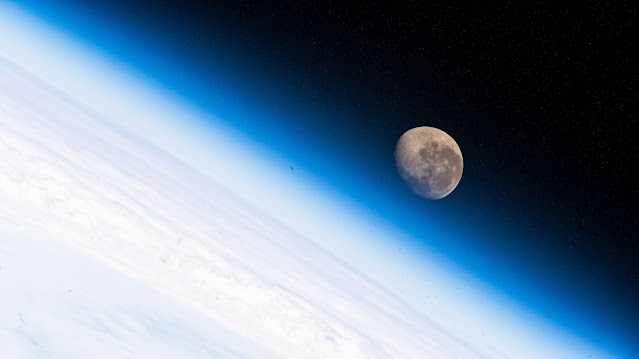
The waning gibbous Moon is pictured above the Earth's horizon as the International Space Station orbited 272 miles above the Atlantic Ocean off the coast of southern Argentina.
The International Space Station (ISS) Program’s greatest accomplishment is as much a human achievement as it is a technological one—how best to plan, coordinate, and monitor the varied activities of the Program’s many organizations.
An international partnership of space agencies provides and operates the elements of the ISS. The principals are the space agencies of the United States, Russia, Europe, Japan, and Canada. The ISS has been the most politically complex space exploration program ever undertaken.
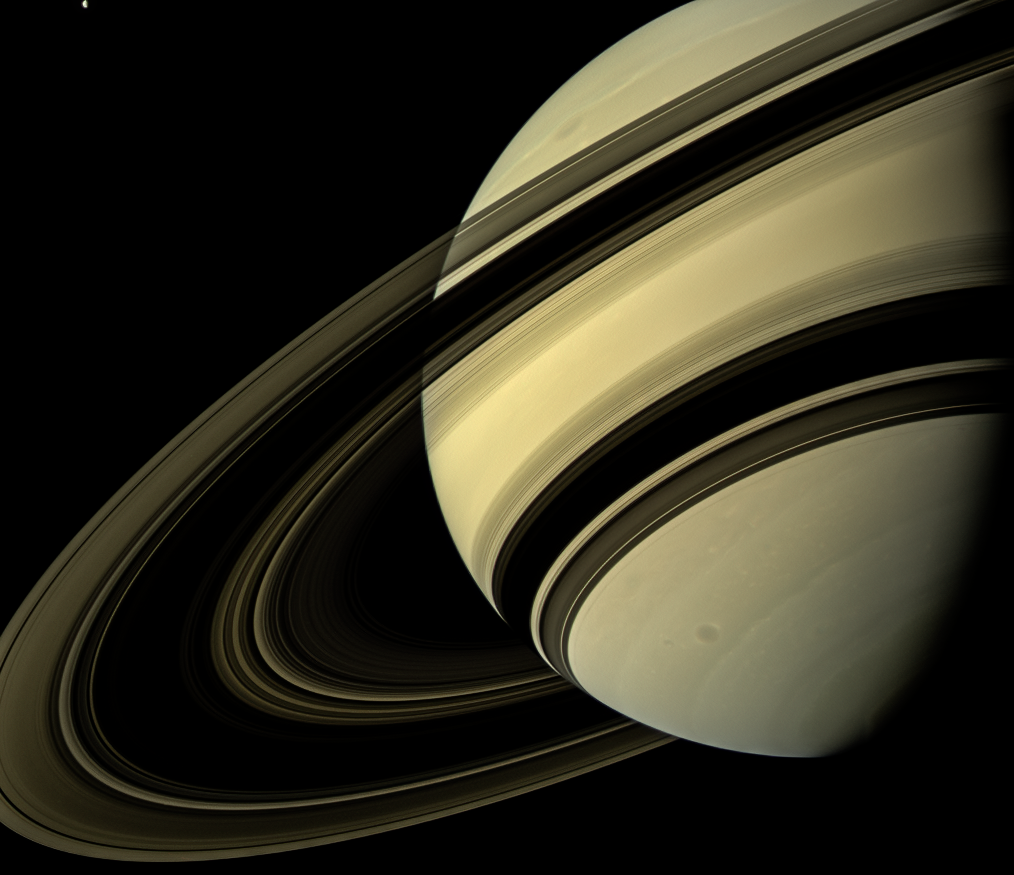
Italian mathematician, astronomer and engineer, Giovanni Cassini, discovered Tethys on March 21, 1684.
Overview
Tethys is Saturn's fifth largest moon. Its irregular shape is 331 miles (533 kilometers) in mean radius, with dimensions 669 x 657 x 654 miles (1076.8 x 1057.4 x 1052.6 kilometers). This cold, airless and heavily scarred body is very similar to sister moons Dione and Rhea except that Tethys is not as heavily cratered as the other two. This may be because its proximity to Saturn causes more tidal warming, and that warming kept Tethys partially molten longer, erasing or dulling more of the early terrain.
Tethys' density is 0.97 times that of liquid water, which suggests that Tethys is composed almost entirely of water ice plus a small amount of rock.
Tethys has a high reflectivity (or visual albedo) of 1.229 in the visual range, again suggesting a composition largely of water ice, which would behave like rock in the Tethyan average temperature of -305 degrees Fahrenheit (-187 degrees Celsius). Many of the crater floors on Tethys are bright, which also suggests an abundance of water ice. Also contributing to the high reflectivity is that Tethys is bombarded by Saturn E-ring water-ice particles generated by geysers on Enceladus.
Tethys appeared as a tiny dot to astronomers until the Voyager (1 and 2) encounters in 1980 and 1981. The Voyager images showed a major impact crater and a great chasm. The Cassini spacecraft has added details including a great variety of colors at small scales suggesting a variety of materials not seen elsewhere.
For more than a decade, NASA’s Cassini spacecraft shared the wonders of Saturn and its family of icy moons—taking us to astounding worlds where methane rivers run to a methane sea and where jets of ice and gas are blasting material into space from a liquid water ocean that might harbor the ingredients for life.
Cassini revealed in great detail the true wonders of Saturn, a giant world ruled by raging storms and delicate harmonies of gravity.
Cassini carried a passenger to the Saturn system, the European Huygens probe—the first human-made object to land on a world in the distant outer solar system.
After 20 years in space — 13 of those years exploring Saturn — Cassini exhausted its fuel supply. And so, to protect moons of Saturn that could have conditions suitable for life, Cassini was sent on a daring final mission that would seal its fate. After a series of nearly two dozen nail-biting dives between the planet and its icy rings, Cassini plunged into Saturn’s atmosphere on Sept. 15, 2017, returning science data to the very end.
Credit: NASA/JPL-Caltech/Space Science Institute (SSI)/CICLOPS/Kevin M. Gill
The Webb Space Telescope Reaches Its New Home | This Week @NASA
Jan. 28, 2022: The Webb Space Telescope reaches its new home, remembering our fallen heroes, and testing a VIPER in the sand … a few of the stories to tell you about – This Week at NASA!
Producer: Andre Valentine
Editor: Sonnet Apple
Music: Universal Production Music
Credit: National Aeronautics and Space Administration (NASA)