Friends of NASA (FoN) is an independent non-governmental organization (NGO) dedicated to building international support for peaceful space exploration, commerce, scientific discovery, and STEM education.
SpaceX Falcon 9 Launch: GPS III Mission | Cape Canaveral Space Force Station
A SpaceX Falcon 9 rocket on Jan. 18, 2023, lifted off at 7:24 a.m. Eastern from Space Launch Complex 40 at Cape Canaveral Space Force Station, Florida, carrying a U.S. Space Force GPS satellite. The Falcon 9 launched the Lockheed Martin-built GPS III SV-06—the 6th of the newest version of the satellite known as GPS III. The GPS constellation of 31 satellites operated by the U.S. Space Force provides positioning, navigation and timing signals to military and civilian users. GPS satellites operate in medium Earth orbit at an altitude of 12,550 miles.
The launch of SV-06 was SpaceX’s fifth GPS mission, its second national security space launch of 2023 and Falcon 9’s 196th flight.
The first stage booster supporting this mission previously launched Crew-5 astronauts to the International Space Station.
Approximately two and a half minutes after liftoff, the rocket’s first stage separated. Following separation, the first stage landed on the “A Shortfall of Gravitas” drone ship stationed in the Atlantic Ocean.
GPS III SV06 will augment the current GPS constellation that is comprised of 31 operational spacecraft operating in MEO at an altitude of approximately 20,200 km (12,550 miles) in six orbital planes. Each satellite circles the Earth twice per day. GPS is the premier space-based provider of positioning, navigation, and timing services for more than four billion users worldwide.
This latest generation of GPS satellite boasts a 15-year design life—25 percent longer than the previous generation of GPS satellites on orbit and brings new capabilities to users such as the new L1C civilian signal, which opens the window for future interoperability with international satellite navigation systems.
The payload for this mission is Global Positioning System III Space Vehicle 06 (GPS-III-SV06). It was built in Littleton, Colorado, by Lockheed Martin and it was placed into a medium Earth orbit (MEO) with an operational circular orbit at 20,180 km and an inclination of 55 degrees.
GPS-III-SV06 had a launch mass of 4.352 kg and is named after Amelia Earhart, the famous aviator who became the first woman to cross the Atlantic Ocean solo in 1932. Earhart disappeared during a flight around the world in 1937.
The mission marked the fifth GPS III satellite launch aboard a SpaceX Falcon 9 rocket, with one previously launched on a United Launch Alliance Delta IV Medium+ (4,2) rocket.
GPS III SV06 will augment the current GPS constellation that is comprised of 31 operational spacecraft operating in MEO at an altitude of approximately 20,200 km (12,550 miles) in six orbital planes. Each satellite circles the Earth twice per day. GPS is the premier space-based provider of positioning, navigation, and timing services for more than four billion users worldwide.
This latest generation of GPS satellite boasts a 15-year design life—25 percent longer than the previous generation of GPS satellites on orbit and brings new capabilities to users such as the new L1C civilian signal, which opens the window for future interoperability with international satellite navigation systems.
China's Lunar Rover Yutu-2: New Images of The Moon's Far Side | CNSA
China's lunar rover beamed back new images from far side of moon before Chinese New Year. For the new Year of the Rabbit, the China National Space Administration (CNSA) released the latest pictures taken by the robotic lunar rover Yutu-2 to send its New Year wishes to everyone.
Yutu-2 is the robotic lunar rover component of CNSA's Chang'e 4 mission to the Moon, launched on December 7, 2018. Chang'e 4 entered lunar orbit on December 12, 2018, before making the first soft landing on the far side of the Moon on January 3, 2019. Yutu-2 is currently operational as the longest-lived lunar rover and the first lunar rover traversing the far side of the Moon.
It has travelled a distance of over 1,000 meters (3,300 ft) along the Moon's surface.
Credit: China National Space Administration (CNSA)/South China Morning Post (SCMP)
Preparing for a More Powerful International Space Station | This Week @NASA
Week of Jan. 20, 2023: Preparing for a more powerful space station, building a more fuel-efficient aircraft, and a way to possibly predict solar flares . . . a few of the stories to tell you about—This Week at NASA!
Credit: National Aeronautics and Space Administration (NASA)
NASA's Space to Ground: First Timers | Week of Jan. 20, 2023
NASA's Space to Ground is your weekly update on what's happening aboard the International Space Station. NASA astronaut Nicole Mann and Japan Aerospace Exploration Agency (JAXA) astronaut Koichi Wakata concluded their spacewalk on Jan. 20, 2023, at 3:35 p.m. EST after 7 hours and 21 minutes.
Mann and Wakata completed work left over from a previous spacewalk for a platform on which a set of International Space Station Roll-Out Solar Arrays (iROSAs) for the station’s 1B power channel will be installed later this year, as well as most of the work to install a similar mounting platform for a set of iROSAs for the 1A power channel. Due to time constraints, plans to bolt a final strut for the second platform were deferred until a future spacewalk. There is no impact to station operations.
The installation is part of a series of spacewalks to augment the International Space Station’s power channels with new iROSAs. Four iROSAs have been installed so far, and two more will be mounted to the platforms installed during this spacewalk in the future.
It was the 258th spacewalk in support of space station assembly, upgrades, and maintenance, the first spacewalk of 2023, and the first spacewalk for both astronauts.
Mann and Wakata are in the midst of a planned six-month science mission living and working aboard the microgravity laboratory to advance scientific knowledge and demonstrate new technologies for future human and robotic exploration missions, including lunar missions through NASA’s Artemis program.
Learn more about the important research being operated on Station:
Expedition 68: New Crew & Earth Photos | International Space Station
NASA astronaut and Expedition 68 Flight Engineer Nicole Mann is pictured during a fit check of her Extravehicular Mobility Unit (EMU), or spacesuit, ahead of a planned spacewalk
Expedition 68 Flight Engineer Koichi Wakata of the Japan Aerospace Exploration Agency (JAXA) is pictured during a fit check of his Extravehicular Mobility Unit (EMU), or spacesuit, ahead of a planned spacewalk
Nicole and Koichi are pictured during a fit check of their Extravehicular Mobility Units (EMUs), or spacesuit, inside the Quest airlock ahead of a planned spacewalk
Cosmonaut Anna Kikina (Russia) works on life support maintenance tasks
Station Commander: Sergey Prokopyev of Roscosmos (Russia)
Roscosmos (Russia): Flight Engineers Anna Kikina & Dmitri Petelin
NASA: Flight Engineers Nicole Mann, Frank Rubio & Josh Cassada
JAXA (Japan): Flight Engineer Koichi Wakata
An international partnership of space agencies provides and operates the elements of the International Space Station (ISS). The principals are the space agencies of the United States, Russia, Europe, Japan, and Canada. The ISS has been the most politically complex space exploration program ever undertaken.
"Enjoy these stunning Earth views from the China Space Station. Take a four-minute space tour! Happy Chinese New Year/Spring Festival 2023! Year of The Rabbit!"
Shenzhou-15 Crew Members:
Fei Junlong (commander), Zhang Lu (taikonaut), and Deng Qingming (taikonaut)
The Island Nation of Madagascar in The Indian Ocean | International Space Station
The island nation of Madagascar, looking north toward Earth's horizon, is pictured from the International Space Station as it orbited 262 miles above the Indian Ocean.
Station Commander: Sergey Prokopyev of Roscosmos (Russia)
Roscosmos (Russia): Flight Engineers Anna Kikina & Dmitri Petelin
NASA: Flight Engineers Nicole Mann, Frank Rubio & Josh Cassada
JAXA (Japan): Flight Engineer Koichi Wakata
An international partnership of space agencies provides and operates the elements of the International Space Station (ISS). The principals are the space agencies of the United States, Russia, Europe, Japan, and Canada. The ISS has been the most politically complex space exploration program ever undertaken.
Light Pollution: Stars Disappearing, Citizen Scientists Report | Globe at Night
The infographic above illustrates the impact of light pollution on our ability to see stars and other objects in the night sky.
A startling analysis from Globe at Night—a citizen science program run by the National Science Foundation’s NOIRLab—concludes that stars are disappearing from human sight at an astonishing rate. The study finds that, to human eyes, artificial lighting has dulled the night sky more rapidly than indicated by satellite measurements. The study published in the journal Science showcases the unique contributions that citizen scientists can make in essential fields of research.
From the glowing arc of the Milky Way to dozens of intricate constellations, the unaided human eye should be able to perceive several thousand stars on a clear, dark night. Unfortunately, growing light pollution has robbed about 30% of people around the globe and approximately 80% of people in the United States of the nightly view of their home galaxy. A new paper published in the journal Science concludes that the problem is getting rapidly worse.
New citizen-science-based research sheds alarming light on the problem of ‘skyglow’—the diffuse illumination of the night sky that is a form of light pollution. The data for this study came from crowd-sourced observations collected from around the world as part of Globe at Night, a program run by the NSF’s NOIRLab and developed by NOIRLab astronomer Connie Walker. The research reveals that skyglow is increasing more rapidly than shown in satellite measurements of Earth's surface brightness at night.
“At this rate of change, a child born in a location where 250 stars were visible would be able to see only around 100 by the time they turned 18,” said Christopher Kyba, a researcher at the German Research Centre for Geosciences and lead author of the paper detailing these results.
Light pollution is a familiar problem that has many detrimental effects, not only on the practice of astronomy. It also has an impact on human health and wildlife, since it disrupts the cyclical transition from sunlight to starlight that biological systems have evolved alongside. Furthermore, the loss of visible stars is a poignant loss of human cultural heritage. Until relatively recently, humans throughout history had an impressive view of the starry night sky, and the effect of this nightly spectacle is evident in ancient cultures, from the myths it inspired to the structures that were built in alignment with celestial bodies.
Despite being a well-recognized issue, however, the changes in sky brightness over time are not well documented, particularly on a global scale.
Globe at Night has been gathering data on stellar visibility every year since 2006. Anyone can submit observations through the Globe at Night web application: https://www.globeatnight.org/webapp/ on a desktop or smartphone. After entering the relevant date, time and location, participants are shown a number of star maps. They then record which one best matches what they can see in the sky without any telescopes or other instruments.
This gives an estimate of what is called the naked eye limiting magnitude, which is a measure of how bright an object must be in order to be seen. This can be used to estimate the brightness of skyglow, because as the sky brightens, the fainter objects disappear from sight.
The authors of the paper analyzed more than 50,000 observations submitted to Globe at Night between 2011 and 2022, ensuring consistency by omitting entries that were affected by factors including cloud cover and moonlight. They focused on data from Europe and North America, since these regions had a sufficient distribution of observations across the land area as well as throughout the decade studied. The paper notes that the sky is likely brightening more quickly in developing countries, where satellite observations indicate the prevalence of artificial lighting is growing at a higher rate.
After devising a new method to convert these observations into estimates of the change in skyglow, the authors found that the loss of visible stars reported by Globe at Night indicates an increase in sky brightness of 9.6% per year over the past decade. This is much greater than the roughly 2% per year global increase in surface brightness measured by satellites.
“This shows that existing satellites aren't sufficient to study how Earth's night is changing,” said Kyba. “We've developed a way to ‘translate’ Globe at Night observations of star visibility made at different locations from year to year into continent-wide trends of sky brightness change. That shows that Globe at Night is not just an interesting outreach activity, it is an essential measurement of one of Earth's environmental variables.”
Existing satellites are not well suited to measuring skyglow as it appears to humans, because there are no current instruments monitoring the whole Earth that can detect wavelengths shorter than 500 nanometers, which corresponds to the color cyan, or greenish blue. Shorter wavelengths, however, contribute disproportionately to skyglow, because they scatter more effectively in the atmosphere. White LEDs, now increasingly commonly used in high-efficiency outdoor lighting, have a peak in emission between 400 and 500 nanometers.
“Since human eyes are more sensitive to these shorter wavelengths at nighttime, LED lights have a strong effect on our perception of sky brightness,” said Kyba. “This could be one of the reasons behind the discrepancy between satellite measurements and the sky conditions reported by Globe at Night participants.”
Beyond wavelength differences, space-based instruments do not measure light emitted horizontally very well, such as from illuminated signs or windows, but these sources are significant contributors to skyglow as seen from the ground. Crowd-sourced observations will therefore always be invaluable for investigating the direct human effects of sky brightness.
“The increase in skyglow over the past decade underscores the importance of redoubling our efforts and developing new strategies to protect dark skies,” said Walker. “The Globe at Night dataset is indispensable in our ongoing evaluation of changes in skyglow, and we encourage everyone who can to get involved to help protect the starry night sky.”
Credit: NOIRLab/National Science Foundation (NSF)/Association of Universities for Research in Astronomy (AURA), P. Marenfeld
Light Pollution: Stars Disappearing, Citizen Scientists Report | Globe at Night
The infographic above illustrates the impact of light pollution on our ability to see stars and other objects in the night sky.
A startling analysis from Globe at Night—a citizen science program run by the National Science Foundation’s NOIRLab—concludes that stars are disappearing from human sight at an astonishing rate. The study finds that, to human eyes, artificial lighting has dulled the night sky more rapidly than indicated by satellite measurements. The study published in the journal Science showcases the unique contributions that citizen scientists can make in essential fields of research.
From the glowing arc of the Milky Way to dozens of intricate constellations, the unaided human eye should be able to perceive several thousand stars on a clear, dark night. Unfortunately, growing light pollution has robbed about 30% of people around the globe and approximately 80% of people in the United States of the nightly view of their home galaxy. A new paper published in the journal Science concludes that the problem is getting rapidly worse.
New citizen-science-based research sheds alarming light on the problem of ‘skyglow’—the diffuse illumination of the night sky that is a form of light pollution. The data for this study came from crowd-sourced observations collected from around the world as part of Globe at Night, a program run by the NSF’s NOIRLab and developed by NOIRLab astronomer Connie Walker. The research reveals that skyglow is increasing more rapidly than shown in satellite measurements of Earth's surface brightness at night.
“At this rate of change, a child born in a location where 250 stars were visible would be able to see only around 100 by the time they turned 18,” said Christopher Kyba, a researcher at the German Research Centre for Geosciences and lead author of the paper detailing these results.
Light pollution is a familiar problem that has many detrimental effects, not only on the practice of astronomy. It also has an impact on human health and wildlife, since it disrupts the cyclical transition from sunlight to starlight that biological systems have evolved alongside. Furthermore, the loss of visible stars is a poignant loss of human cultural heritage. Until relatively recently, humans throughout history had an impressive view of the starry night sky, and the effect of this nightly spectacle is evident in ancient cultures, from the myths it inspired to the structures that were built in alignment with celestial bodies.
Despite being a well-recognized issue, however, the changes in sky brightness over time are not well documented, particularly on a global scale.
Globe at Night has been gathering data on stellar visibility every year since 2006. Anyone can submit observations through the Globe at Night web application: https://www.globeatnight.org/webapp/ on a desktop or smartphone. After entering the relevant date, time and location, participants are shown a number of star maps. They then record which one best matches what they can see in the sky without any telescopes or other instruments.
This gives an estimate of what is called the naked eye limiting magnitude, which is a measure of how bright an object must be in order to be seen. This can be used to estimate the brightness of skyglow, because as the sky brightens, the fainter objects disappear from sight.
The authors of the paper analyzed more than 50,000 observations submitted to Globe at Night between 2011 and 2022, ensuring consistency by omitting entries that were affected by factors including cloud cover and moonlight. They focused on data from Europe and North America, since these regions had a sufficient distribution of observations across the land area as well as throughout the decade studied. The paper notes that the sky is likely brightening more quickly in developing countries, where satellite observations indicate the prevalence of artificial lighting is growing at a higher rate.
After devising a new method to convert these observations into estimates of the change in skyglow, the authors found that the loss of visible stars reported by Globe at Night indicates an increase in sky brightness of 9.6% per year over the past decade. This is much greater than the roughly 2% per year global increase in surface brightness measured by satellites.
“This shows that existing satellites aren't sufficient to study how Earth's night is changing,” said Kyba. “We've developed a way to ‘translate’ Globe at Night observations of star visibility made at different locations from year to year into continent-wide trends of sky brightness change. That shows that Globe at Night is not just an interesting outreach activity, it is an essential measurement of one of Earth's environmental variables.”
Existing satellites are not well suited to measuring skyglow as it appears to humans, because there are no current instruments monitoring the whole Earth that can detect wavelengths shorter than 500 nanometers, which corresponds to the color cyan, or greenish blue. Shorter wavelengths, however, contribute disproportionately to skyglow, because they scatter more effectively in the atmosphere. White LEDs, now increasingly commonly used in high-efficiency outdoor lighting, have a peak in emission between 400 and 500 nanometers.
“Since human eyes are more sensitive to these shorter wavelengths at nighttime, LED lights have a strong effect on our perception of sky brightness,” said Kyba. “This could be one of the reasons behind the discrepancy between satellite measurements and the sky conditions reported by Globe at Night participants.”
Beyond wavelength differences, space-based instruments do not measure light emitted horizontally very well, such as from illuminated signs or windows, but these sources are significant contributors to skyglow as seen from the ground. Crowd-sourced observations will therefore always be invaluable for investigating the direct human effects of sky brightness.
“The increase in skyglow over the past decade underscores the importance of redoubling our efforts and developing new strategies to protect dark skies,” said Walker. “The Globe at Night dataset is indispensable in our ongoing evaluation of changes in skyglow, and we encourage everyone who can to get involved to help protect the starry night sky.”
Credit: NOIRLab/National Science Foundation (NSF)/Association of Universities for Research in Astronomy (AURA), P. Marenfeld
Artemis I Orion Moon Mission: Commander Moonikin Campos | NASA Kennedy
Joe Leblanc, Orion payload and cargo manager with Lockheed Martin, secures Commander Moonikin Campos, a sensored stand-in for humans from NASA's Artemis I mission, inside its transport crate in the Space Station Processing Facility at Kennedy Space Center in Florida on Jan. 10, 2023, for its trip back to NASA's Johnson Space Center in Houston.
Moonikin Campos was secured inside the Orion spacecraft for the mission beyond the Moon and back to Earth. Artemis I Orion launched atop the Space Launch System (SLS) rocket from Kennedyâs Launch Complex 39B on Nov. 16, 2022, at 1:47 a.m. EST for a 25-day trip beyond the Moon and back. During the flight, Orion flew farther than any human-rated spacecraft has ever flown, paving the way for human deep space exploration and demonstrating NASA's commitment and capability to extend human presence to the Moon and beyond.
The primary goal of Artemis I was to thoroughly test the SLS and Orion spacecraftâs integrated systems before crewed missions. Under Artemis, NASA aims to land the first woman and first person of color on the Moon and establish sustainable lunar exploration.
Credit: NASA's Kennedy Space Center (KSC)/Cory Huston
Planetary Missions: Fossils of Our Solar System | NASA Goddard
When the Hubble Space Telescope launched, one of its main goals was to learn more about our incredible universe. While we’re used to Hubble images coming from thousands of light-years away, Hubble is also capable of looking at objects in our solar system. Using Hubble, astronomers have been able to help planetary missions, like New Horizons and Lucy, plan out their own discoveries.
Artemis I Orion Moon Mission: Helga & Zohar (MARE) | NASA Kennedy
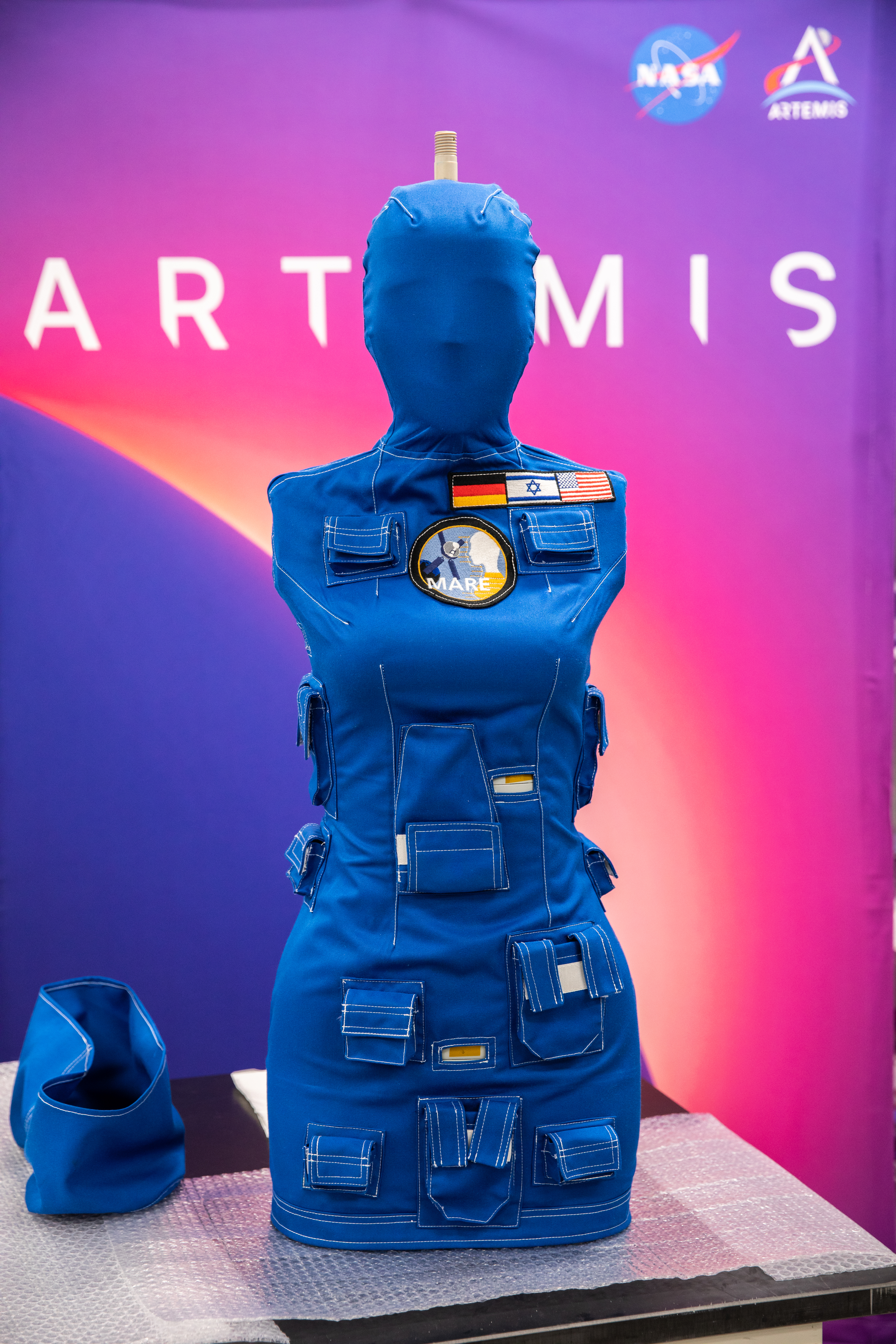
After a 25-day flight inside the Artemis I Orion crew module beyond the Moon and back, Helga, one of two identical phantom torsos, is shown without a radiation detection vest while undergoing post-flight payload inspections inside the Space Station Processing Facility at Kennedy Space Center in Florida on Jan. 11, 2023. The detectors will be removed at Kennedy and the torsos will return to teams at the German Space Agency for further analysis. As part of the Matroshka AstroRad Radiation Experiment (MARE) investigation, two female manikins—Helga and Zohar—were equipped with radiation detectors, while Zohar also wore a radiation protection vest, to determine the radiation risk during the Artemis I mission and potentially reduce exposure during future missions with astronauts.
Artemis I Orion launched atop the Space Launch System (SLS) rocket from Kennedy’s Launch Complex 39B on Nov. 16, 2022, at 1:47 a.m. EST. During the flight, Orion flew farther than any spacecraft built for humans has ever flown, paving the way for human deep space exploration and demonstrating NASA’s commitment and capability to extend human presence to the Moon and beyond. The primary goal of Artemis I was to thoroughly test the SLS and Orion spacecraft’s integrated systems before crewed missions. Under Artemis, NASA aims to land the first woman and first person of color on the Moon and establish sustainable lunar exploration.
SpaceX Falcon Heavy Rocket Launch Plume | International Space Station
An external high-definition camera on the International Space Station captured the launch plume of the SpaceX Falcon Heavy rocket after it had ascended to Earth orbit following its liftoff on Sunday, Jan. 15, 2023, from NASA's Kennedy Space Center in Florida. The space station was flying 262 miles above the Atlantic Ocean just after an orbital sunset at the time of this photograph.
Station Commander: Sergey Prokopyev of Roscosmos (Russia)
Roscosmos (Russia): Flight Engineers Anna Kikina & Dmitri Petelin
NASA: Flight Engineers Nicole Mann, Frank Rubio & Josh Cassada
JAXA (Japan): Flight Engineer Koichi Wakata
An international partnership of space agencies provides and operates the elements of the International Space Station (ISS). The principals are the space agencies of the United States, Russia, Europe, Japan, and Canada. The ISS has been the most politically complex space exploration program ever undertaken.
Billions of Celestial Objects Revealed in Milky Way Survey | NOIRLab
Astronomers have released a gargantuan survey of the galactic plane of the Milky Way. The new dataset contains a staggering 3.32 billion celestial objects—arguably the largest such catalog so far. The data for this unprecedented survey were taken with the Dark Energy Camera, built by the US Department of Energy, at the NSF’s Cerro Tololo Inter-American Observatory in Chile, a Program of NOIRLab.




.jpg)
.jpg)