Expedition 75 Russian Soyuz Rocket Rollout | International Space Station
Date: July 11, 2026
Friends of NASA (FoN) is an independent non-governmental organization (NGO) dedicated to building international support for peaceful space exploration, commerce, scientific discovery, and STEM education.
Expedition 75 Russian Soyuz Rocket Rollout | International Space Station
Expedition 75 Russian Soyuz Rocket Assembly | International Space Station
Bright Dust Trail of Planet Jupiter Family Comet 10P/Tempel: View from Arizona
Image Data: Date/Time Local: 7/10/26 12:47 am MST -Date/Time UT: 7/10/26 7:47 UT -FOV: 200' x 134' -Orientation: N up -Seeing: 10 -Transparency: 9 -Orig. Scale: 1.2 arcsec/Pixel -Instrument: RASA 11 f/2.2 -Exposure: 60m total -Camera: ASI6200MM + UV/IR + Baader LRGB -Location: Happy Jack,AZ`
The background here is filled with integrated flux nebula, and on the original luminance data, a short tail was seen at about a 45 degree to the trail. Easily seen in 10 x 50 binoculars. Bortle 1, 7000 feet elevation.
Arizona is a landlocked state in the Southwestern region of the United States, sharing the Four Corners region of the western United States with Colorado, New Mexico, and Utah. It also borders Nevada to the northwest and California to the west, and shares an international border with the Mexican states of Sonora and Baja California to the south and southwest.
Why the Reusability of Commercial Rockets Matters
The Long March-10B is China's next-generation rocket built specifically for the commercial space market. In its reusable configuration, it can deliver 16 tonnes to low Earth orbit, supporting missions ranging from satellite Internet constellations to large commercial satellite launches.
The Long March-10B's capabilities represent a major breakthrough in the country's reusable rocket technology. This makes China the second country after the United States to have demonstrated such a capacity.
Developed by the China Academy of Launch Vehicle Technology (CALT) under the China Aerospace Science and Technology Corporation (CASC), the Long March-10B is a large, two-stage liquid-fueled rocket with a five-meter diameter core. The rocket utilizes liquid oxygen and kerosene for its first stage and liquid oxygen and methane for its second.
The Long March-10B rocket stands about 63 meters tall with a takeoff thrust of 890 tons.
The successful maiden flight of the Long March-10B on July 10, 2026, marks the 657th launch of the Long March rocket series.
#NASA #Space #Science #China #中国 #LongMarch10 #LongMarch10B #CZ10B #长征十号乙 #RocketFirstStages #ReusableRockets #SpaceTechnology #Engineering #Satellites #SatelliteConstellations #SpaceExploration #CommercialSpace #STEM #Education #HD #Video
Multi-Angle Views: China's Long March-10B Reusable Rocket First Stage Recovery
China Media Group released exclusive multi-angle footage on July 10, 2026, of the Long March-10B carrier rocket's launch and recovery, as China achieved its first controlled recovery of a carrier rocket's first stage.
The rocket lifted off from the Wenchang Spacecraft Launch Site in south China's Hainan Province at 12:15 Friday. About six minutes after stage separation, the first stage returned and was successfully captured by a net system on a seaborne platform—a global first. At the same time, the second stage delivered its payload into the preset orbit.
Developed by the China Academy of Launch Vehicle Technology (CALT) under the China Aerospace Science and Technology Corporation (CASC), the Long March-10B is a large, two-stage liquid-fueled rocket with a five-meter diameter core.
Standing about 63 meters tall with a takeoff thrust of 890 tons, it has a low Earth orbit payload capacity of 16 tons in reusable mode.
Friday's mission successfully validated several core technologies, including combined configuration optimization, methane autogenous pressurization, and propellant management using baffled tanks. It demonstrated critical first-stage reuse technologies such as multiple engine restarts, high-altitude ignition, adaptability to complex aerothermal environments, high-precision navigation and control, and a sea-based net-capture recovery system.
Looking ahead, the development team plans to continuously optimize the rocket's performance and accelerate the iteration of its reusable technologies, with a targeted first-stage reuse flight scheduled for the end of this year.
The successful maiden flight of the Long March-10B marks the 657th launch of the Long March rocket series.
Watch NASA's Space Shuttle Endeavour Conduct Pitch Maneuver over Earth
NASA astronaut Don Pettit: "POV of the space shuttle pitch maneuver! I filmed this from Endeavour on STS-126. The RPM was standard safety procedure to expose the heat shield to ISS for inspection. My commander was gracious enough to let me put a camera on the window to get this, now one of few such videos!"
STS-126 was the one hundred and twenty-fourth NASA Space Shuttle mission, and twenty-second orbital flight of the Space Shuttle Endeavour (OV-105) to the International Space Station (ISS). The purpose of the mission, referred to as ULF2 by the ISS program, was to deliver equipment and supplies to the station, to service the Solar Alpha Rotary Joints (SARJ), and repair the problem in the starboard SARJ that had limited its use since STS-120. STS-126 launched on November 15, 2008, at 00:55:39 UTC from Launch Pad 39A (LC-39A) at NASA's Kennedy Space Center (KSC) with no delays or issues. Endeavour successfully docked with the station on November 16, 2008. After spending 15 days, 20 hours, 30 minutes, and 30 seconds docked to the station, during which the crew performed four spacewalks, and transferred cargo, the orbiter undocked on November 28, 2008. Due to poor weather at Kennedy Space Center, Endeavour landed at Edwards Air Force Base on November 30, 2008 at 21:25:09 UTC.
Scenes from the Baikonur Cosmodrome in Kazakhstan | International Space Station
Expedition 75 Russian Soyuz Rocket Rollout: Part 4 | International Space Station
Expedition 75 Russian Soyuz Rocket Rollout: Part 3 | International Space Station
Expedition 75 Russian Soyuz Rocket Rollout: Part 2 | International Space Station
Expedition 75 Russian Soyuz Rocket Rollout: Part 1 | International Space Station
The Russian Soyuz rocket is rolled out by train to the launch pad, Saturday, July 11, 2026, at Site 31 of the Baikonur Cosmodrome in Kazakhstan. Expedition 75 crewmembers: NASA astronaut Anil Menon, Roscosmos cosmonauts Pyotr Dubrov and Anna Kikina of Russia are scheduled to launch to the International Space Station on Tuesday, July 14, 2026, at 10:47 a.m. EDT (7:47 p.m. local time) aboard their Soyuz MS-29 spacecraft. The trio will spend about eight months aboard the orbiting laboratory before returning to Earth in spring 2027.
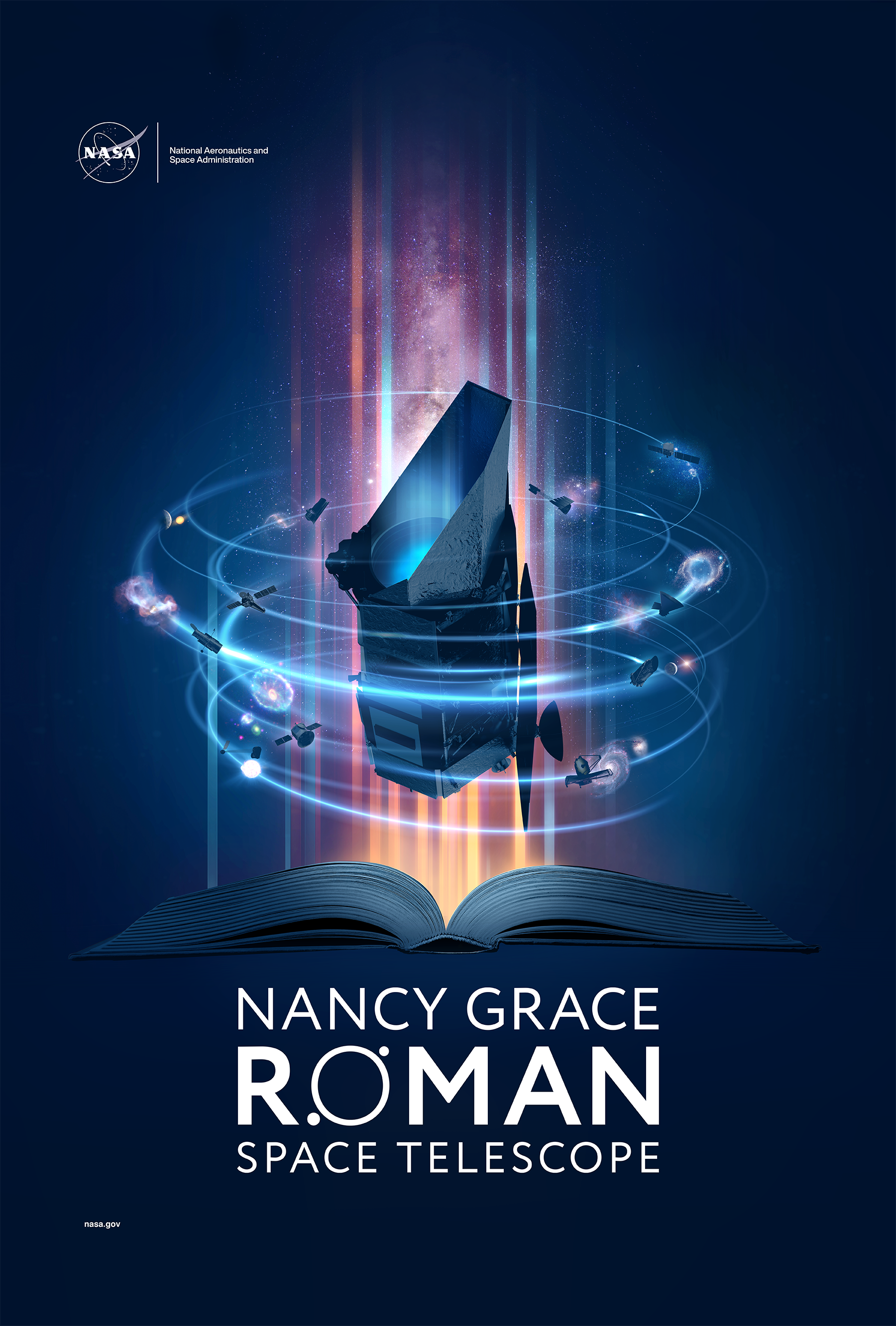
Get Your Boarding Pass for NASA's Nancy Grace Roman Space Telescope by July 12
The NASA Artemis II astronauts have their Nancy Grace Roman Space Telescope boarding passes, do you?!
Download the free Nancy Grace Roman Space Telescope poster here:
Starship's Super Heavy V3: Full Duration 33-Engine Static Fire Test | Starbase Texas
Full-duration, 33-engine static fire of Starship's Super Heavy V3 ahead of the upcoming 13th flight test.
This was the first flight of the "next generation Starship and Super Heavy vehicles, powered by the next evolution of the Raptor engine."
Read more about the key upgrades designed to enhance performance and unlock Starship's full capabilities here: https://www.spacex.com/updates/starship-v3
NASA plans to use a lunar lander version of Starship to deliver astronauts and cargo to the Moon during the Artemis IV mission and beyond through the Human Landing System (HLS) Program.
The Future of Deep Space Exploration | Lockheed Martin
"We're advancing the technologies and capabilities that will push missions farther into deep space. From robotic precursors to crewed missions, each step expands what's possible for the next generation of explorers."
Learn more: https://www.lockheedmartin.com/en-us/capabilities/space/deep-space-exploration.html
Artemis II Moon Mission Celebrations | Kennedy Space Center
Between July 7-8, 2026, the Artemis II Moon Mission crew returned to NASA's Kennedy Space Center for their first official visit since the launch of Artemis II on Wednesday, April 1, 2026, to meet with the center’s workforce, to tour facilities, and to view progress on Artemis III prelaunch processing.
NASA's Artemis II Moon Mission took NASA astronauts Reid Wiseman, Victor Glover, Christina Koch, and Canadian Space Agency (CSA) astronaut Jeremy Hansen on a nearly 10-day journey around the Moon and back to Earth.
The Orion spacecraft successfully splashed down on Friday, April 10, 2026, in the Pacific Ocean following its journey around the Moon.
The first crewed test flight of NASA’s Artemis Program lifted off from Launch Pad 39B at the agency’s Kennedy Space Center in Florida on April 1, 2026, carrying the first astronauts to travel to the Moon in more than half a century.
The crew completed a record-setting lunar flyby, taking them 252,756 miles at their farthest distance from Earth and 4,067 miles above the lunar surface at their closest approach.
Under Artemis, NASA will send astronauts on increasingly difficult missions to explore more of the Moon for scientific discovery, economic benefits, and to build on our foundation for the first crewed missions to Mars.
Learn more about NASA's Artemis II Mission:
https://www.nasa.gov/mission/artemis-ii/