Monday, July 13, 2026

Shenzhou-23 Crew Conducts Life Sciences, Physics Experiments | China Space Station

Shenzhou-23 Crew Conducts Life Sciences, Physics Experiments | China Space Station

China's Shenzhou-23 astronauts have spent nearly 50 days aboard the Tiangong Space Station in orbit, where they conduct a rapidly expanding range of scientific experiments while maintaining the orbital complex, marking yet another milestone in the nation's crewed spaceflight program.

Over the past week, the crew conducted tests, biomechanics research and brain function studies on the effects of microgravity on human health and performance, according to the China Manned Space Agency (CMSA).

The in-orbit biomechanics data will enable ground researchers to map muscle-tendon interactions under microgravity, while the brain-function studies will shed light on how prolonged spaceflight alters human cognitive control and neural performance.

The Shenzhou-23 crew also maintained and upgraded equipment for combustion and fluid physics experiments and installed new research modules.

Plus, the three astronauts conducted routine inspections and maintenance of various devices in the space station, and performed tests on the upgraded body mass measurement device that has made its debut aboard the space station.

Despite their packed schedule, the astronauts continued their daily in-orbit exercise regimen to counteract the physiological effects of microgravity.

China successfully launched the Shenzhou-23 crewed spacecraft on May 24, sending the three astronauts into orbit.

The crew members are mission commander Zhu Yangzhu, Zhang Zhiyuan, and Lai Ka-ying, who made history as the first astronaut from China's Hong Kong Special Administrative Region to travel to space.

According to the CMSA, the astronauts are set to carry out a one-year in-orbit stay experiment. During the extended mission, the crew will fulfill more than 100 new science and application projects, focusing on frontier fields, such as space life science, materials science, microgravity fluid physics, aerospace medicine and new space technologies.

Shenzhou-23 Crew
Zhu Yangzhu 朱杨柱, Commander & Flight Engineer (second spaceflight)
Zhang Zhiyuan 张志远, Pilot (first spaceflight)
Lai Ka-ying/Li Jiaying 黎家盈, Payload Specialist (first spaceflight) [Hong Kong SAR]

Video Credit: CCTV
Duration: 1 minute
Release Date: July 13, 2026

#NASA #Space #Science #China #中国 #Shenzhou23Mission #神舟二十三号 #Shenzhou23 #Taikonauts #Astronauts #ZhuYangzhu #ZhangZhiyuan #LiJiaying #LaiKaying #ChinaSpaceStation #中国空间站 #TiangongSpaceStation #MicrogravityExperiments #SpaceLaboratory #CMSA #中国载人航天工程办公室 #HumanSpaceflight #STEM #Education #HD #Video

Sunday, July 12, 2026

Noctilucent Clouds of Planet Earth | International Space Station

Noctilucent Clouds of Planet Earth | International Space Station


Noctilucent clouds or polar mesospheric clouds are "Earth’s highest clouds, forming in the mesosphere, about 50 miles above the surface. They form from water ice crystals that condense on minute meteor dust particles, reaching upward toward the perimeter of space. I’ve observed many of these from the International Space Station over the past week . . . a fitting tribute to the life and legacy of Wally Funk, a pioneering aviator and member of the Mercury 13, a group of women who demonstrated that they had the skills and determination needed for spaceflight."

"Although the Mercury 13 were not part of NASA’s astronaut corps and never flew in space through that program, Wally continued to break barriers in aviation throughout her remarkable career." 

"I had the pleasure of meeting Wally at NASA's Johnson Space Center and flew a postcard with her picture on it (that she gave me that day) to the ISS with me on my first mission. Shortly after in 2021, Wally reached space herself aboard a Blue Origin
New Shepard flight."

"Thank your contributions and inspiration, Wally. May you continue to fly high."

Follow Expedition 74:

Expedition 74 Crew
Station Commander: Sergey-Kud Sverchkov (Russia)
Roscosmos (Russia) Flight Engineers:
Andrey Fedyaev, Sergei Mikaev
European Space Agency Flight Engineer: Sophie Adenot
NASA Flight Engineers: Jessica Meir, Jack Hathaway, Chris Williams

An international partnership of space agencies provides and operates the elements of the International Space Station (ISS). The principals are the space agencies of the United States, Russia, Europe, Japan, and Canada.


Image Credit: NASA's Johnson Space Center/J. Meir
Release Date: July 10, 2026


#NASA #Space #Science #Astronomy #ISS #Planets #Earth #Weather #Meteorology #Atmosphere #WaterVapor #Clouds #IceCrystals #NoctilucentClouds #PolarMesosphericClouds #Astronauts #JessicaMeir #WallyFunk #AstronautPhotography #Europe #France #ESA #Cosmonauts #Russia #Россия #Roscosmos #Роскосмос #HumanSpaceflight #InternationalCooperation #UnitedStates #STEM #Education

Expedition 75 Russian Soyuz Rocket Rollout | International Space Station

Expedition 75 Russian Soyuz Rocket Rollout | International Space Station


After final assembly on July 10, 2026, the Russian Soyuz rocket was rolled out by train to the launch pad, Saturday, July 11, 2026, at Site 31 of the Baikonur Cosmodrome in Kazakhstan. Expedition 75 crewmembers: NASA astronaut Anil Menon, Roscosmos cosmonauts Pyotr Dubrov and Anna Kikina of Russia are scheduled to launch to the International Space Station on Tuesday, July 14, 2026, at 10:47 a.m. EDT (7:47 p.m. local time) aboard their Soyuz MS-29 spacecraft. The trio will spend about eight months aboard the orbiting laboratory before returning to Earth in spring 2027.

During his expedition, Menon will conduct scientific investigations and technology demonstrations intended to help humans prepare for future exploration missions to the Moon and Mars, and to provide benefits on Earth. Among the hundreds of experiments planned during his mission, he will participate in studies to better understand astronaut vein structure, blood flow, and blood composition in microgravity. He also will test producing intravenous fluids using the space station’s potable water.

The Soyuz MS-29 mission will be his first spaceflight after he was selected as part of NASA’s 2021 astronaut class. A native of Minneapolis, Menon is an emergency medicine physician, mechanical engineer, and colonel in the United States Space Force. He also has served as an expedition flight surgeon supporting the agency’s crew members aboard the space station.

NASA astronaut Anil Menon's Official Biography:

For more than 25 years, people have lived and worked continuously aboard the International Space Station, advancing scientific knowledge and making research breakthroughs not possible on Earth. The space station helps NASA understand and overcome the challenges of human spaceflight, expand commercial opportunities in low Earth orbit, and build on the foundation for long-duration missions to the Moon, as part of the Artemis program, and to Mars.

To learn more about International Space Station research, operations, and its crews, visit: 

An international partnership of space agencies provides and operates the elements of the International Space Station (ISS). The principals are the space agencies of the United States, Russia, Europe, Japan, and Canada.

Video Credit: Roscosmos
Duration: 1 minute
Date: July 11, 2026

#NASA #Space #Science #Astronomy #ISS #Planets #Earth #SoyuzRocket #SoyuzMS29 #Astronauts #AnilMenon #Cosmonauts #AnnaKikina #PyotrDubrov #Russia #Россия #Roscosmos #Роскосмос #HumanSpaceflight #InternationalCooperation #UnitedStates #Expedition74 #Expedition75 #Baikonur #Kazakhstan #Қазақстан #STEM #Education #HD #Video

Expedition 75 Russian Soyuz Rocket Assembly | International Space Station

Expedition 75 Russian Soyuz Rocket Assembly | International Space Station

After final assembly on July 10, 2026, the Russian Soyuz rocket was rolled out by train to the launch pad, Saturday, July 11, 2026, at Site 31 of the Baikonur Cosmodrome in Kazakhstan. Expedition 75 crewmembers: NASA astronaut Anil Menon, Roscosmos cosmonauts Pyotr Dubrov and Anna Kikina of Russia are scheduled to launch to the International Space Station on Tuesday, July 14, 2026, at 10:47 a.m. EDT (7:47 p.m. local time) aboard their Soyuz MS-29 spacecraft. The trio will spend about eight months aboard the orbiting laboratory before returning to Earth in spring 2027.

During his expedition, Menon will conduct scientific investigations and technology demonstrations intended to help humans prepare for future exploration missions to the Moon and Mars, and to provide benefits on Earth. Among the hundreds of experiments planned during his mission, he will participate in studies to better understand astronaut vein structure, blood flow, and blood composition in microgravity. He also will test producing intravenous fluids using the space station’s potable water.

The Soyuz MS-29 mission will be his first spaceflight after he was selected as part of NASA’s 2021 astronaut class. A native of Minneapolis, Menon is an emergency medicine physician, mechanical engineer, and colonel in the United States Space Force. He also has served as an expedition flight surgeon supporting the agency’s crew members aboard the space station.

NASA astronaut Anil Menon's Official Biography:

For more than 25 years, people have lived and worked continuously aboard the International Space Station, advancing scientific knowledge and making research breakthroughs not possible on Earth. The space station helps NASA understand and overcome the challenges of human spaceflight, expand commercial opportunities in low Earth orbit, and build on the foundation for long-duration missions to the Moon, as part of the Artemis program, and to Mars.

To learn more about International Space Station research, operations, and its crews, visit: 

An international partnership of space agencies provides and operates the elements of the International Space Station (ISS). The principals are the space agencies of the United States, Russia, Europe, Japan, and Canada.

Video Credit: Roscosmos
Duration: 1 minute
Date: July 10, 2026

#NASA #Space #Science #Astronomy #ISS #Planets #Earth #SoyuzRocket #SoyuzMS29 #Astronauts #AnilMenon #Cosmonauts #AnnaKikina #PyotrDubrov #Russia #Россия #Roscosmos #Роскосмос #HumanSpaceflight #InternationalCooperation #UnitedStates #Expedition74 #Expedition75 #Baikonur #Kazakhstan #Қазақстан #STEM #Education #HD #Video

Bright Dust Trail of Planet Jupiter Family Comet 10P/Tempel: View from Arizona

Bright Dust Trail of Planet Jupiter Family Comet 10P/Tempel: View from Arizona


Astrophotographer Chris Schur: "This comet is exhibiting the most obvious dust trail I have ever seen in 50 years of imaging."

Comet 10P/Tempel, also known as Tempel 2, is a large Jupiter-family comet roughly 10 km in diameter with a 5.36 year orbit around the Sun. Jupiter-family comets (JFCs) are short-period comets with orbital periods under 20 years, whose orbits are strongly influenced by planet Jupiter’s immense gravity. 10P/Tempel was discovered on July 4, 1873 by Wilhelm Tempel. At perihelion (closest approach to the Sun) passage on August 2, 2026, the solar elongation will be 164 degrees at a magnitude of approximately 8–10 with a declination of –24. The closest approach to Earth will be the next day on August 3, 2026, at a distance of 0.414 AU (61.9 million km). The comet should then be visible with binoculars.

Image Data: Date/Time Local: 7/10/26 12:47 am MST -Date/Time UT: 7/10/26 7:47 UT -FOV: 200' x 134' -Orientation: N up -Seeing: 10 -Transparency: 9 -Orig. Scale: 1.2 arcsec/Pixel -Instrument: RASA 11 f/2.2 -Exposure: 60m total -Camera: ASI6200MM + UV/IR + Baader LRGB -Location: Happy Jack,AZ` 

The background here is filled with integrated flux nebula, and on the original luminance data, a short tail was seen at about a 45 degree to the trail. Easily seen in 10 x 50 binoculars. Bortle 1, 7000 feet elevation.

Arizona is a landlocked state in the Southwestern region of the United States, sharing the Four Corners region of the western United States with Colorado, New Mexico, and Utah. It also borders Nevada to the northwest and California to the west, and shares an international border with the Mexican states of Sonora and Baja California to the south and southwest.


Image Credit: Chris Schur 
Location: Happy Jack, Arizona, United States
Date: July 10, 2026

#NASA #Astronomy #Space #Science #Planets #Earth #Comets #Comet10PTempel #CometTemple2 #JupiterFamilyClass #JFC #SolarSystem #MilkyWayGalaxy #Cosmos #Universe #Astrophotography #ChrisSchur #Astrophotographers #HappyJack #Arizona #UnitedStates #STEM #Education

Why the Reusability of Commercial Rockets Matters

Why the Reusability of Commercial Rockets Matters

The Long March-10B is China's next-generation rocket built specifically for the commercial space market. In its reusable configuration, it can deliver 16 tonnes to low Earth orbit, supporting missions ranging from satellite Internet constellations to large commercial satellite launches.

The Long March-10B's capabilities represent a major breakthrough in the country's reusable rocket technology. This makes China the second country after the United States to have demonstrated such a capacity.

Developed by the China Academy of Launch Vehicle Technology (CALT) under the China Aerospace Science and Technology Corporation (CASC), the Long March-10B is a large, two-stage liquid-fueled rocket with a five-meter diameter core. The rocket utilizes liquid oxygen and kerosene for its first stage and liquid oxygen and methane for its second.

The Long March-10B rocket stands about 63 meters tall with a takeoff thrust of 890 tons.

The successful maiden flight of the Long March-10B on July 10, 2026, marks the 657th launch of the Long March rocket series.


Video Credit: CGTN
Duration: 1 minute, 45 seconds
Release Date: July 12, 2026


#NASA #Space #Science #China #中国 #LongMarch10 #LongMarch10B #CZ10B #长征十号乙 #RocketFirstStages #ReusableRockets #SpaceTechnology #Engineering #Satellites #SatelliteConstellations #SpaceExploration #CommercialSpace #STEM #Education #HD #Video

Multi-Angle Views: China's Long March-10B Reusable Rocket First Stage Recovery

Multi-Angle Views: China's Long March-10B Reusable Rocket First Stage Recovery

China Media Group released exclusive multi-angle footage on July 10, 2026, of the Long March-10B carrier rocket's launch and recovery, as China achieved its first controlled recovery of a carrier rocket's first stage.

The rocket lifted off from the Wenchang Spacecraft Launch Site in south China's Hainan Province at 12:15 Friday. About six minutes after stage separation, the first stage returned and was successfully captured by a net system on a seaborne platform—a global first. At the same time, the second stage delivered its payload into the preset orbit.

Developed by the China Academy of Launch Vehicle Technology (CALT) under the China Aerospace Science and Technology Corporation (CASC), the Long March-10B is a large, two-stage liquid-fueled rocket with a five-meter diameter core.

Standing about 63 meters tall with a takeoff thrust of 890 tons, it has a low Earth orbit payload capacity of 16 tons in reusable mode.

Friday's mission successfully validated several core technologies, including combined configuration optimization, methane autogenous pressurization, and propellant management using baffled tanks. It demonstrated critical first-stage reuse technologies such as multiple engine restarts, high-altitude ignition, adaptability to complex aerothermal environments, high-precision navigation and control, and a sea-based net-capture recovery system.

Looking ahead, the development team plans to continuously optimize the rocket's performance and accelerate the iteration of its reusable technologies, with a targeted first-stage reuse flight scheduled for the end of this year.

The successful maiden flight of the Long March-10B marks the 657th launch of the Long March rocket series.


Video Credit: CCTV
Duration: 3 minutes
Release Date: July 12, 2026

#NASA #Space #Science #China #中国 #LongMarch10 #LongMarch10B #CZ10B #长征十号乙 #RocketFirstStages #LinghangzheDroneShip #ReusableRockets #CASC #中国航天科技集团有限公司 #CALT #中国运载火箭技术研究院 #SpaceTechnology #Satellites #SatelliteConstellations #CX26 #ChinaSatelliteNetworkGroup #SpaceExploration #WSLC #Hainan #STEM #Education #HD #Video

Watch NASA's Space Shuttle Endeavour Conduct Pitch Maneuver over Earth

Watch NASA's Space Shuttle Endeavour Conduct Pitch Maneuver over Earth

NASA astronaut Don Pettit: "POV of the space shuttle pitch maneuver! I filmed this from Endeavour on STS-126. The RPM was standard safety procedure to expose the heat shield to ISS for inspection. My commander was gracious enough to let me put a camera on the window to get this, now one of few such videos!"

STS-126 was the one hundred and twenty-fourth NASA Space Shuttle mission, and twenty-second orbital flight of the Space Shuttle Endeavour (OV-105) to the International Space Station (ISS). The purpose of the mission, referred to as ULF2 by the ISS program, was to deliver equipment and supplies to the station, to service the Solar Alpha Rotary Joints (SARJ), and repair the problem in the starboard SARJ that had limited its use since STS-120. STS-126 launched on November 15, 2008, at 00:55:39 UTC from Launch Pad 39A (LC-39A) at NASA's Kennedy Space Center (KSC) with no delays or issues. Endeavour successfully docked with the station on November 16, 2008. After spending 15 days, 20 hours, 30 minutes, and 30 seconds docked to the station, during which the crew performed four spacewalks, and transferred cargo, the orbiter undocked on November 28, 2008. Due to poor weather at Kennedy Space Center, Endeavour landed at Edwards Air Force Base on November 30, 2008 at 21:25:09 UTC.


Video Credit: NASA/JSC/ D. Pettit
Duration: 40 seconds
Release Date: July 7, 2026

#NASA #Space #Science #Earth #ISS #SpaceShuttleEndeavour #OV105 #STS126 #PitchManeuver #SpaceflightSafety #Astronauts #DonPettit #AstronautVideography #HumanSpaceflight #JSC #UnitedStates #MicrogravityLaboratory #SpaceExploration #SolarSystem #InternationalCooperation #History #STEM #Education #HD #Video

Saturday, July 11, 2026

Scenes from the Baikonur Cosmodrome in Kazakhstan | International Space Station

Scenes from the Baikonur Cosmodrome in Kazakhstan | International Space Station

The Russian Soyuz rocket is rolled out by train to the launch pad, Saturday, July 11, 2026, at Site 31 of the Baikonur Cosmodrome in Kazakhstan.
A train, with the Soyuz MS-29 patch on it, prepares to roll the Russian Soyuz rocket out to the launch pad, Saturday, July 11, 2026, at Site 31 of the Baikonur Cosmodrome in Kazakhstan.
A mosaic sign welcomes visitors outside the town of Baikonur, Kazakhstan, Friday, July 10, 2026.
NASA team members and guest arrive at the Krayniy Airport in Baikonur, Kazakhstan, in advance of the launch of Expedition 75 crewmembers: NASA astronaut Anil Menon, Roscosmos cosmonauts Pyotr Dubrov and Anna Kikina Friday, July 10, 2026.
Security teams prepare to support the roll out of the Russian Soyuz rocket by train to the launch pad, Saturday, July 11, 2026, at Site 31 of the Baikonur Cosmodrome in Kazakhstan.
Camels are seen grazing, Saturday, July 11, 2026, at the Baikonur Cosmodrome in Kazakhstan.
A camel is seen in the road, Saturday, July 11, 2026, at the Baikonur Cosmodrome in Kazakhstan.

The Russian Soyuz rocket was rolled out by train to the launch pad on Saturday, July 11, 2026, at Site 31 of the Baikonur Cosmodrome in Kazakhstan. Expedition 75 crewmembers: NASA astronaut Anil Menon, Roscosmos cosmonauts Pyotr Dubrov and Anna Kikina of Russia are scheduled to launch to the International Space Station on Tuesday, July 14, 2026, at 10:47 a.m. EDT (7:47 p.m. local time) aboard their Soyuz MS-29 spacecraft. The trio will spend about eight months aboard the orbiting laboratory before returning to Earth in spring 2027.

During his expedition, Menon will conduct scientific investigations and technology demonstrations intended to help humans prepare for future exploration missions to the Moon and Mars, and to provide benefits on Earth. Among the hundreds of experiments planned during his mission, he will participate in studies to better understand astronaut vein structure, blood flow, and blood composition in microgravity. He also will test producing intravenous fluids using the space station’s potable water.

The Soyuz MS-29 mission will be his first spaceflight after he was selected as part of NASA’s 2021 astronaut class. A native of Minneapolis, Menon is an emergency medicine physician, mechanical engineer, and colonel in the United States Space Force. He also has served as an expedition flight surgeon supporting the agency’s crew members aboard the space station.

NASA astronaut Anil Menon's Official Biography:

For more than 25 years, people have lived and worked continuously aboard the International Space Station, advancing scientific knowledge and making research breakthroughs not possible on Earth. The space station helps NASA understand and overcome the challenges of human spaceflight, expand commercial opportunities in low Earth orbit, and build on the foundation for long-duration missions to the Moon, as part of the Artemis program, and to Mars.

To learn more about International Space Station research, operations, and its crews, visit: 

An international partnership of space agencies provides and operates the elements of the International Space Station (ISS). The principals are the space agencies of the United States, Russia, Europe, Japan, and Canada.

Image Credit: NASA/Bill Ingalls
Dates: July 10-11, 2026

#NASA #Space #Science #Astronomy #ISS #Earth #SoyuzRocket #SoyuzMS29 #Astronauts #AnilMenon #Cosmonauts #AnnaKikina #PyotrDubrov #Russia #Россия #Roscosmos #Роскосмос #HumanSpaceflight #InternationalCooperation #UnitedStates #MicrogravityLaboratory #Expedition74 #Expedition75 #Baikonur #Kazakhstan #Қазақстан #STEM #Education

Expedition 75 Russian Soyuz Rocket Rollout: Part 4 | International Space Station

Expedition 75 Russian Soyuz Rocket Rollout: Part 4 | International Space Station


Expedition 75 backup crewmembers: Roscosmos cosmonaut Dmitry Petelin (Russia), left, NASA astronuaut Deniz Burnham, and Roscosmos cosmonaut Konstantin Borisov (Russia), right, pose for a group photograph after the Soyuz rocket was rolled out by train to the launch pad, Saturday, July 11, 2026, at Site 31 of the Baikonur Cosmodrome in Kazakhstan.


The Russian Soyuz rocket is rolled out by train to the launch pad, Saturday, July 11, 2026, at Site 31 of the Baikonur Cosmodrome in Kazakhstan. Expedition 75 crewmembers: NASA astronaut Anil Menon, Roscosmos cosmonauts Pyotr Dubrov and Anna Kikina of Russia are scheduled to launch to the International Space Station on Tuesday, July 14, 2026, at 10:47 a.m. EDT (7:47 p.m. local time) aboard their Soyuz MS-29 spacecraft. The trio will spend about eight months aboard the orbiting laboratory before returning to Earth in spring 2027.

During his expedition, Menon will conduct scientific investigations and technology demonstrations intended to help humans prepare for future exploration missions to the Moon and Mars, and to provide benefits on Earth. Among the hundreds of experiments planned during his mission, he will participate in studies to better understand astronaut vein structure, blood flow, and blood composition in microgravity. He also will test producing intravenous fluids using the space station’s potable water.

The Soyuz MS-29 mission will be his first spaceflight after he was selected as part of NASA’s 2021 astronaut class. A native of Minneapolis, Menon is an emergency medicine physician, mechanical engineer, and colonel in the United States Space Force. He also has served as an expedition flight surgeon supporting the agency’s crew members aboard the space station.

NASA astronaut Anil Menon's Official Biography:

For more than 25 years, people have lived and worked continuously aboard the International Space Station, advancing scientific knowledge and making research breakthroughs not possible on Earth. The space station helps NASA understand and overcome the challenges of human spaceflight, expand commercial opportunities in low Earth orbit, and build on the foundation for long-duration missions to the Moon, as part of the Artemis program, and to Mars.

To learn more about International Space Station research, operations, and its crews, visit: 

An international partnership of space agencies provides and operates the elements of the International Space Station (ISS). The principals are the space agencies of the United States, Russia, Europe, Japan, and Canada.

Image Credit: NASA/Bill Ingalls
Date: July 11, 2026

#NASA #Space #Science #Astronomy #ISS #Planets #Earth #SoyuzRocket #SoyuzMS29 #Astronauts #AnilMenon #Cosmonauts #AnnaKikina #PyotrDubrov #Russia #Россия #Roscosmos #Роскосмос #HumanSpaceflight #InternationalCooperation #UnitedStates #MicrogravityLaboratory #Expedition74 #Expedition75 #Baikonur #Kazakhstan #Қазақстан #STEM #Education

Expedition 75 Russian Soyuz Rocket Rollout: Part 3 | International Space Station

Expedition 75 Russian Soyuz Rocket Rollout: Part 3 | International Space Station

Expedition 75 backup crewmembers: Roscosmos cosmonaut Konstantin Borisov (Russia), left, NASA astronuaut Deniz Burnham, and Roscosmos cosmonaut Dmitry Petelin (Russia), pose for a group photograph in the flame trench after the Soyuz rocket was raised into position at the Site 31 launch pad of the Baikonur Cosmodrome in Kazakhstan, Saturday, July 11, 2026. 


Expedition 75 backup crewmembers: NASA astronuaut Deniz Burnham, left, Roscosmos cosmonauts Konstantin Borisov (Russia), and Dmitry Petelin (Russia), along with Head of Gargarin Cosmonaut Training Center Oleg Kononenko, right, watch from the flame trench as the Soyuz rocket is raised into position at the Site 31 launch pad of the Baikonur Cosmodrome in Kazakhstan, Saturday, July 11, 2026. 

The Russian Soyuz rocket is rolled out by train to the launch pad, Saturday, July 11, 2026, at Site 31 of the Baikonur Cosmodrome in Kazakhstan. Expedition 75 crewmembers: NASA astronaut Anil Menon, Roscosmos cosmonauts Pyotr Dubrov and Anna Kikina of Russia are scheduled to launch to the International Space Station on Tuesday, July 14, 2026, at 10:47 a.m. EDT (7:47 p.m. local time) aboard their Soyuz MS-29 spacecraft. The trio will spend about eight months aboard the orbiting laboratory before returning to Earth in spring 2027.

During his expedition, Menon will conduct scientific investigations and technology demonstrations intended to help humans prepare for future exploration missions to the Moon and Mars, and to provide benefits on Earth. Among the hundreds of experiments planned during his mission, he will participate in studies to better understand astronaut vein structure, blood flow, and blood composition in microgravity. He also will test producing intravenous fluids using the space station’s potable water.

The Soyuz MS-29 mission will be his first spaceflight after he was selected as part of NASA’s 2021 astronaut class. A native of Minneapolis, Menon is an emergency medicine physician, mechanical engineer, and colonel in the United States Space Force. He also has served as an expedition flight surgeon supporting the agency’s crew members aboard the space station.

NASA astronaut Anil Menon's Official Biography:

For more than 25 years, people have lived and worked continuously aboard the International Space Station, advancing scientific knowledge and making research breakthroughs not possible on Earth. The space station helps NASA understand and overcome the challenges of human spaceflight, expand commercial opportunities in low Earth orbit, and build on the foundation for long-duration missions to the Moon, as part of the Artemis program, and to Mars.

To learn more about International Space Station research, operations, and its crews, visit: 

An international partnership of space agencies provides and operates the elements of the International Space Station (ISS). The principals are the space agencies of the United States, Russia, Europe, Japan, and Canada.

Image Credit: NASA/Bill Ingalls
Date: July 11, 2026

#NASA #Space #Science #Astronomy #ISS #Planets #Earth #SoyuzRocket #SoyuzMS29 #Astronauts #AnilMenon #Cosmonauts #AnnaKikina #PyotrDubrov #Russia #Россия #Roscosmos #Роскосмос #HumanSpaceflight #InternationalCooperation #UnitedStates #MicrogravityLaboratory #Expedition74 #Expedition75 #Baikonur #Kazakhstan #Қазақстан #STEM #Education

Expedition 75 Russian Soyuz Rocket Rollout: Part 2 | International Space Station

Expedition 75 Russian Soyuz Rocket Rollout: Part 2 | International Space Station

Expedition 75 backup crewmembers: Roscosmos cosmonaut Dmitry Petelin (Russia), left, NASA astronuaut Deniz Burnham, and Roscosmos cosmonaut Konstantin Borisov (Russia), right, pose for a group photograph.


The Russian Soyuz rocket is rolled out by train to the launch pad, Saturday, July 11, 2026, at Site 31 of the Baikonur Cosmodrome in Kazakhstan. Expedition 75 crewmembers: NASA astronaut Anil Menon, Roscosmos cosmonauts Pyotr Dubrov and Anna Kikina of Russia are scheduled to launch to the International Space Station on Tuesday, July 14, 2026, at 10:47 a.m. EDT (7:47 p.m. local time) aboard their Soyuz MS-29 spacecraft. The trio will spend about eight months aboard the orbiting laboratory before returning to Earth in spring 2027.

During his expedition, Menon will conduct scientific investigations and technology demonstrations intended to help humans prepare for future exploration missions to the Moon and Mars, and to provide benefits on Earth. Among the hundreds of experiments planned during his mission, he will participate in studies to better understand astronaut vein structure, blood flow, and blood composition in microgravity. He also will test producing intravenous fluids using the space station’s potable water.

The Soyuz MS-29 mission will be his first spaceflight after he was selected as part of NASA’s 2021 astronaut class. A native of Minneapolis, Menon is an emergency medicine physician, mechanical engineer, and colonel in the United States Space Force. He also has served as an expedition flight surgeon supporting the agency’s crew members aboard the space station.

NASA astronaut Anil Menon's Official Biography:

For more than 25 years, people have lived and worked continuously aboard the International Space Station, advancing scientific knowledge and making research breakthroughs not possible on Earth. The space station helps NASA understand and overcome the challenges of human spaceflight, expand commercial opportunities in low Earth orbit, and build on the foundation for long-duration missions to the Moon, as part of the Artemis program, and to Mars.

To learn more about International Space Station research, operations, and its crews, visit: 

An international partnership of space agencies provides and operates the elements of the International Space Station (ISS). The principals are the space agencies of the United States, Russia, Europe, Japan, and Canada.

Image Credit: NASA/Bill Ingalls
Date: July 11, 2026

#NASA #Space #Science #Astronomy #ISS #Planets #Earth #SoyuzRocket #SoyuzMS29 #Astronauts #AnilMenon #Cosmonauts #AnnaKikina #PyotrDubrov #Russia #Россия #Roscosmos #Роскосмос #HumanSpaceflight #InternationalCooperation #UnitedStates #MicrogravityLaboratory #Expedition74 #Expedition75 #Baikonur #Kazakhstan #Қазақстан #STEM #Education

Expedition 75 Russian Soyuz Rocket Rollout: Part 1 | International Space Station

Expedition 75 Russian Soyuz Rocket Rollout: Part 1 | International Space Station


The Russian Soyuz rocket is rolled out by train to the launch pad, Saturday, July 11, 2026, at Site 31 of the Baikonur Cosmodrome in Kazakhstan. Expedition 75 crewmembers: NASA astronaut Anil Menon, Roscosmos cosmonauts Pyotr Dubrov and Anna Kikina of Russia are scheduled to launch to the International Space Station on Tuesday, July 14, 2026, at 10:47 a.m. EDT (7:47 p.m. local time) aboard their Soyuz MS-29 spacecraft. The trio will spend about eight months aboard the orbiting laboratory before returning to Earth in spring 2027.

During his expedition, Menon will conduct scientific investigations and technology demonstrations intended to help humans prepare for future exploration missions to the Moon and Mars, and to provide benefits on Earth. Among the hundreds of experiments planned during his mission, he will participate in studies to better understand astronaut vein structure, blood flow, and blood composition in microgravity. He also will test producing intravenous fluids using the space station’s potable water.

The Soyuz MS-29 mission will be his first spaceflight after he was selected as part of NASA’s 2021 astronaut class. A native of Minneapolis, Menon is an emergency medicine physician, mechanical engineer, and colonel in the United States Space Force. He also has served as an expedition flight surgeon supporting the agency’s crew members aboard the space station.

NASA astronaut Anil Menon's Official Biography:

For more than 25 years, people have lived and worked continuously aboard the International Space Station, advancing scientific knowledge and making research breakthroughs not possible on Earth. The space station helps NASA understand and overcome the challenges of human spaceflight, expand commercial opportunities in low Earth orbit, and build on the foundation for long-duration missions to the Moon, as part of the Artemis program, and to Mars.

To learn more about International Space Station research, operations, and its crews, visit: 

An international partnership of space agencies provides and operates the elements of the International Space Station (ISS). The principals are the space agencies of the United States, Russia, Europe, Japan, and Canada.

Image Credit: NASA/Bill Ingalls
Date: July 11, 2026

#NASA #Space #Science #Astronomy #ISS #Planets #Earth #SoyuzRocket #SoyuzMS29 #Astronauts #AnilMenon #Cosmonauts #AnnaKikina #PyotrDubrov #Russia #Россия #Roscosmos #Роскосмос #HumanSpaceflight #InternationalCooperation #UnitedStates #MicrogravityLaboratory #Expedition74 #Expedition75 #Baikonur #Kazakhstan #Қазақстан #STEM #Education

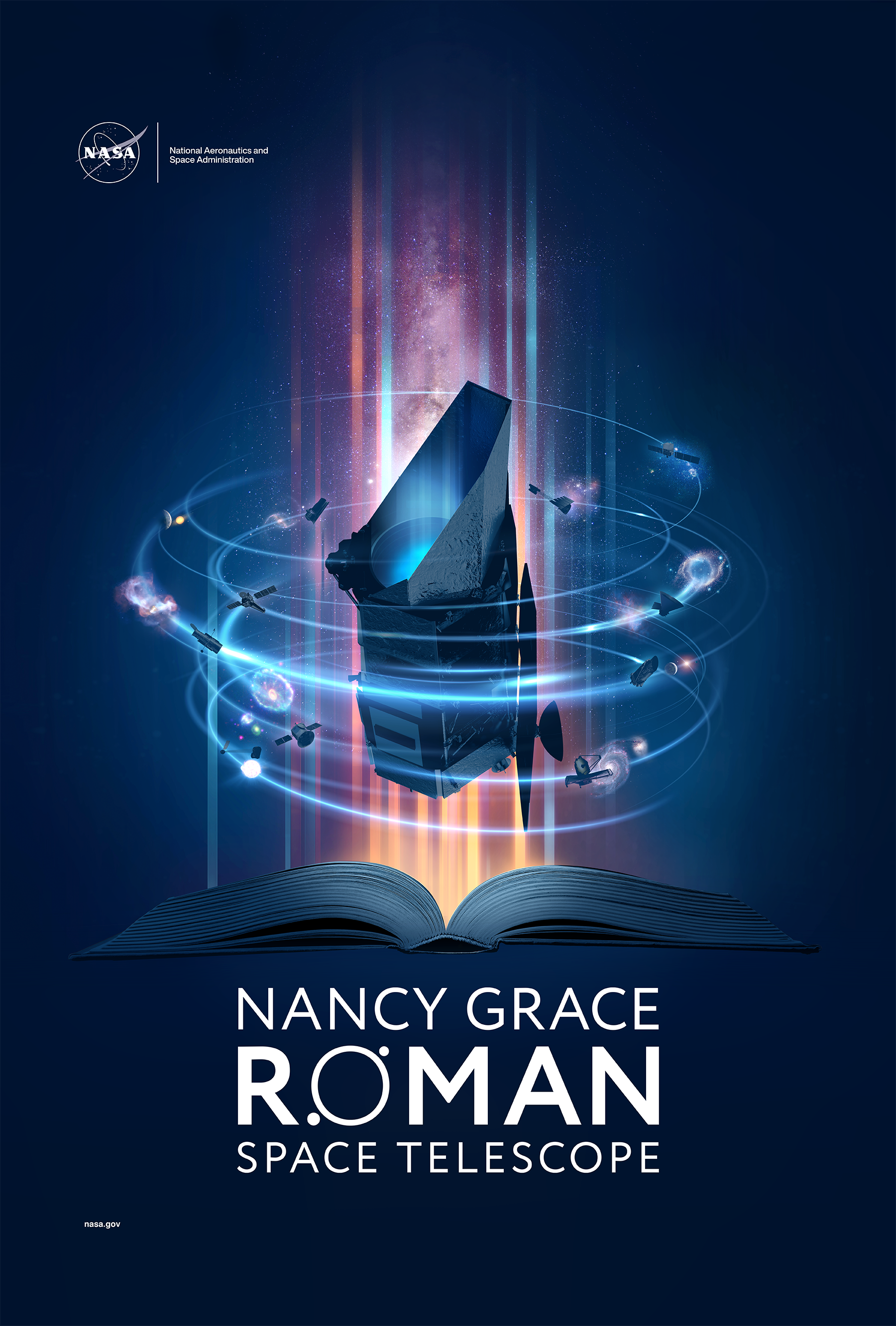
Get Your Boarding Pass for NASA's Nancy Grace Roman Space Telescope by July 12

Get Your Boarding Pass for NASA's Nancy Grace Roman Space Telescope by July 12

The NASA Artemis II astronauts have their Nancy Grace Roman Space Telescope boarding passes, do you?!

Sign up to have your name sent on the Roman space telescope before it travels a million miles away!
http://go.nasa.gov/RomanNames

Submission Deadline: July 12, 2026

The telescope is currently scheduled to launch on August 30, 2026. 

The Roman telescope and the discoveries it will support:
https://www.stsci.edu/roman


Image Credit: NASA
Release Date: July 10, 2026

#NASA #Space #Astronomy #Science #ArtemisIICrew #NASARoman #RomanSpaceTelescope #NancyGraceRomanSpaceTelescope #NancyGraceRoman #Exoplanets #Planets #SolarSystem #Stars #MilkyWayGalaxy #Galaxies #Cosmos #Universe #SpaceTelescopes #NASAGoddard #GSFC #STScI #NASAKennedy #Florida #UnitedStates #STEM #Education

Starship Super Heavy V3: Full Duration 33-Engine Static Fire Test | Starbase Texas

Starship's Super Heavy V3: Full Duration 33-Engine Static Fire Test | Starbase Texas

Full-duration, 33-engine static fire of Starship's Super Heavy V3 ahead of the upcoming 13th flight test.

The 12th flight test of SpaceX's Starship lifted off May 22, 2026, from Pad 2 at Starbase, Texas. Learn about the flight test results and watch a replay of the launch webcast here: 
https://www.spacex.com/launches/starship-flight-12

This was the first flight of the "next generation Starship and Super Heavy vehicles, powered by the next evolution of the Raptor engine." 

Read more about the key upgrades designed to enhance performance and unlock Starship's full capabilities here: https://www.spacex.com/updates/starship-v3

NASA plans to use a lunar lander version of Starship to deliver astronauts and cargo to the Moon during the Artemis IV mission and beyond through the Human Landing System (HLS) Program.

Download the Free Starship User Guide (PDF):
https://www.spacex.com/media/starship_users_guide_v1.pdf


Credit: Space Exploration Technologies Corporation (SpaceX)
Duration: 31 seconds
Date: July 10, 2026

#NASA #SpaceX #Space #Earth #Mars #Moon #MoonToMars #ArtemisProgram #ArtemisIII #ArtemisIV #Starship #StarshipV3 #StaticFireEngineTest #ReusableSpacecraft #SuperHeavy #SuperHeavyV3 #ElonMusk #Engineering #SpaceTechnology #HumanSpaceflight #CommercialSpace #SpaceExploration #StarbaseTexas #UnitedStates #STEM #Education #HD #Video