Happy Father's Day!

SARah-1 Mission | SpaceX
.jpg)
SpaceX's Falcon 9 booster 1071-3 lands after successfully launching the SARah-1 satellite for Germany's Bundeswehr—the German Armed Forces.
Germany’s SARah-1 military radar Earth observation satellite launched aboard a SpaceX Falcon 9 rocket from Vandenberg Space Force Base on Saturday, June 18, 2022. The launch, which was the 25th flight of the Falcon 9 this year, occurred at 7:19 AM PDT (14:19 UTC)—less than 24 hours after Friday’s Starlink 4-19 launch from NASA's Kennedy Space Center.
Saturday’s launch used flight-proven Falcon 9 booster 1071-3. This booster previously flew the NROL-87 and NROL-85 missions out of Vandenberg earlier in 2022, and the SARah-1 mission marks its third flight. SpaceX was awarded the contract to launch SARah for the German government in 2013.
Lifting off from Space Launch Complex 4E (SLC-4E) at Vandenberg Space Force Base, Falcon 9 headed southward targeting a sun-synchronous polar orbit—a type of orbit commonly used by Earth observation satellites.
Unlike optical reconnaissance satellites, radar imaging satellites like SARah-1 and its sister spacecraft can image Earth in any weather and lighting conditions, such as a cloudy, rainy night, or other conditions which would limit optical observation, using a technique called synthetic aperture radar (SAR).
While B1071-3 flew back towards the launch site, Falcon 9’s second stage and its single Merlin Vacuum (MVac) engine placed the SARah-1 satellite into orbit. SARah-1 will operate in a circular orbit inclined at 98.4 degrees to the equator, with an altitude of about 750 kilometers above the surface of the Earth.
Image Credit: SpaceX
Caption Credit: NASASpaceflight.com
Release Date: June 18, 2022
#NASA #Space #SpaceX #Falcon9 #Rocket #Booster #Satellite #EO #EarthObservation #RemoteSensing #SARah1 #Military #Bundeswehr #Germany #Deutschland #Earth #Orbit #ElonMusk #GwynneShotwell #Spaceflight #Technology #Engineering #Commerce #Spaceport #VandenbergSFB #SpaceForce #California #UnitedStates #FAA #STEM #Education
China Shenzhou-14 Crew's First Week at Tiangong Space Station
Three Chinese astronauts, or taikonauts, successfully arrived at the core module of China's Tiangong Space Station on June 5, 2022. Chen Dong, Liu Yang, and Cai Xuzhe are adapting to microgravity at the start of their six-month long duration mission to complete the construction of the facility. Liu became the first Chinese woman in space during the Shenzhou-9 Mission in 2012. Shenzhou-14 represents the second space mission for Chen Dong and Liu Yang. Cai Xuzhe is on his first.
The astronauts first needed to fetch living necessities from the Tianzhou-4 cargo craft, said Liu Weibo, deputy chief designer of the astronaut system of China's manned space project. "They need to transfer things such as food, water, air filters and set them up in the core module."
Setting up all the equipment and moving around the supplies were the astronauts' main tasks during the first week of their stay. Tianzhou-4, which holds supplies for the Shenzhou-14 crewed mission, docked with the combination of Tianhe core module and Tianzhou-3 cargo vessel in May 2022.
With a length of 10.6 meters and a maximum diameter of 3.35 meters, the Tianzhou-4 cargo ship carried about 6 tons of goods and 750 kg of propellant for the space station complex. Colored tags were put on parcels with different goods, so that the astronauts can quickly identify and find the goods they need.
The lab module Wentian is scheduled to arrive in July 2022, the lab module Mengtian in October, and then the Tianzhou-5 cargo craft and the Shenzhou-15 crew mission spacecraft later this year. The Wentian and Mengtian lab modules will provide larger platforms for scientific experiments in microgravity. Nearly 100 experiments are planned during the construction phase of China's space station. After operations are normalized, larger-scale scientific research will be conducted. This is expected to effectively promote breakthroughs in major frontier scientific fields, such as dark matter and dark energy, galaxy formation and evolution, laws about the nature of matter, as well as in sustainable development on Earth.
Credit: China Global Television Network (CGTN)
Duration: 2 minutes, 40 seconds
Release Date: June 15, 2022
#NASA #Space #China #中国 #Shenzhou14 #神舟十四号 #Taikonauts #Astronauts #ChenDong #LiuYang #刘洋 #Women #Pilots #Pioneers #CaiXuzhe #王亚平 #Tiangong #天宫 #SpaceStation #CNSA #CMSA #国家航天局 #Science #Technology #Engineering #STEM #Education #International #UNOOSA #UnitedNations #HDVideo #Video
SpaceX Starlink Mission: June 17, 2022
.jpg)
SpaceX is targeting Sunday, June 19, 2022 at 12:27 a.m. ET for a Falcon 9 launch of Globalstar FM15 to orbit from Space Launch Complex 40 in Florida.
Learn more about Starlink: https://www.starlink.com
Credit: Space Exploration Technologies Corp. (SpaceX)
Image Date: June 17, 2022
#NASA #Space #SpaceX #Falcon9 #Rocket #Satellites #Starlink #Broadband #Internet #Earth #Orbit #ElonMusk #GwynneShotwell #Spaceflight #Technology #Engineering #Commerce #Spaceport #CapeCanaveral #Florida #FAA #UnitedStates #STEM #Education
NASA's Mars Curiosity Rover—New June 2022 Images | JPL

MSL - Sol 1819 - Mastcam

MSL - Sol 1555 - Mastcam

MSL - Sol 3504 - Mastcam

MSL - Sol 3504 - Mastcam
Curiosity Rover Update: Sols 3493-3495
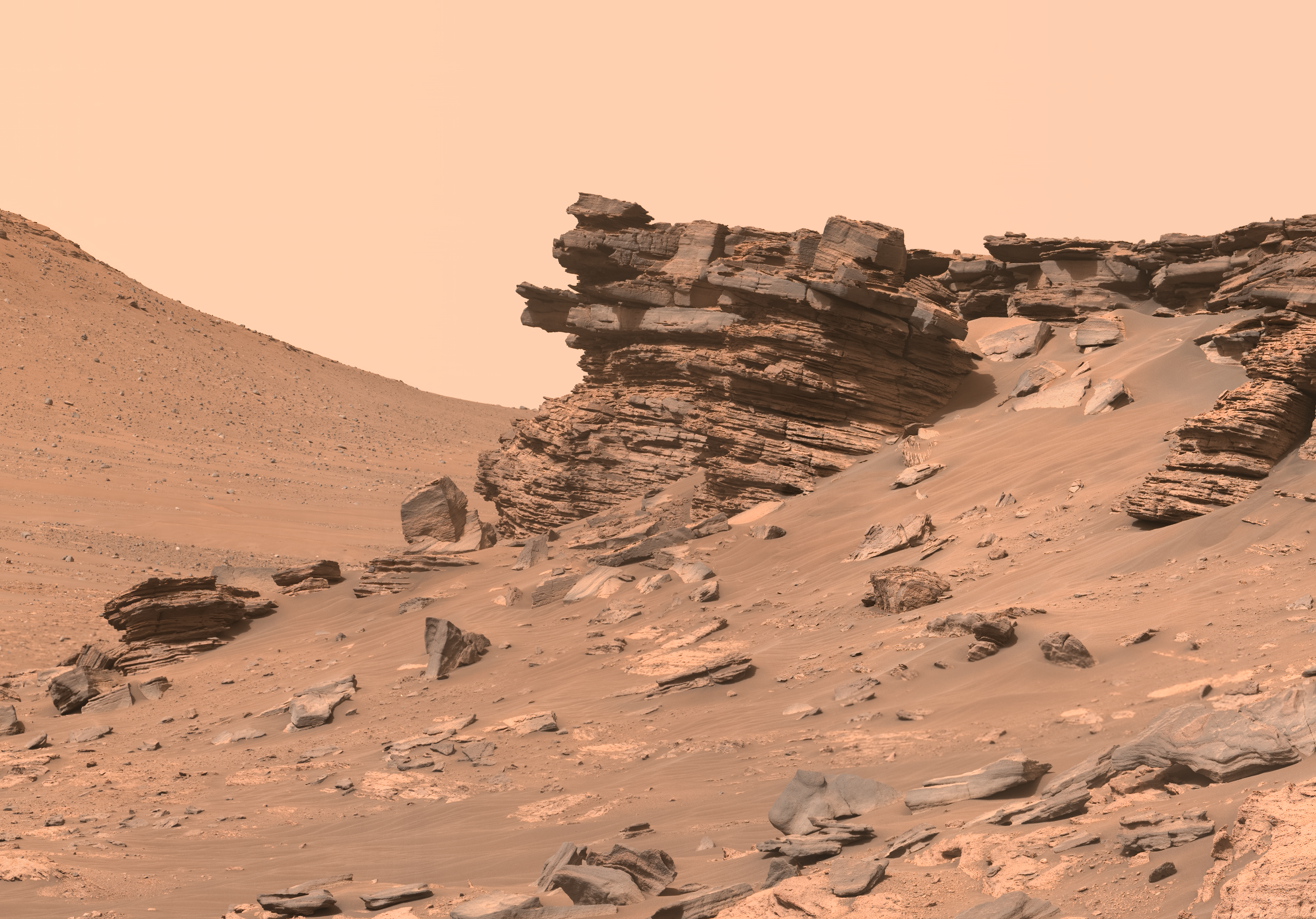
"Everywhere you look in the Navcam mosaic (above) there's something interesting to see!
We're up close to a nifty layered outcrop, which is getting lots of imaging including ChemCam LIBS on targets 'Rukumata' and 'Guarico,' a ChemCam mosaic on 'Kamakusa,' MAHLI dogs-eye imaging of 'Tabaco' and the DRT location 'Issano,' which will also have APXS on it.
Mastcam will also be imaging Issano pre- and post-DRT for comparison, and taking a mosaic of the outcrop as a whole. Off the outcrop, ChemCam is also doing LIBS on 'Sisipelin,' which Mastcam will also image, and ChemCam and Mastcam are both taking mosaics further afield towards the Gediz Vallis Ridge.
I . . . was very excited to see the great view we have of the north crater rim, especially since we've been spending so much time recently in among lots of terrain blocking this view. Imaging the crater rim can help us to characterise the amount of dust in the atmosphere, which is especially important in the dusty season.
Aside from the crater rim observations, we are also trying to catch dust devils with a dust devil survey and movie, keeping an eye on the clouds with a few cloud movies, and taking Mastcam tau observations as an additional way to quantify the amount of dust in the atmosphere.
After this marathon of observations, we'll drive about 30 m further and finish up the weekend with a morning ENV block with our weekly AM cloud and dust observations."
Caption Credit: Alex Innanen/JPL
Release Date: June 7, 2022
Mission Name: Mars Science Laboratory (MSL)
Rover Name: Curiosity
Main Job: To determine if Mars was ever habitable to microbial life.
Launch: November 6, 2011
Landing: August 5, 2012, Gale Crater, Mars
For more information on NASA's Mars missions, visit mars.nasa.gov
Image Credit: NASA/JPL-Caltech/Malin Space Science Systems (MSSS)/Kevin M. Gill
Image Release Date: June 17, 2022
#NASA #Space #Astronomy #Science #Mars #RedPlanet #Planet #Astrobiology #Geology #Crater #GaleCrater #MountSharp #Curiosity #Rovers #Robotics #Technology #Engineering #JPL #Pasadena #California #UnitedStates #JourneyToMars #CitizenScience #STEM #Education
NASA Astronauts on American Tour
V1.jpg)
NASA astronauts Stephanie Wilson, left, Jasmin Moghbeli, and Tom Marshburn, along with Vice President Kamala Harris watch a video screen as NASA astronauts onboard the International Space Station give remarks prior to the screening of the movie Lightyear on the grounds of the Vice President's residence at the Naval Observatory, Friday, June 17, 2022, in Washington.
Photo Credit: NASA/Bill Ingalls
V2.jpg)
NASA astronaut Tom Marshburn gives remarks prior to the screening of the movie Lightyear on the grounds of the Vice President's residence at the Naval Observatory, Friday, June 17, 2022, in Washington.
Photo Credit: NASA/Bill Ingalls
V3.jpg)
NASA astronaut Jasmin Moghbeli works with students during a hands-on STEM activity on the grounds of the Vice President's residence at the Naval Observatory, Friday, June 17, 2022, in Washington.
Photo Credit: NASA/Bill Ingalls
V4.jpg)
NASA’s SpaceX Crew-2 NASA astronaut Megan McArthur speaks to students during a visit to Arlington Science Focus Elementary School, Friday, June 10, 2022, in Arlington, Virginia.
Photo Credit: NASA/Aubrey Gemignani
V5.jpg)
NASA’s SpaceX Crew-2 NASA astronaut Shane Kimbrough speaks to students during a visit to Arlington Science Focus Elementary School, Friday, June 10, 2022, in Arlington, Virginia.
Photo Credit: NASA/Aubrey Gemignani
Astronaut Stephanie Wilson Official NASA Biography
https://www.nasa.gov/astronauts/biographies/stephanie-d-wilson/biography/
Astronaut Jasmin Moghbeli Official NASA Biography
https://www.nasa.gov/astronauts/biographies/jasmin-moghbeli
https://www.nasa.gov/astronauts/biographies/jasmin-moghbeli/biography
Astronaut Thomas Marshburn Official NASA Biography
https://www.nasa.gov/astronauts/biographies/thomas-h-marshburn
https://www.nasa.gov/astronauts/biographies/thomas-h-marshburn/biography
Astronaut Megan McArthur Official NASA Biography
https://www.nasa.gov/astronauts/biographies/k-megan-mcarthur
https://www.nasa.gov/astronauts/biographies/k-megan-mcarthur/biography
Astronaut Shane Kimbrough Official NASA Biography
https://www.nasa.gov/astronauts/biographies/robert-shane-kimbrough
https://www.nasa.gov/astronauts/biographies/robert-shane-kimbrough/biography
#NASA #Space #Earth #ISS #Moon #Artemis #Children #Students #ElementarySchool #Events #Astronauts #Astronaut #StephanieWilson #JasminMoghbeli #ThomasMarshburn #MeganMcArthur #ShaneKimbrough #HumanSpaceflight #Washington #DC #Arlington #Virginia #STEM #Education
Next Prelaunch Rehearsal Before Artemis I Moon Mission | This Week @NASA
The next prelaunch rehearsal before launch of our Artemis I Moon mission, news about some NASA astronomy missions, and a critical milestone for an Earth-observing satellite . . . a few of the stories to tell you about—This Week at NASA!
Credit: National Aeronautics and Space Administration (NASA)
Producer: Andre Valentine
Editor: Lacey Young
Music: Universal Production Music
Duration: 3 minutes, 35 seconds
Release Date: June 17, 2022
#NASA #ESA #Space #Moon #Artemis #ArtemisI #SLS #Rocket #DeepSpace #Orion #Spacecraft #Astronauts #Mars #JourneyToMars #Science #Engineering #Technology #Exploration #SolarSystem #LaunchComplex39B #KSC #Spaceport #Florida #UnitedStates #Europe #STEM #Education #HD #Video
Last Rays of an Orbital Sunset | International Space Station
.jpg)
The last rays of an orbital sunset burst through Earth's horizon as the International Space Station flew 258 miles above Brazil.
Expedition 67 Crew
Commander Oleg Artemyev (Russia)
Roscosmos Flight Engineers: Denis Matveev and Sergey Korsakov (Russia)
NASA Flight Engineers: Kjell Lindgren, Bob Hines, Jessica Watkins (USA)
European Space Agency (ESA) Flight Engineer: Samantha Cristoforetti (Italy)
An international partnership of space agencies provides and operates the elements of the International Space Station (ISS). The principals are the space agencies of the United States, Russia, Europe, Japan, and Canada. The ISS has been the most politically complex space exploration program ever undertaken.
Credit: NASA's Johnson Space Center (JSC)
Image Date: June 10, 2022
#NASA #Space #ISS #Earth #Sun #Orbital #Sunset #Planet #Atmosphere #Astronauts #FlightEngineers #HumanSpaceflight #Art #Science #Photography #Technology #Engineering #UnitedStates #Canada #Europe #Italy #Italia #Japan #日本 #Russia #Россия #International #STEM #Education
NASA's Mars Perseverance & Curiosity Rovers—New June 2022 Images | JPL


Image Credit: NASA/JPL-Caltech/Kevin M. Gill

Mars2020 - MastCam-Z - SOL 467 - PanoramaB
(4 images combined)
Image Credit: NASA/JPL-Caltech/ASU/PipploIMP
 Mars2020 - MastCam-Z - SOL 466 - Panorama B (from 2 images)
Mars2020 - MastCam-Z - SOL 467 - Panorama C (from 6 images)
Image Credit: NASA/JPL-Caltech/ASU/PipploIMP
Perseverance Rover Update:
Perseverance has continued into Hawksbill Gap, making remote sensing observations of small portions of outcropping rock layers in search of a good place to collect a sample. Since Perseverance is in the Shenandoah quadrangle, we are using target names from Shenandoah National Park. Some of the names this past week included “Bald_Face_Mountain,” “Little_Devil_Stairs,” “Sunset_Hill,” “Luck_Hollow,” and “Moody_Creek.” Perseverance logged nearly 400 meters of driving progress for the week of May 15-21, accumulating a total distance since landing of over 11.8 km as of Sol 446.
Caption Credit: Eleni Ravanis, Student Collaborator at University of Hawaiʻi at Mānoa
Release Date: June 2, 2022
Curiosity Rover Update: Sols 3493-3495
"Everywhere you look in the Navcam mosaic (above) there's something interesting to see!
We're up close to a nifty layered outcrop, which is getting lots of imaging including ChemCam LIBS on targets 'Rukumata' and 'Guarico,' a ChemCam mosaic on 'Kamakusa,' MAHLI dogs-eye imaging of 'Tabaco' and the DRT location 'Issano,' which will also have APXS on it.
Mastcam will also be imaging Issano pre- and post-DRT for comparison, and taking a mosaic of the outcrop as a whole. Off the outcrop, ChemCam is also doing LIBS on 'Sisipelin,' which Mastcam will also image, and ChemCam and Mastcam are both taking mosaics further afield towards the Gediz Vallis Ridge.
I . . . was very excited to see the great view we have of the north crater rim, especially since we've been spending so much time recently in among lots of terrain blocking this view. Imaging the crater rim can help us to characterise the amount of dust in the atmosphere, which is especially important in the dusty season.
Aside from the crater rim observations, we are also trying to catch dust devils with a dust devil survey and movie, keeping an eye on the clouds with a few cloud movies, and taking Mastcam tau observations as an additional way to quantify the amount of dust in the atmosphere.
After this marathon of observations, we'll drive about 30 m further and finish up the weekend with a morning ENV block with our weekly AM cloud and dust observations."
Caption Credit: Alex Innanen/JPL
Release Date: June 7, 2022
Mission Name: Mars 2020
Rover Name: Perseverance
Main Job: Seek signs of ancient life and collect samples of rock and regolith (broken rock and soil) for possible return to Earth.
Launch: July 30, 2020
Landing: Feb. 18, 2021, Jezero Crater, Mars
Mission Name: Mars Science Laboratory (MSL)
Rover Name: Curiosity
Main Job: To determine if Mars was ever habitable to microbial life.
Launch: November 6, 2011
Landing: August 5, 2012, Gale Crater, Mars
For more information on NASA's Mars missions, visit mars.nasa.gov
Image Credit: NASA/JPL-Caltech/Arizona State University/Kevin M. Gill
Image Release Dates: June 13-16, 2022
#NASA #Space #Astronomy #Science #Mars #RedPlanet #Planet #Astrobiology #Geology #Jezero #Crater #MountSharp #GaleCrater #Perseverance #Curiosity #Rovers #Robotics #Technology #Engineering #JPL #Pasadena #California #UnitedStates #JourneyToMars #CitizenScience #STEM #Education
China’s Chang’e 5 Lunar Lander Finds Water on Moon | South China Morning Post
Soil samples collected by China’s Chang’e 5 lunar lander have determined that much of the water on the lunar surface likely comes from within the Moon itself, not solar winds as previously hypothesized. The discovery comes from the first-ever water survey conducted on the surface of the Moon and is an important step in China’s ambitions to build a Moonbase by 2027. However, while Chinese scientists discovered water, they found far less of it than initially predicted—a minuscule 30 grams per ton of soil so far.
Chang'e 5 is the fifth lunar exploration mission of the Chinese Lunar Exploration Program, and China's first lunar sample-return mission. Like its predecessors, the spacecraft is named after the Chinese moon goddess Chang'e. It launched in November 23, 2020 from Wenchang Spacecraft Launch Site on Hainan Island, landed on the Moon December 1, 2020, collected ~1,731 g (61.1 oz) of lunar samples (including from a core ~1 m deep), and returned samples to the Earth on December 16, 2020. The Chang'e 5 landing site is at 43.1°N (in latitude), 51.8°W (in longitude) in the Northern Oceanus Procellarum near a huge volcanic complex, Mons Rümker, located in the northwest lunar near side.
Related story:
Chinese scientists find clues to the origins of water on the moon https://sc.mp/z6lw
Chang'e-5 was the first lunar sample-return mission since the Soviet Union's Luna 24 in 1976. The mission made China the third country to return samples from the Moon after the United States and the Soviet Union.
Support the South China Morning Post (SCMP):
Video Credit: South China Morning Post (SCMP)
Duration: 1 minute, 41 seconds
Release Date: June 17, 2022
#China #Space #Moon #SampleReturn #Spacecraft #Lander #Robotics #Change5 #嫦娥五号 #Science #Technology #Engineering #Water #SolarSystem #Exploration #中国 #STEM #Education #HD #Video
European Space Agency Astronaut Samantha Cristoforetti Works on U.S. Spacesuits
.jpg)
Samantha Cristoforetti's Biography (ESA)
Expedition 67 Crew
Commander Oleg Artemyev (Russia)
Roscosmos Flight Engineers: Denis Matveev and Sergey Korsakov (Russia)
NASA Flight Engineers: Kjell Lindgren, Bob Hines, Jessica Watkins (USA)
European Space Agency (ESA) Flight Engineer: Samantha Cristoforetti (Italy)
An international partnership of space agencies provides and operates the elements of the International Space Station (ISS). The principals are the space agencies of the United States, Russia, Europe, Japan, and Canada. The ISS has been the most politically complex space exploration program ever undertaken.
Image Credit: NASA's Johnson Space Center (JSC)
Image Date: May 11, 2022
#NASA #Space #ISS #Earth #Planet #Spacesuits #EVA #Spacewalk #Science #Technology #Engineering #ESA #Astronaut #SamanthaCristoforetti #Pilot #FlightEngineer #MechanicalEngineer #Minerva #Italy #Italia #ASI #HumanSpaceflight #Expedition67 #Europe #UnitedStates #International #STEM #Education
NASA's Space to Ground: One Million Hours | Week of June 17, 2022
NASA's Space to Ground is your weekly update on what's happening aboard the International Space Station.
On Thursday, June 16, 2022, the International Space Station’s Progress 81 thrusters fired for 4 minutes, 34 seconds in a Pre-Determined Debris Avoidance Maneuver (PDAM) to provide the complex and extra measure of distance away from the predicted track of a fragment of Russian Cosmos 1408 debris. The thruster firing occurred at 2:03 p.m. Central time. The crew was never in any danger and the maneuver had no impact on station operations. Without the maneuver, it was predicted that the fragment could have passed within around a half mile from the station.
The PDAM increased the station’s altitude by 3/10 of a mile at apogee and 7/10 of a mile at perigee and left the station in an orbit of 261.2 x 257.3 statute miles.
Commander Oleg Artemyev (Russia)
Roscosmos Flight Engineers: Denis Matveev and Sergey Korsakov (Russia)
NASA Flight Engineers: Kjell Lindgren, Bob Hines, Jessica Watkins (USA)
European Space Agency (ESA) Flight Engineer: Samantha Cristoforetti (Italy)
Credit: NASA's Johnson Space Center (JSC)
Duration: 2 minutes, 59 seconds
Release Date: June 17, 2022
#NASA #Space #ISS #Astronauts #FlightEngineers #HumanSpaceflight #Science #Technology #Engineering #Research #UnitedStates #Canada #Europe #Italy #Italia #Japan #日本 #Russia #Россия #International #STEM #Education #HD #Video
NASA Espacio a Tierra | La lista de pendientes: 10 de junio 2022
Espacio a Tierra, la versión en español de las cápsulas Space to Ground de la NASA, te informa semanalmente de lo que está sucediendo en la Estación Espacial Internacional.
Duration: 3 minutes, 26 seconds
Release Date: June 15, 2022
Credit: NASA's Johnson Space Center (JSC)
#NASA #Space #ISS #Astronauts #FlightEngineers #HumanSpaceflight #Science #Technology #Engineering #Research #UnitedStates #Canada #Europe #Italy #Italia #Japan #日本 #Russia #Россия #International #STEM #Education #Español #HD #Video
NASA Astronaut Chris Cassidy: Adapting to the International Space Station
In this episode of Down to Earth: Conversations, former NASA astronaut Chris Cassidy and astronaut Warren "Woody" Hoburg explore what it's like to adapt to life on the International Space Station. Season 2, Episode 4.
Chris Cassidy's Spaceflight Experience:
STS‐127 (July 15 through July 31, 2009)
ISS Expedition 35 (March 28 through September 10, 2013)
Expedition 63 (April 9 through October 21, 2020)
Astronaut Chris Cassidy Official NASA Biography:
https://www.nasa.gov/astronauts/biographies/christopher-j-cassidy/biography
https://www.nasa.gov/sites/default/files/atoms/files/cassidy-cj.pdf
Astronaut Warren "Woody" Hoburg Official NASA Biography:
https://www.nasa.gov/astronauts/biographies/warren-hoburg/biography
https://www.nasa.gov/sites/default/files/atoms/files/hoburg-w.pdf
An international partnership of space agencies provides and operates the elements of the International Space Station (ISS). The principals are the space agencies of the United States, Russia, Europe, Japan, and Canada. The ISS has been the most politically complex space exploration program ever undertaken.
Credit: NASA's Johnson Space Center (JSC)
Duration: 4 minutes
Record Date: October 27, 2020
Release Date: June 10, 2022
#NASA #Space #ISS #Earth #Astronaut #ChrisCassidy #Astronauts #FlightEngineers #USNavy #SEAL #SpaceShuttle #WarrenHoburg #Engineer #Microgravity #Adaptation #HumanSpaceflight #Expedition63 #JSC #Houston #Texas #UnitedStates #International #STEM #Education #HD #Video
NASA's Mars Perseverance & Curiosity Rovers—New June 2022 Images | JPL
Mars2020 - Sol 467 - Mastcam-Z
Image Credit: NASA/JPL-Caltech/ASU/Kevin M. Gill
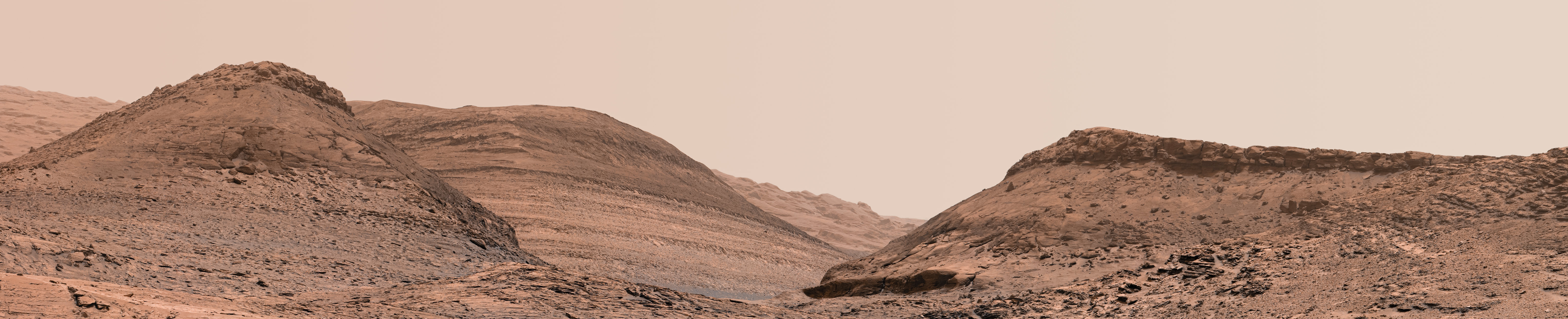
Image Credit: NASA/JPL-Caltech/MSSS/Kevin M. Gill


Mars2020 - Sol 467 - Mastcam-Z (another view of landing debris)
NASA/JPL-Caltech/ASU/Kevin M. Gill
Perseverance Rover Update:
Perseverance has continued into Hawksbill Gap, making remote sensing observations of small portions of outcropping rock layers in search of a good place to collect a sample. Since Perseverance is in the Shenandoah quadrangle, we are using target names from Shenandoah National Park. Some of the names this past week included “Bald_Face_Mountain,” “Little_Devil_Stairs,” “Sunset_Hill,” “Luck_Hollow,” and “Moody_Creek.” Perseverance logged nearly 400 meters of driving progress for the week of May 15-21, accumulating a total distance since landing of over 11.8 km as of Sol 446.
Caption Credit: Eleni Ravanis, Student Collaborator at University of Hawaiʻi at Mānoa
Release Date: June 2, 2022
Curiosity Rover Update: Sols 3493-3495
"Everywhere you look in the Navcam mosaic (above) there's something interesting to see!
We're up close to a nifty layered outcrop, which is getting lots of imaging including ChemCam LIBS on targets 'Rukumata' and 'Guarico,' a ChemCam mosaic on 'Kamakusa,' MAHLI dogs-eye imaging of 'Tabaco' and the DRT location 'Issano,' which will also have APXS on it.
Mastcam will also be imaging Issano pre- and post-DRT for comparison, and taking a mosaic of the outcrop as a whole. Off the outcrop, ChemCam is also doing LIBS on 'Sisipelin,' which Mastcam will also image, and ChemCam and Mastcam are both taking mosaics further afield towards the Gediz Vallis Ridge.
I . . . was very excited to see the great view we have of the north crater rim, especially since we've been spending so much time recently in among lots of terrain blocking this view. Imaging the crater rim can help us to characterise the amount of dust in the atmosphere, which is especially important in the dusty season.
Aside from the crater rim observations, we are also trying to catch dust devils with a dust devil survey and movie, keeping an eye on the clouds with a few cloud movies, and taking Mastcam tau observations as an additional way to quantify the amount of dust in the atmosphere.
After this marathon of observations, we'll drive about 30 m further and finish up the weekend with a morning ENV block with our weekly AM cloud and dust observations."
Caption Credit: Alex Innanen/JPL
Release Date: June 7, 2022
Mission Name: Mars 2020
Rover Name: Perseverance
Main Job: Seek signs of ancient life and collect samples of rock and regolith (broken rock and soil) for possible return to Earth.
Launch: July 30, 2020
Landing: Feb. 18, 2021, Jezero Crater, Mars
Mission Name: Mars Science Laboratory (MSL)
Rover Name: Curiosity
Main Job: To determine if Mars was ever habitable to microbial life.
Launch: November 6, 2011
Landing: August 5, 2012, Gale Crater, Mars
For more information on NASA's Mars missions, visit mars.nasa.gov
Image Credit: NASA/JPL-Caltech/Arizona State University/Kevin M. Gill
Image Release Dates: June 14-15, 2022
#NASA #Space #Astronomy #Science #Mars #RedPlanet #Planet #Astrobiology #Geology #Jezero #Crater #MountSharp #GaleCrater #Perseverance #Curiosity #Rovers #Robotics #Technology #Engineering #JPL #Pasadena #California #UnitedStates #JourneyToMars #CitizenScience #STEM #Education
Autumn Milky Way at Wellington Dam, Western Australia
.jpg)
Nikon d810a, 50mm, ISO 6400, f/2.8
Foreground: 5 x 30 seconds
Sky: 6 x 30 seconds
iOptron SkyTracker
Hoya Red Intensifier filter
The Fading Milky Way
Light pollution is a growing environmental problem that threatens to erase the night sky before its time. A recent study revealed that perhaps two-thirds of the world's population can no longer look upwards at night and see the Milky Way—a hazy swath of stars that on warm summer nights spans the sky from horizon to horizon.
The Milky Way is dimming, not because the end of the Universe is near, but rather as a result of light pollution: the inadvertent illumination of the atmosphere from street lights, outdoor advertising, homes, schools, airports and other sources. Every night billions of bulbs send their energy skyward where microscopic bits of matter—air molecules, airborne dust, and water vapor droplets—reflect much of the wasted light back to Earth.
(Source: NASA)
Learn more:
International Dark-Sky Association
https://www.darksky.org/light-pollution
Globe at Night
Night Sky Network (NASA JPL)
https://nightsky.jpl.nasa.gov/index.cfm
Tourism Australia: https://www.australia.com
Image Credit: Trevor Dobson
Image Date: May 6, 2022
#NASA #Space #Astronomy #Science #MilkyWay #Stars #LightPollution #CitizenScience #Astrophotographer #TrevorDobson #Astrophotography #Skywatching #Cosmos #Universe #SolarSystem #Earth #WellingtonDam #Perth #Australia #STEM #Education
