Sunday, August 28, 2022

Pan over Starburst Galaxy NGC 1569 | Hubble

Pan over Starburst Galaxy NGC 1569 | Hubble

The nearby dwarf galaxy NGC 1569 is a hotbed of vigorous star birth activity which blows huge bubbles and super-bubbles that riddle the main body of the galaxy. The galaxy's vigorous star factories are also manufacturing brilliant blue star clusters. This galaxy had a sudden and relatively recent onset of star birth 25 million years ago, which subsided about the time the very earliest human ancestors appeared on Earth.

In this image, taken with the NASA/European Space Agency Hubble Space Telescope, the bubble structure is sculpted by the galactic super-winds and outflows caused by a colossal input of energy from collective supernova explosions that are linked with a massive episode of star birth.The bubble-like structures seen in this image are made of hydrogen gas that glows when hit by the fierce winds and radiation from hot young stars and is racked by supernovae shocks. The first supernovae blew up when the most massive stars reached the end of their lifetimes roughly 20-25 million years ago. The environment in NGC 1569 is still turbulent and the supernovae may not only deliver the gaseous raw material needed for the formation of further stars and star clusters, but also actually trigger their birth in the tortured swirls of gas.


Credit: European Space Agency (ESA)/Hubble (M. Kornmesser & L. L. Christensen)

Duration: 24 seconds

Release Date: Oct 24, 2017


#NASA #ESA #Astronomy #Space #Science #Galaxy #DwarfGalaxy #NGC1569 #Stars #StarClusters #Supernovae #Camelopardalis #Constellation #Cosmos #Universe #SpaceTelescope #GSFC #STScI #UnitedStates #Europe #STEM #Education #HD #Video

Zoom on Starburst Galaxy NGC 1569 | Hubble

Zoom on Starburst Galaxy NGC 1569 | Hubble

The nearby dwarf galaxy NGC 1569 is a hotbed of vigorous star birth activity which blows huge bubbles and super-bubbles that riddle the main body of the galaxy. The galaxy's vigorous star factories are also manufacturing brilliant blue star clusters. This galaxy had a sudden and relatively recent onset of star birth 25 million years ago, which subsided about the time the very earliest human ancestors appeared on Earth.


Credit: European Space Agency (ESA), NASA & Peter Anders (Gottingen University Galaxy Evolution Group, Germany)

Duration: 21 seconds

Release Date: October 24, 2017


#NASA #ESA #Astronomy #Space #Science #Galaxy #DwarfGalaxy #NGC1569 #Stars #StarClusters #Supernovae #Camelopardalis #Constellation #Cosmos #Universe #SpaceTelescope #GSFC #STScI #UnitedStates #Europe #STEM #Education #HD #Video

Supernova Blast Bonanza in Nearby Galaxy NGC 1569 | Hubble

Supernova Blast Bonanza in Nearby Galaxy NGC 1569 | Hubble


The nearby dwarf galaxy NGC 1569 is a hotbed of vigorous star birth activity which blows huge bubbles and super-bubbles that riddle the main body of the galaxy. The galaxy's vigorous "star factories" are also manufacturing brilliant blue star clusters. This galaxy had a sudden and relatively recent onset of star birth 25 million years ago, which subsided about the time the very earliest human ancestors appeared on Earth.

Distance: 11 million light years

In this image, taken with the NASA/European Space Agency Hubble Space Telescope, the bubble structure is sculpted by the galactic super-winds and outflows caused by a colossal input of energy from collective supernova explosions that are linked with a massive episode of star birth.

The bubble-like structures seen in this image are made of hydrogen gas that glows when hit by the fierce winds and radiation from hot young stars and is racked by supernovae shocks. The first supernovae blew up when the most massive stars reached the end of their lifetimes roughly 20-25 million years ago. The environment in NGC 1569 is still turbulent and the supernovae may not only deliver the gaseous raw material needed for the formation of further stars and star clusters, but also actually trigger their birth in the tortured swirls of gas.


Credit: European Space Agency (ESA), NASA & Peter Anders (Göttingen University Galaxy Evolution Group, Germany)

Release Date: February 3, 2004


#NASA #ESA #Astronomy #Space #Science #Galaxy #DwarfGalaxy #NGC1569 #Stars #StarClusters #Supernovae #Camelopardalis #Constellation #Cosmos #Universe #SpaceTelescope #GSFC #STScI #UnitedStates #Europe #STEM #Education

Zooming in on Binary Star AR Scorpii

Zooming in on Binary Star AR Scorpii

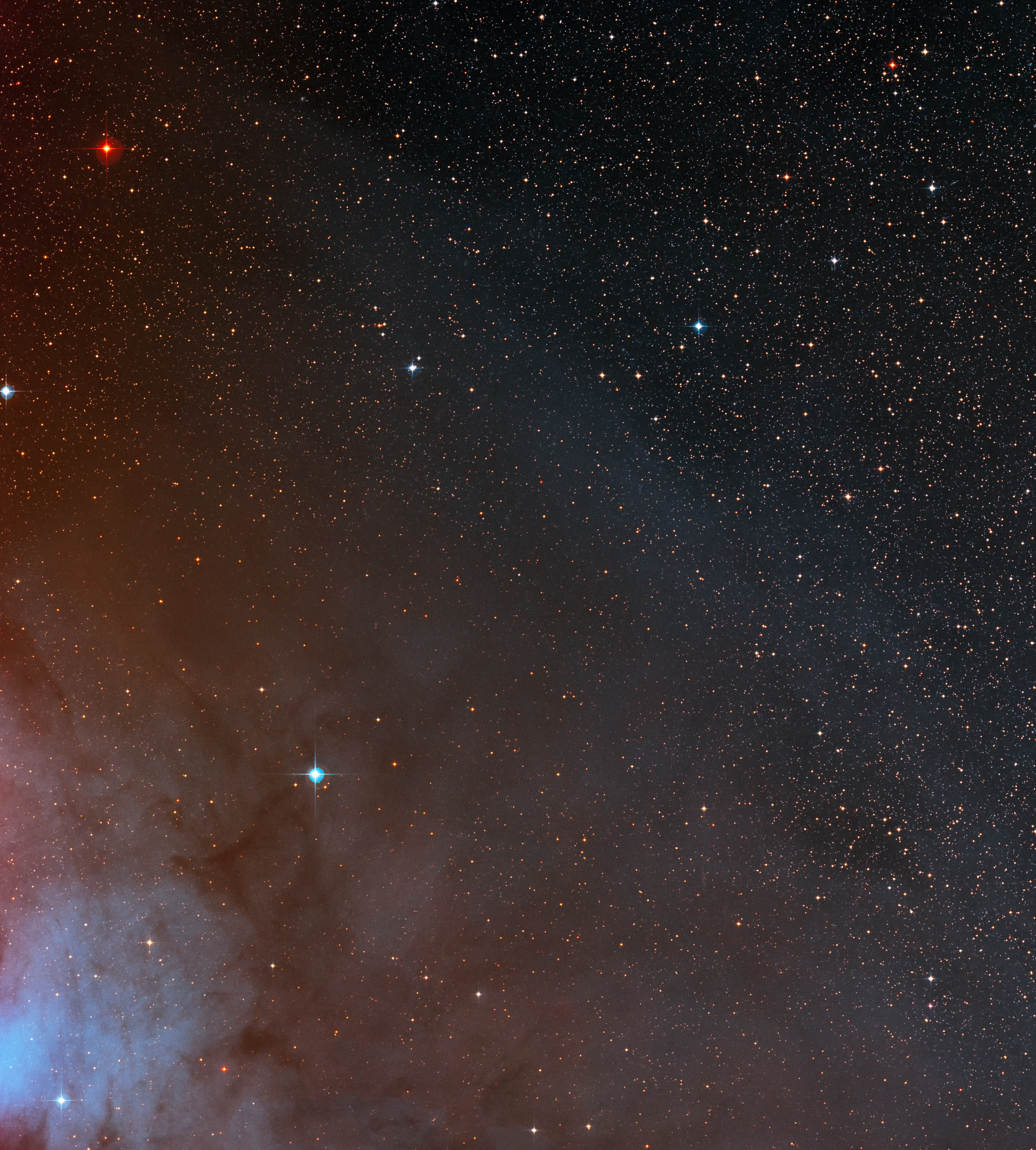
This zoom sequence takes the viewer from a wide-field view of the spectacular central parts of the Milky Way into the bright constellation of Scorpius (The Scorpion). The final view is centered on the exotic binary star AR Scorpii.

Distance: 400 light years


Credit: European Space Agency (ESA)/Hubble, Digitized Sky Survey 2, N, Risinger

Duration: 50 seconds

Release Date: July 27, 2016


#NASA #ESA #Astronomy #Space #Science #Star #BinaryStarSystem #ARScorpii #Scorpius #Constellation #MilkyWay #Galaxy #Cosmos #Universe #SpaceTelescope #GSFC #STScI #UnitedStates #Europe #STEM #Education #HD #Video
Saturday, August 27, 2022

Binary Star System AR Scorpii: Artist’s Impression Video | ESA

Binary Star System AR Scorpii: Artist’s Impression Video | ESA

This artist’s impression video shows the strange object AR Scorpii. In this unique double star a rapidly spinning white dwarf star powers electrons up to almost the speed of light. These high energy particles release blasts of radiation that lash the companion red dwarf star and cause the entire system to pulse dramatically every 1.97 minutes with radiation ranging from the ultraviolet to radio.


Credit: European Space Agency (ESA)/Hubble, L. Calçada, University of Warwick

Duration: 30 seconds

Release Date: July 27, 2016


#NASA #ESA #Astronomy #Space #Science #Star #BinaryStarSystem #ARScorpii #Scorpius #Constellation #MilkyWay #Galaxy #Cosmos #Universe #SpaceTelescope #GSFC #STScI #UnitedStates #Europe #Art #ArtistImpression #STEM #Education #HD #Video

Binary Star System AR Scorpii: Artist’s Impression | ESA

Binary Star System AR Scorpii: Artist’s Impression | ESA


This artist’s impression shows the strange object AR Scorpii. In this unique double star a rapidly spinning white dwarf star (right) powers electrons up to almost the speed of light. These high energy particles release blasts of radiation that lash the companion red dwarf star (left) and cause the entire system to pulse dramatically every 1.97 minutes with radiation ranging from the ultraviolet to radio.

Distance: 400 light years


Credit: M. Garlick/University of Warwick, European Space Agency (ESA)/Hubble

Release Date: July 27, 2016


#NASA #ESA #Astronomy #Space #Science #Star #BinaryStarSystem #ARScorpii #Scorpius #Constellation #MilkyWay #Galaxy #Cosmos #Universe #SpaceTelescope #GSFC #STScI #UnitedStates #Europe #Art #ArtistImpression #STEM #Education

Binary Star System AR Scorpii: Wide-field View | Hubble

Binary Star System AR Scorpii: Wide-field View | Hubble


This wide-field image from the Digitized Sky Survey 2 shows the rich starfields surrounding the exotic binary star system AR Scorpii.

Distance: 400 light years


Credit: Digitized Sky Survey 2

Acknowledgement: Davide De Martin

Release Date: July 27, 2016


#NASA #ESA #Astronomy #Space #Science #Star #BinaryStarSystem #ARScorpii #Scorpius #Constellation #MilkyWay #Galaxy #Cosmos #Universe #SpaceTelescope #GSFC #STScI #UnitedStates #Europe #STEM #Education

Pan across The Serpens Nebula | Hubble

Pan across The Serpens Nebula | Hubble

This video pans over NASA/European Space Agency Hubble Space Telescope observations of the Serpens Nebula, about 1,300 light-years from Earth. It is a reflection nebula that owes most of its sheen to the light emitted by stars in its surroundings or embedded within it.

It is also home to two cosmic shadows, created by stars which are orbited by protoplanetary discs.


Credit: European Space Agency (ESA)/Hubble, NASA

Duration: 25 seconds

Release Date: December 19, 2018


#NASA #ESA #Astronomy #Space #Science #Star #HBC672 #SerpensNebula #ReflectionNebula #SerpensCauda #Constellation #MilkyWay #Galaxy #Cosmos #Universe #SpaceTelescope #GSFC #STScI #UnitedStates #Europe #STEM #Education #HD #Video

Serpens Nebula: Hubble Optical & VLT Infrared Views

Serpens Nebula: Hubble Optical & VLT Infrared Views


This animation compares the appearance of the Serpens Nebula as seen from the ground—with the Very Large Telescope (VLT) of the European Southern Observatory, and from space—with the NASA/European Space Agency Hubble Space Telescope. Both observatories used detectors and filters observing in the near-infrared to gather their data.
Distance: 1,300 light years

Credit: NASA, European Space Agency (ESA)/Hubble, European Southern Observatory (ESO)

Duration: 26 seconds

Release Date: October 31, 2018


#NASA #ESA #ESO #Astronomy #Space #Science #Star #HBC672 #ProtoplanetaryDisc #SerpensNebula #BatShadow #SerpensCauda #Constellation #MilkyWay #Galaxy #Cosmos #Universe #SpaceTelescope #VLT #HAWKI #Infrared #Chile #UnitedStates #Europe #Animation #STEM #Education #HD #Video

Serpens Nebula: Infrared View | ESO's VLT HAWK-I

Serpens Nebula: Infrared View | ESO's VLT HAWK-I

This image shows the Serpens Nebula as seen by the HAWK-I instrument installed on the Very Large Telescope (VLT) of the European Southern Observatory. The filters used by HAWK-I to create this image cover wavelengths similar to the filters used by Hubble.

Distance: 1,300 light years


Credit: European Southern Observatory (ESO)

Release Date: October 31, 2018


#NASA #ESO #Astronomy #Space #Science #Star #HBC672 #ProtoplanetaryDisc #SerpensNebula #BatShadow #SerpensCauda #Constellation #MilkyWay #Galaxy #Cosmos #Universe #Telescope #VLT #HAWKI #Infrared #UnitedStates #Chile #Europe #STEM #Education

Elliptical Galaxy NGC 5018: Wide-field View | ESO

Elliptical Galaxy NGC 5018: Wide-field View | ESO


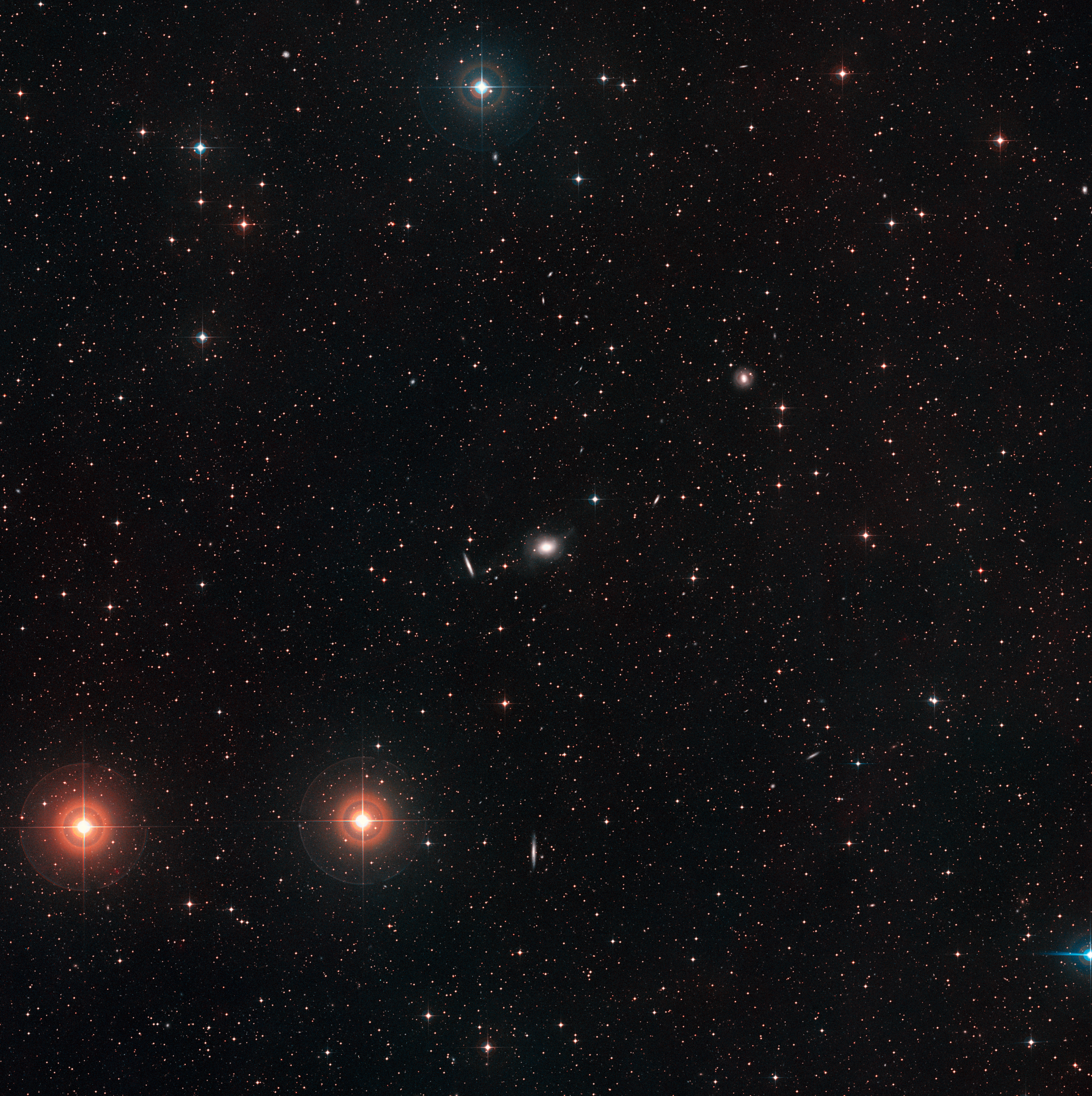
This image is a color composite made from exposures from the Digitized Sky Survey 2 (DSS2).


Credit: ESO/Digitized Sky Survey 2

Acknowledgment: Davide De Martin

Release Date: August 8, 2018


#NASA #ESO #Astronomy #Space #Science #Galaxies #Elliptical #Galaxy #NGC5018 #Virgo #Constellation  #Cosmos #Universe #Telescope #Chile #Europe #STEM #Education

Students Enjoy Visiting NASA's Artemis I Moon Rocket & Orion Spacecraft

Students Enjoy Visiting NASA's Artemis I Moon Rocket & Orion Spacecraft

"Best day of my whole life. Ever." Watch the reactions of a group of students, joined by NASA Administrator Bill Nelson and NASA Associate Administrator Bob Cabana, who hopped on a tour bus at Kennedy Space Center for an opportunity of a lifetime to view the Artemis I Space Launch System rocket and Orion spacecraft in the Vehicle Assembly Building's High Bay 3.

Artemis I is scheduled to launch no earlier than Aug. 29, 2022, at 8:33 a.m. EDT from the center’s Launch Complex 39B on a flight test around the Moon and back to Earth.

All about Artemis I: https://www.nasa.gov/specials/artemis-i/


Credit: National Aeronautics and Space Administration (NASA)

Editor: Christopher Chamberland

Producers: Sami Aziz and John Sackman

Duration: 2 minutes

Release Date: August 27, 2022


#NASA #ESA #Space #Moon #Artemis #ArtemisI #Orion #Spacecraft #SLS #NASASLS #SpaceLaunchSystem #Rocket #DeepSpace #Astronauts #MoonToMars #Science #Engineering #Technology #Exploration #SolarSystem #KennedySpaceCenter #Florida #UnitedStates #Europe #ArtemisGeneration #STEM #Education #HD #Video

A Tour of the Sky surrounding Elliptical Galaxy NGC 5018 | ESO

A Tour of the Sky surrounding Elliptical Galaxy NGC 5018 | ESO

This annotated view of the surroundings of the elliptical galaxy NGC 5018 shows many of its neighbors. It also reveals a few asteroids that were captured by chance during the deep exposures needed to reveal the delicate streams of stars between the galaxies.


Credit: European Southern Observatory (ESO)/Spavone et al.

Release Date: August 8, 2018


#NASA #ESO #Astronomy #Space #Science #Stars #Asteroids #Galaxies #Elliptical #Galaxy #NGC5018 #Virgo #Constellation #Cosmos #Universe #Telescope #Chile #Europe #Annotated #Infographic #STEM #Education

Panning across Elliptical Galaxy NGC 5018 and its surroundings | ESO

Panning across Elliptical Galaxy NGC 5018 and its surroundings | ESO

This pan video takes a closer look of the elliptical galaxy NGC 5018 and the tender streams of stars and gas left over from dramatic galactic collisions in the past. The extremely sensitive detectors of the VLT Survey Telescope (VST) have captured a myriad of stars, galaxies, and even a few errant asteroids crossing this area of the sky during the long exposures need to obtain the image.


Credit: European Southern Observatory (ESO), Spavone et al.

Duration: 25 seconds

Release Date: August 8, 2018


#NASA #ESO #Astronomy #Space #Science #Stars #Asteroids #Galaxies #Elliptical #Galaxy #NGC5018 #Virgo #Constellation #Cosmos #Universe #Telescope #Chile #Europe #STEM #Education #HD #Video
Zooming into Elliptical Galaxy NGC 5018 | ESO

Zooming into Elliptical Galaxy NGC 5018 | ESO

This zoom video starts with a wide view of the Milky Way and ends with a close-up look at the elliptical galaxy NGC 5018 and its surroundings in the constellation of Virgo.


Credit: European Southern Observatory (ESO)/Spavone et al., DSS, N. Risinger

Duration: 50 seconds

Release Date: August 8, 2018


#NASA #ESO #Astronomy #Space #Science #Galaxies #Elliptical #Galaxy #NGC5018 #Virgo #Constellation #Cosmos #Universe #Telescope #Chile #Europe #STEM #Education #HD #Video

Elliptical Galaxy NGC 5018 | ESO

Elliptical Galaxy NGC 5018 | ESO

This deep image of the area of sky around the elliptical galaxy NGC 5018 (left of image center) offers a spectacular view of its tenuous streams of stars and gas. These delicate features are hallmarks of galactic interactions, and provide vital clues to the structure and dynamics of early-type galaxies.

Distance: 110 million light years


Credit: European Southern Observatory  (ESO)/Spavone et al.

Release Date: August 8, 2018


#NASA #ESO #Astronomy #Space #Science #Galaxies #Elliptical #Galaxy #NGC5018 #Virgo #Constellation  #Cosmos #Universe #Telescope #Chile #Europe #STEM #Education