Orion's Lunar Close Flyby Images | NASA's Artemis I Moon Mission
Friends of NASA (FoN) is an independent non-governmental organization (NGO) dedicated to building international support for peaceful space exploration, commerce, scientific discovery, and STEM education.
Thursday, December 08, 2022
Orion's Lunar Close Flyby Images | NASA's Artemis I Moon Mission
Are Wildfires Getting Worse? – We Asked a NASA Scientist
Are wildfires getting worse? Unfortunately, yes.
Changes in our climate, along with other factors, have led to wildfires increasing in intensity, severity, size and duration. NASA climate and wildfire expert Liz Hoy explains how and why NASA studies these events from the ground, air, and space to better understand the impacts they have on both a local and global scale.
Learn more: https://www.nasa.gov/fires
Credit: National Aeronautics and Space Administration (NASA)
Producers: Jessica Wilde, Scott Bednar
Editor: Daniel Salazar
Duration: 1 minute, 42 seconds
Release Date: Dec. 7, 2022
#NASA #NOAA #Space #Satellites #Science #Earth #Planet #Atmosphere #EarthObservation #RemoteSensing #Environment #ClimateChange #GlobalWarming #GlobalHeating #GHG #Climate #Weather #Wildfires #GSFC #UnitedStates #Technology #STEM #Education #HD #Video
Explore NASA's Orion Crew Capsule with Astronaut Randy Bresnik
The focus of the flight of Artemis I is to test Orion’s systems ahead of crewed missions. Starting with Artemis II, human crew members will be on board. You may be thinking, “what is it like inside?” I’m glad you asked . . . follow along as NASA astronaut Randy Bresnik guides us through the interior of the Orion spacecraft and a close up look at elements that will support a crew on humankind’s next trip to the Moon.
Though Artemis I is an uncrewed mission, what we've learned from our flight test of Orion and NASA's Space Launch System will help us get ready for future Artemis missions, which will build a long-term human presence on the Moon—and prepare us to land the first NASA Astronauts on Mars.
With Artemis missions, NASA will land the first woman and first person of color on the Moon, using innovative technologies to explore more of the lunar surface than ever before.
More on Artemis I: https://www.nasa.gov/specials/artemis-i
Credit: NASA's Johnson Space Center (JSC)
Duration: 2 minutes
Release Date: Dec. 7, 2022
#NASA #ESA #Space #Earth #Moon #Artemis #ArtemisI #ArtemisII #ArtemisIII #Orion #Spacecraft #Astronauts #RandyBresnik #DeepSpace #MoonToMars #Science #Engineering #Technology #Exploration #HumanSpaceflight #SolarSystem #UnitedStates #Europe #STEM #Education #HD #Video
Reflections on NASA's Artemis I Mission: Henry Louis Gates Jr.
Henry Louis Gates Jr. reflects on the Artemis I mission around the Moon:
"These images reveal with stunning, humbling sublimity, the triumph of the human spirit in breaking beyond the confines of the Earth. Let us hope that this milestone will inspire us to transcend 'all possible manner of differences,' as the great Du Bois once put it, and keep foremost in mind all that we have in common as human beings; as sisters and brothers here on Earth."
Though Artemis I is an uncrewed mission, what we've learned from our flight test of Orion and NASA's Space Launch System will help us get ready for future Artemis missions, which will build a long-term human presence on the Moon—and prepare us to land the first NASA Astronauts on Mars.
With Artemis missions, NASA will land the first woman and first person of color on the Moon, using innovative technologies to explore more of the lunar surface than ever before.
Credit: NASA/Henry Louis Gates Jr.
Duration: 1 minute
Release Date: Dec. 8, 2022
#NASA #ESA #Space #Earth #Moon #Artemis #ArtemisI #Orion #Spacecraft #DeepSpace #MoonToMars #Science #Engineering #Technology #Exploration #HumanSpaceflight #SolarSystem #UnitedStates #Europe #International #Humanity #Future #STEM #Education #HD #Video
Kilonova Discovery Challenges our Understanding of Gamma-Ray Bursts | NOIRLab
Episode#58 While studying the aftermath of a long gamma-ray burst (GRB), two independent teams of astronomers using a host of telescopes in space and on Earth, including the Gemini North telescope on Hawai‘i and the Gemini South telescope in Chile, have uncovered the unexpected hallmarks of a kilonova, the colossal explosion triggered by colliding neutron stars. This discovery challenges the prevailing theory that long GRBs exclusively come from supernovae, the end-of-life explosions of massive stars.
Gamma-ray bursts (GRBs)—the most energetic explosions in the Universe—come in two varieties, long and short. Long GRBs, which last a couple of seconds to one minute, form when a star at least 10 times the mass of our Sun explodes as a supernova. Short GRBs, which last less than two seconds, occur when two compact objects, like two neutron stars or a neutron star and a black hole, collide to form a kilonova.
Credit: NOIRLab
Images and Videos:
International Gemini Observatory/NOIRLab/NSF/AURA, Fermilab, M. Zamani, NASA/ESA, J. da Silva/Spaceengine, CI Lab, N. Bartmann
Duration: 1 minute, 22 seconds
Release Date: Dec. 5, 2022
#NASA #Astronomy #Space #Science #Stars #NeutronStars #Kilonova #GRB #GammaRayBursts #Astrophysics #Cosmos #Universe #NOIRLab #AURA #NSF #GeminiSouthTelescope #Chile #SouthAmerica #GeminiNorthTelescope #Hawaii #UnitedStates #STEM #Education #HD #Video
Wednesday, December 07, 2022
Orion Captures Crescent Earthrise | NASA's Artemis I Moon Mission
On flight day 20, Dec. 5, 2022, NASA's Orion spacecraft captured the crescent Earth in the distance as the spacecraft regained communications with the Deep Space Network (DSN) following its return powered flyby on the far side of the Moon. The spacecraft will splash down on Sunday, Dec. 11.
Orion's Home Journey: Updates | NASA's Artemis I Moon Mission
Learn more about the mission and track the Orion spacecraft’s current position at www.nasa.gov/trackartemis/
Live coverage of major events will air on NASA Television, the NASA app, and the agency’s website at: www.nasa.gov/live
Credit: NASA's Johnson Space Center (JSC)
Duration: 6 minutes
Release Date: Dec. 7, 2022
#NASA #ESA #Space #Earth #Moon #Artemis #ArtemisI #Orion #Spacecraft #DeepSpace #MoonToMars #JourneyToMars #Science #Engineering #Technology #Exploration #HumanSpaceflight #SolarSystem #UnitedStates #Europe #International #STEM #Education
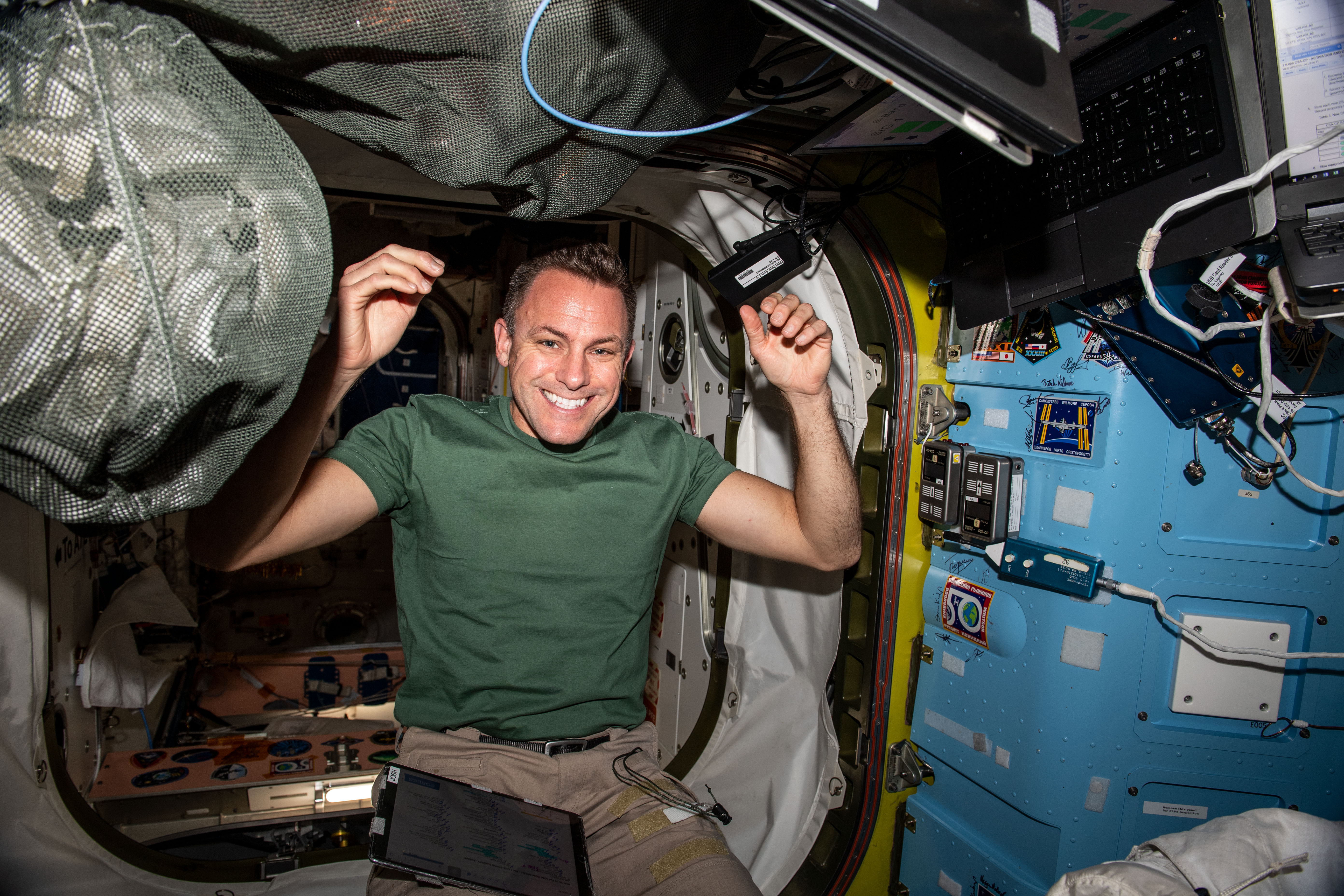
Expedition 68 Crew Photos: Dec. 2022 | International Space Station
Hawaii's Mauna Loa Volcano Erupts | Earth Science from Orbit | NOAA
On Nov. 28, 2022, the world’s largest active volcano began erupting for the first time since 1984. Mauna Loa, located on Hawaii’s Big Island, began spewing ash and debris from its summit around 11:30 p.m. local time after a series of earthquakes. Lava was ejected to heights of up to 148 feet on Nov. 29.
NOAA satellites monitored the ongoing eruption, lava flow, ash plume, and sulfur dioxide (SO2) emissions. GOES-17 (GOES West) provided one-minute imagery to help NOAA’sNational Weather Service Pacific Region monitor the evolution of the eruption and volcanic plumes in real-time. GOES-18, still undergoing post-launch testing, began collecting 30-second imagery of the eruption on Nov. 30. This rapid-update imagery allowed forecasters to observe the hottest areas of the lava field as well as the constant emission of ash and vapor.
Credit: National Oceanic and Atmospheric Administration (NOAA)
Duration: 2 minutes
Release Date: Dec. 6, 2022
#NASA #NOAA #Earth #Science #Planet #Atmosphere #Satellite #Hawaii #BigIsland #MaunaLoa #Volcano #Eruption #Weather #Meteorology #GOES17 #GOES18 #EarthObservation #RemoteSensing #LockheedMartin #UnitedStates #STEM #Education #HD #Video
The "Peekaboo" Dwarf Galaxy HIPASS J1131–31 | Hubble Space Telescope
Image Description: A large bright star is centered, with four long rays extending in an X shape. A small, peanut-shaped blue galaxy appears just to the star's right, between its right-hand rays. The galaxy is speckled with bright spots. The image background is scattered with a few smaller versions of the large central star, and even smaller orange galaxies of various shapes.
Distance: about 22 million light-years
Like someone living apart from modern conveniences, a dwarf galaxy in the local universe looks like it belongs in another time—the early eras of galaxy evolution itself. NASA's Hubble Space Telescope has helped confirm an example of what astronomers call an "extremely metal-poor" galaxy, which has very few of the chemical elements or "metals" that stars produce and enrich their galaxies with over time. Most intriguingly, its stars indicate that it is also one of the youngest galaxies ever detected in the local universe.
Despite the galaxy being nearly hidden behind the glare of a foreground star—leading to its nickname, Peekaboo—Hubble was able to pick out individual stars for analysis. The discovery provides the tantalizing opportunity to study a relic of the past in fine detail, like shaking hands with an ancient ancestor.
A large bright star is centered, with four long rays extending in an X shape. Between the rays on the right is a small blue peanut-shaped galaxy with some bright spots. Smaller similar stars and orange background galaxies fill image.
Peeking out from behind the glare of a bright foreground star, astronomers have uncovered the most extraordinary example yet of a nearby galaxy with characteristics that are more like galaxies in the distant, early universe. Only 1,200 light-years across, the tiny galaxy HIPASS J1131–31 has been nicknamed "Peekaboo" because of its emergence in the past 50-100 years from behind the fast-moving star that was obscuring astronomers' ability to detect it.
The discovery is a combined effort of telescopes on the ground and in space, including confirmation by NASA's Hubble Space Telescope. Together the research shows tantalizing evidence that the Peekaboo Galaxy is the nearest example of the galaxy formation processes that commonly took place not long after the big bang, 13.8 billion years ago.
"Uncovering the Peekaboo Galaxy is like discovering a direct window into the past, allowing us to study its extreme environment and stars at a level of detail that is inaccessible in the distant, early universe," said astronomer Gagandeep Anand of the Space Telescope Science Institute in Baltimore, Maryland, co-author of the new study on Peekaboo's intriguing properties.
Astronomers describe galaxies like Peekaboo as "extremely metal-poor" (XMP). In astronomy, "metals" refers to all elements heavier than hydrogen and helium. The very early universe was almost entirely made up of primordial hydrogen and helium, elements forged in the big bang. Heavier elements were forged by stars over the course of cosmic history, building up to the generally metal-rich universe humans find ourselves in today. Life as we know it is made from heavier element "building blocks" like carbon, oxygen, iron, and calcium.
While the universe's earliest galaxies were XMP by default, similarly metal-poor galaxies have also been found in the local universe. Peekaboo caught astronomers' attention because, not only is it an XMP galaxy without a substantial older stellar population, but at only 20 million light-years from Earth it is located at least half the distance of the previously known young XMP galaxies.
Peekaboo was first detected as a region of cold hydrogen more than 20 years ago with the Australian Parkes radio telescope Murriyang, in the HI Parkes All Sky Survey by professor Bärbel Koribalski, who is an astronomer at Australia's national science agency CSIRO and a co-author of the latest research study on Peekaboo's metallicity. Far-ultraviolet observations by NASA's space-based Galaxy Evolution Explorer (GALEX) mission showed it to be a compact blue dwarf galaxy.
"At first we did not realize how special this little galaxy is," Koribalski said of Peekaboo. "Now with combined data from the Hubble Space Telescope, the Southern African Large Telescope (SALT), and others, we know that the Peekaboo Galaxy is one of the most metal-poor galaxies ever detected."
NASA's Hubble Space Telescope was able to resolve about 60 stars in the tiny galaxy, almost all of which appear to be a few billion years old or younger. Measurements of Peekaboo's metallicity by SALT completed the picture. Together, these findings underline the major difference between Peekaboo and other galaxies in the local universe, which typically have ancient stars that are many billions of years old. Peekaboo's stars indicate that it is one of the youngest and least-chemically-enriched galaxies ever detected in the local universe. This is very unusual, as the local universe has had about 13 billion years of cosmic history to develop.
However, the picture is still a shallow one, Anand says, as the Hubble observations were made as part of a "snapshot" survey program called The Every Known Nearby Galaxy Surveyan effort to get Hubble data of as many neighboring galaxies as possible. The research team plans to use Hubble and the James Webb Space Telescope to do further research on Peekaboo, to learn more about its stellar populations and their metal-makeup.
"Due to Peekaboo's proximity to us, we can conduct detailed observations, opening up possibilities of seeing an environment resembling the early universe in unprecedented detail," Anand said.
The results are accepted for publication in the Monthly Notices of the Royal Astronomical Society.
The Hubble Space Telescope is a project of international cooperation between NASA and the European Space Agency (ESA). NASA's Goddard Space Flight Center in Greenbelt, Maryland, manages the telescope. The Space Telescope Science Institute (STScI) in Baltimore conducts Hubble science operations. STScI is operated for NASA by the Association of Universities for Research in Astronomy, in Washington, D.C.
Credits: NASA, European Space Agency (ESA), STScI
Release Date: Dec. 6, 2022
#NASA #ESA #Astronomy #Hubble #Space #Science #Star #TYC72151991 #Galaxy #DwarfGalaxy #HIPASSJ113131 #PeekabooGalaxy #XMPGalaxy #Hydra #Constellation #MilkyWayGalaxy #Cosmos #Universe #SpaceTelescope #GSFC #STScI #UnitedStates #Europe #STEM #Education
Tuesday, December 06, 2022
NASA Unfurls Largest Solar Cruiser Sail Quadrant Ever Deployed
Solar Cruiser is a NASA mission launching in 2025 to test a large solar sail at an artificial orbit between the Earth and Sun.
Solar sails use the gentle push of sunlight for propulsion, giving them unlimited fuel to reach unique orbits and perhaps one day visit other stars.
Solar Cruiser’s sail will be the largest ever tested in space, covering an area of more than six tennis courts.
NASA and industry partners used two 100-foot lightweight composite booms to stretch out a 4,300-square-foot (400-square-meter) prototype solar sail quadrant for the first time in Building 4316 at NASA’s Marshall Space Flight Center in Huntsville, Alabama, on Oct. 13, 2022. Solar sails use the force of light—not rocket fuel—to fly in deep space. They get a gentle, constant push from sunlight particles, or photons, hitting their giant reflective surfaces. The fully deployed sail the covers an area larger than the surface of a tennis court with an aluminum-coated plastic material that’s thinner than a human hair. The full-scale prototype is only a quarter of the sail designed to fly the Solar Cruiser spacecraft towards the Sun and demonstrate orbits that would be difficult or impossible for conventional satellites to maintain.
Credit: NASA's Marshall Space Flight Center
Duration: 5 minutes
Release Date: Dec. 6, 2022
#NASA #ESA #Space #SolarCruiser #SolarSail #Sun #Earth #Asteroids #SolarSystem #Exploration #Artemis #Rideshare #DeepSpace #Science #Engineering #Technology #Exploration #HumanSpaceflight #MSFC #UnitedStates #STEM #Education #HD #Video
Training for a New Moon Mission | NASA Johnson
While designers and engineers develop new spacecraft, astronauts who will fly the missions and the specialists who support their spaceflights get themselves ready the old fashioned way: practice, practice, practice. NASA teams have used simulations to prepare for every human spaceflight America has ever flown; take a closer look at today’s Mission Control Houston training team as they prepare for the Artemis flights that will return Americans to the surface of the Moon.
Credit: NASA's Johnson Space Center (JSC)
Duration: 2 minutes, 31 seconds
Release Date: Dec. 6, 2022
#NASA #ESA #Space #Earth #Moon #Artemis #ArtemisI #Orion #Spacecraft #DeepSpace #MoonToMars #JourneyToMars #Science #Engineering #Technology #Exploration #HumanSpaceflight #SolarSystem #UnitedStates #Europe #International #STEM #Education
The South Pole of Mars | NASA's Mars Reconnaissance Orbiter
Semper gelidus in Latin can be best translated as “always cold” or “always icy.” We are looking at a scene of the South Polar residual cap of Mars. It is termed that because of the persistence of ice even after the season changes. This is all carbon dioxide ice at this location.
The expansion and contraction of underground ice, along with the process of sublimation (when a solid transforms directly into a gaseous state) contribute to the weird and interesting patterns that we see here.
This is a non-narrated clip with ambient sound. The image is less than 5 km (3 mi) across and the spacecraft altitude was 245 km (152 mi).
Credit: NASA/JPL-Caltech/UArizona
Duration: 3 minutes, 32 seconds
Release Date: Dec. 6, 2022
#NASA #Space #Astronomy #Mars #Planet #RedPlanet #SouthPole #CarbonDioxideIce #Science #Geology #Landscape #Terrain #Geoscience #MRO #Reconnaissance #Orbiter #Spacecraft #HiRISE #Camera #JPL #Caltech #UniversityOfArizona #BallAerospace #MSSS #STEM #Education #HD #Video
Open Star Cluster NGC 376 in The Small Magellanic Cloud | Hubble
A small portion of the Small Magellanic Cloud (SMC) is pictured in this image from the NASA/European Space Agency Hubble Space Telescope. The SMC is a dwarf galaxy and one of the Milky Way’s nearest neighbors, lying only about 200,000 light-years from Earth. It makes a pair with the Large Magellanic Cloud, and both objects can be seen from the southern hemisphere, as well as from some northern latitudes.
Image Description: A large number of bright stars, each with a cross-shape extending from its center. In the center there is a dense collection of foreground stars. Five are orange and the rest are blue. The black background is filled with small stars—most of them, however, larger than a single point.
The Small Magellanic Cloud contains hundreds of millions of stars, but this image focuses on just a small fraction of them. These stars comprise the open cluster NGC 376, which has a total mass only about 3,400 times that of the Sun. Open clusters, as the name suggests, are loosely bound and sparsely populated. This distinguishes open clusters from globular clusters, which are often so thronged with stars that they have a continuous blur of starlight at their centers. In the case of NGC 376, individual stars can be picked out clearly even in the most densely populated parts of this image.
The data in this image come from two different astronomical investigations which relied on two of Hubble’s instruments: the Wide Field Camera 3 (WFC3) and the Advanced Camera for Surveys (ACS). The first investigation used the ACS to explore a handful of star clusters in the Small Magellanic Cloud and help astronomers explore topics including the abundance of low- and high-mass stars in different environments. The second investigation used both the WFC3 and ACS, and aimed to answer fundamental questions about the lives of stars and help astronomers understand precisely where, when, why and how stars form.
Credit: European Space Agency (ESA)/Hubble & NASA, A. Nota, G. De Marchi
Duration: 30 seconds
Release Date: Dec. 5, 2022
#NASA #ESA #Astronomy #Space #Science #Hubble #StarCluster #OpenStarCluster #NGC376 #NGC1376 #Tucana #Constellation #Galaxy #SmallMagellanicCloud #SMC #DwarfGalaxy #Cosmos #Universe #SpaceTelescope #GSFC #STScI #UnitedStates #Europe #STEM #Education #HD #Video
Moon Views: Orion's Lunar Flyby | NASA's Artemis I Moon Mission
On Dec. 5, 2022, NASA's Orion spacecraft completed its return powered flyby burn, in which the spacecraft harnessed the Moon’s gravity and accelerated back toward Earth. Orion is expected to splashdown off the coast of San Diego at 12:40 p.m. EST (17:30 UTC) on Sunday, Dec. 11, 2022.
Orion launched on the Space Launch System (SLS) rocket from Launch Pad 39B at NASA’s Kennedy Space Center in Florida on Wednesday, Nov. 16, 2022. Artemis I is an uncrewed flight test of our SLS rocket, Orion spacecraft, and exploration ground systems for future Artemis missions—which will provide the foundation to send humans to the lunar surface, develop a long-term presence on and around the Moon, and pave the way for humanity to set foot on Mars.
More on Artemis I: https://www.nasa.gov/specials/artemis-i
Credit: National Aeronautics and Space Administration (NASA)
Release Date: Dec. 5, 2022
#NASA #ESA #Space #Earth #Moon #Artemis #ArtemisI #Orion #Spacecraft #DeepSpace #MoonToMars #JourneyToMars #Science #Engineering #Technology #Exploration #HumanSpaceflight #SolarSystem #UnitedStates #Europe #International #STEM #Education
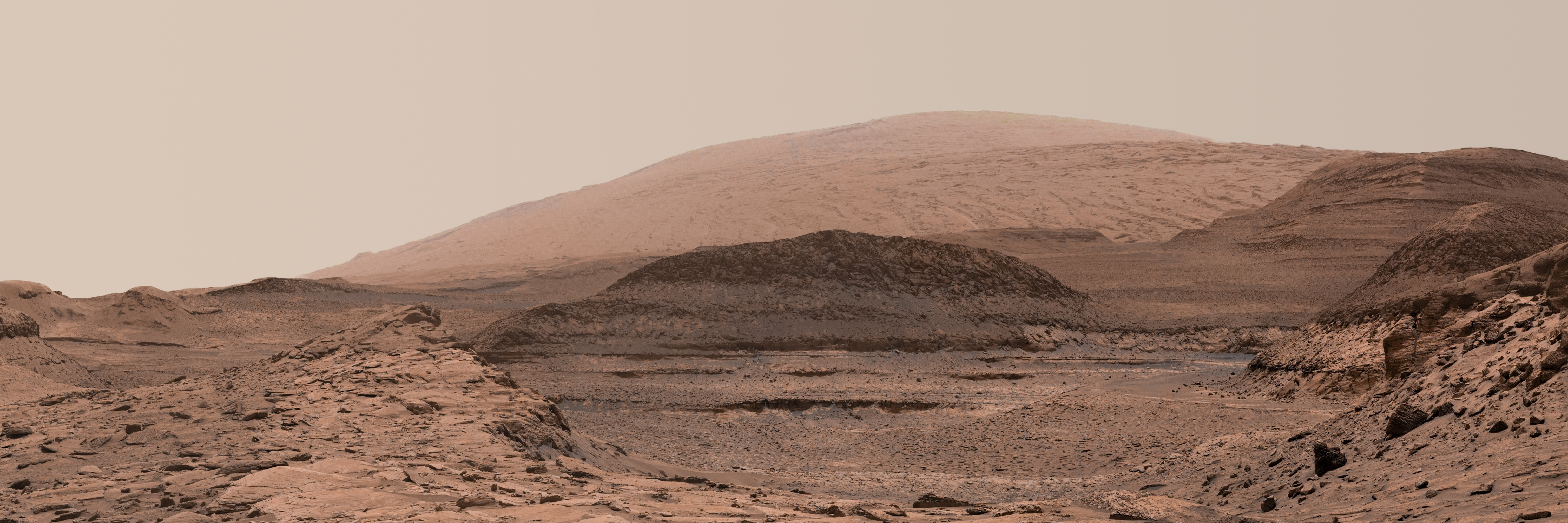
New Mars Images: Dec. 2022 | NASA's Curiosity & Perseverance Rovers | JPL
Celebrating 10 Years on Mars! (2012-2022)
Mission Name: Mars Science Laboratory (MSL)
Rover Name: Curiosity
Main Job: To determine if Mars was ever habitable to microbial life.
Launch: Nov. 6, 2011
Landing Date: Aug. 5, 2012, Gale Crater, Mars
Mission Name: Mars 2020
Rover Name: Perseverance
Main Job: Seek signs of ancient life and collect samples of rock and regolith (broken rock and soil) for possible return to Earth.
Launch: July 30, 2020
Landing: Feb. 18, 2021, Jezero Crater, Mars
For more information on NASA's Mars missions, visit: mars.nasa.gov
Image Credits: NASA/JPL-Caltech/ASU/MSSS/Kevin M. Gill
Image Release Dates: Dec. 1-5, 2022
#NASA #Space #Astronomy #Science #Mars #RedPlanet #Planet #Astrobiology #Geology #CuriosityRover #MSL #MountSharp #GaleCrater #PerseveranceRover #Mars2020 #JezeroCrater #Robotics #Technology #Engineering #JPL #UnitedStates #JourneyToMars #MoonToMars #CitizenScience #KevinGill #STEM #Education


.jpg)