Orion Recovery Complete | NASA's Artemis I Moon Mission
Friends of NASA (FoN) is an independent non-governmental organization (NGO) dedicated to building international support for peaceful space exploration, commerce, scientific discovery, and STEM education.
Monday, December 12, 2022
Orion Recovery Complete | NASA's Artemis I Moon Mission
NASA’s Lunar Flashlight Mission Launched to Detect Water Ice | JPL
This illustration shows NASA’s Lunar Flashlight, with its four solar arrays deployed, shortly after launch. The small satellite, or SmallSat, will take about three months to reach its science orbit to seek out surface water ice in the darkest craters of the Moon’s South Pole.
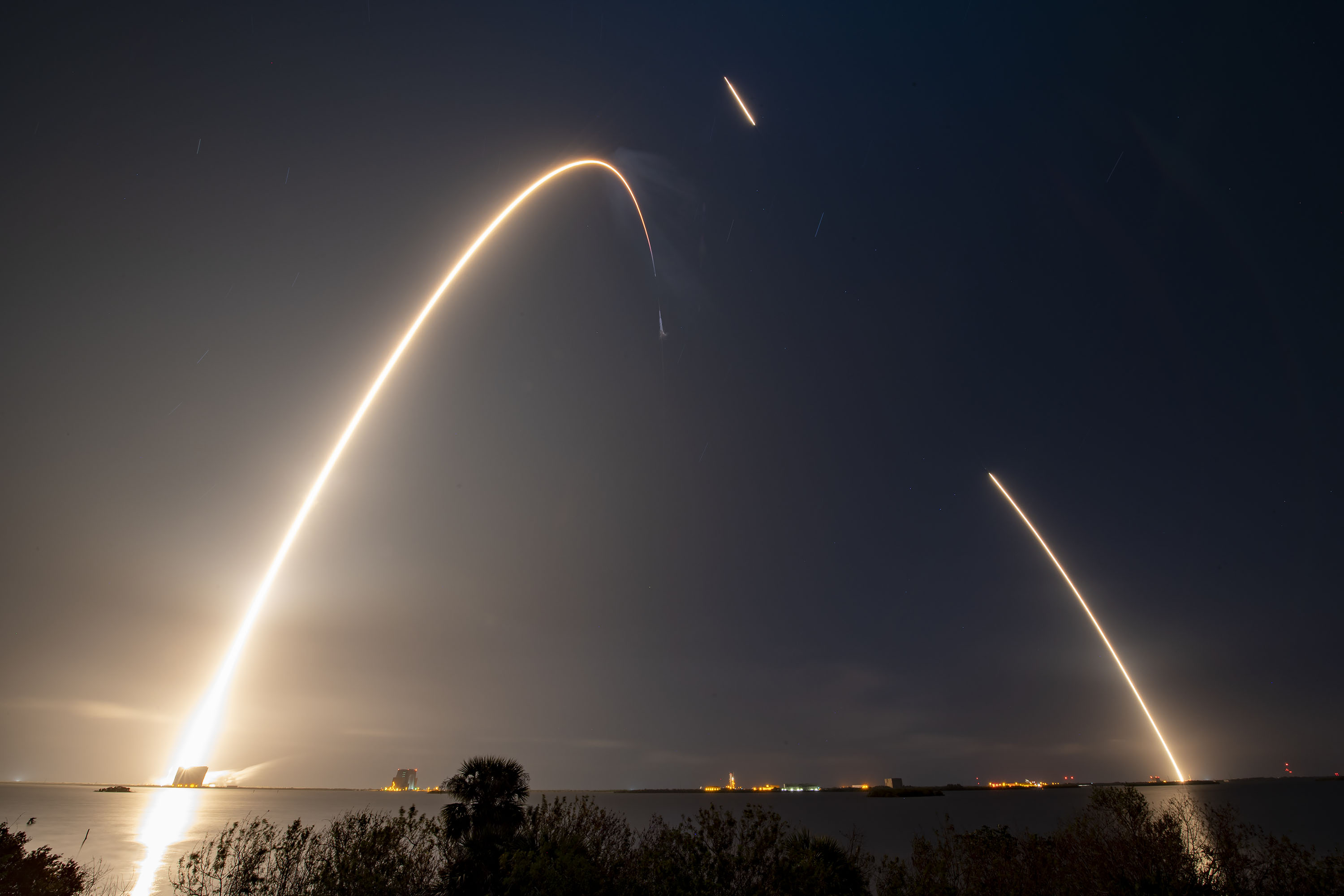
NASA’s Lunar Flashlight SmallSat has communicated with mission controllers and confirmed it is healthy after launching Sunday, Dec. 11, 2022, at 2:38 a.m. EST (Saturday, Dec. 10, at 11:38 p.m. PST) from Cape Canaveral Space Force Station in Florida. About 53 minutes after launch, the small satellite, or SmallSat, was released from its dispenser to begin a four-month journey to the Moon to seek out surface water ice in permanently shadowed craters at the lunar South Pole.
To get close to the Moon’s surface, the SmallSat will employ what’s called a near-rectilinear halo orbit—designed for energy efficiency—that will take it within just 9 miles (15 kilometers) over the lunar South Pole and 43,000 miles (70,000 kilometers) away at its farthest point. Only one other spacecraft has employed this type of orbit: NASA’s Cislunar Autonomous Positioning System Technology Operations and Navigation Experiment (CAPSTONE) mission.
Lunar Ice Science
Lunar Flashlight will use a reflectometer equipped with four lasers that emit near-infrared light in wavelengths readily absorbed by surface water ice. This is the first time that multiple colored lasers will be used to seek out ice inside these dark regions on the Moon, which haven’t seen sunlight in billions of years. Should the lasers hit bare rock or regolith (broken rock and dust), the light will reflect back to the spacecraft. However, if the target absorbs the light, that would indicate the presence of water ice. The greater the absorption, the more ice there may be.
The science data collected by the mission will be compared with observations made by other lunar missions to help reveal the distribution of surface water ice on the Moon for potential use by future astronauts.
Lunar Flashlight will use a new kind of “green” propellant that is safer to transport and store than the commonly used in-space propellants such as hydrazine. In fact, the SmallSat will be the first interplanetary spacecraft to use this propellant, and one of the mission’s primary goals is to demonstrate this technology for future use. The propellant was successfully tested on a previous NASA technology demonstration mission in Earth orbit.
More About the Mission
Lunar Flashlight launched on a SpaceX Falcon 9 rocket as a rideshare with ispace’s HAKUTO-R Mission 1. Lunar Flashlight is managed for NASA by JPL, a division of Caltech in Pasadena, California. Barbara Cohen, the mission’s principal investigator, is based at NASA’s Goddard Space Flight Center in Greenbelt, Maryland. Lunar Flashlight will be operated by Georgia Tech, including graduate and undergraduate students. The Lunar Flashlight science team is distributed across multiple institutions, including Goddard, the University of California, Los Angeles, Johns Hopkins University Applied Physics Laboratory, and the University of Colorado.
Credit: NASA's Jet Propulsion Laboratory-Caltech
Release Date: Dec. 11, 2022
#NASA #Space #Earth #Science #Moon #WaterIce #LunarFlashlight #SmallSat #Lasers #SpaceX #Falcon9 #Rocket #Rideshare #Spaceflight #Technology #Engineering #CommercialSpace #CapeCanaveral #Florida #JPL #GSFC #MSFC #GeorgiaTech #UnitedStates #Illustration #STEM #Education
ispace HAKUTO-R M1 Lunar Lander & Rover Mission | SpaceX
OSIRIS-REx Spacecraft Departs Asteroid Bennu for Earth | NASA
This animation shows NASA’s OSIRIS-REx spacecraft departing asteroid Bennu, returning to Earth, and dropping off a capsule of pristine material from the asteroid. On September 24, 2023, the sample return capsule will enter Earth’s atmosphere, cross the Western U.S., deploy its parachute, and touch down at the Air Force’s Utah Test and Training Range in the Great Salt Lake Desert. From there, the capsule will be flown to NASA’s Johnson Space Center (JSC) in Houston, where its samples of asteroid Bennu will be curated, distributed, and studied for decades to come.
OSIRIS-REx Mission:
http://www.asteroidmission.org
Credits: NASA’s Goddard Space Flight Center/CI Lab/SVS
Duration: 1 minute, 20 seconds
Release Date: Dec. 12, 2022
#NASA #Astronomy #Space #Science #OSIRISREx #Spacecraft #Asteroid #Bennu #ToBennuAndBack #Organics #Minerals #Mapping #SampleReturn #Technology #GSFC #CSA #JAXA #Japan #日本 #UnitedStates #SolarSystem #Exploration #STEM #Education #Art #Animation #HD #Video
Panning across a Cosmic Smokescreen: The Lagoon Nebula | Hubble
A portion of the open cluster NGC 6530 appears as a roiling wall of smoke studded with stars in this image from the NASA/European Space Agency Hubble Space Telescope. NGC 6530 is a collection of several thousand stars lying around 4,350 light-years from Earth in the constellation Sagittarius. The cluster is set within the larger Lagoon Nebula, a gigantic interstellar cloud of gas and dust. It is the nebula that gives this image its distinctly smokey appearance; clouds of interstellar gas and dust stretch from one side of this image to the other.
Description: Clouds of gas cover the entire view, in a variety of bold colors. In the center the gas is brighter and very textured, resembling dense smoke. Around the edges it is more sparse and faint. Several small, bright blue stars are scattered over the nebula.
Astronomers investigated NGC 6530 using Hubble’s Advanced Camera for Surveys and Wide Field Planetary Camera 2. They scoured the region in the hope of finding new examples of proplyds, a particular class of illuminated protoplanetary discs surrounding newborn stars. The vast majority of proplyds have been found in only one region, the nearby Orion Nebula. This makes understanding their origin and lifetimes in other astronomical environments challenging.
Credit: European Space Agency (ESA)/Hubble & NASA, European Southern Observatory (ESO), O. De Marco
Acknowledgement: M. H. Özsaraç
Duration: 30 seconds
Release Date: Dec. 12, 2022
Coloring the Night over Chile | NOIRLab
The diffuse light to the right of the center is the gegenschein, which is caused by sunlight that is scattered back from dust particles in the outer Solar System. The dust that produces the zodiacal light and Gegenschein comes from a variety of sources, including comet tails and asteroid collisions.
This 170-megapixel photo was taken as part of the recent NOIRLab 2022 Photo Expedition to all the NOIRLab sites.
Credit:
NOIRLab/NSF/AURA/ P. Horálek (Institute of Physics in Opava)
Release Date: Dec. 7, 2022
#NASA #Astronomy #Space #Science #Stars #RhoOphiuchiCloudComplex #Nebulae #Nebula #Sh227 #Star #ZetaOphiuchi #Gegenschein #SolarSystem #MilkyWayGalaxy #Cosmos #Universe #NOIRLab #AURA #NSF #GeminiSouthTelescope #Chile #SouthAmerica #STEM #Education
NASA's Artemis I Moon Mission Highlights
From launch to splashdown, NASA’s Orion spacecraft completed its first deep-space mission with a splashdown in the Pacific Ocean, west of Baja California, at 9:40 a.m. PST (12:40 p.m. EST) Sunday, December 11, 2022. The record-breaking Artemis mission traveled more than 1.4 million miles on a path around the Moon and returned safely to Earth. Splashdown was the final milestone of the Artemis I Moon mission, which began with a successful liftoff of NASA’s Space Launch System (SLS) rocket Nov. 16, from Launch Pad 39B at NASA’s Kennedy Space Center in Florida. Over the course of 25.5 days, NASA tested Orion in the harsh environment of deep space before flying astronauts on Artemis II. During the mission, Orion performed two lunar flybys, coming within 80 miles of the lunar surface. At its farthest distance during the mission, Orion traveled nearly 270,000 miles from our home planet, more than 1,000 times farther than where the International Space Station orbits Earth, to intentionally stress systems before flying crew.
Prior to entering the Earth’s atmosphere, the crew module separated from its service module, which is the spacecraft’s propulsive powerhouse provided by ESA (European Space Agency). During re-entry, Orion endured temperatures of about 5,000 degrees Fahrenheit, half as hot as the surface of the Sun. Within about 20 minutes, Orion slowed from nearly 25,000 mph to about 20 mph for its parachute-assisted splashdown. During the flight test, Orion stayed in space longer than any spacecraft designed for astronauts without docking to a space station. While in a distant lunar orbit, Orion surpassed the record for distance traveled by a spacecraft designed to carry humans, previously set during Apollo 13.
Credit: NASA's Johnson Space Center (JSC)
Duration: 24 minutes
Release Date: Dec. 11, 2022
#NASA #ESA #Space #Earth #Moon #Artemis #ArtemisI #Orion #Spacecraft #DeepSpace #MoonToMars #Science #Engineering #Technology #Exploration #HumanSpaceflight #SolarSystem #UnitedStates #Europe #International #STEM #Education #History #HD #Video
Cosmic Smokescreen: The Lagoon Nebula | Hubble Space Telescope
Astronomers investigated NGC 6530 using Hubble’s Advanced Camera for Surveys and Wide Field Planetary Camera 2. They scoured the region in the hope of finding new examples of proplyds, a particular class of illuminated protoplanetary discs surrounding newborn stars. The vast majority of proplyds have been found in only one region, the nearby Orion Nebula. This makes understanding their origin and lifetimes in other astronomical environments challenging.
Hubble’s ability to observe at infrared wavelengths—particularly with Wide Field Camera 3—have made it an indispensable tool for understanding starbirth and the origin of exoplanetary systems. In particular, Hubble was crucial to investigations of the proplyds around newly born stars in the Orion Nebula. The new NASA/European Space Agency/Canadian Space Agency James Webb Space Telescope’s unprecedented observational capabilities at infrared wavelengths will complement Hubble observations by allowing astronomers to peer through the dusty envelopes around newly born stars and investigate the faintest, earliest stages of starbirth.
Credit: European Space Agency (ESA)/Hubble & NASA, European Southern Observatory (ESO), O. De Marco
Acknowledgement: M. H. Özsaraç
#NASA #ESA #Astronomy #Hubble #Space #Science #Nebula #LagoonNebula #NGC6530 #Proplyds #Sagittarius #Constellation #MilkyWayGalaxy #Cosmos #Universe #SpaceTelescope #GSFC #STScI #UnitedStates #Europe #STEM #Education
Sunday, December 11, 2022
Replay: NASA Experts Discuss Artemis I Moon Mission Splashdown & Next Steps
Following the successful splashdown of the Artemis I Moon mission off the coast of California at 12:40 p.m. EST (17:40 UTC) on Dec. 11, 2022, NASA experts discussed next steps for the Orion spacecraft. Orion spent 25.5 days in space and travelled 1.4 million miles (2.3 million km) around the Moon and back after launching aboard the Space Launch System (SLS) rocket on Nov. 16 from NASA’s Kennedy Space Center (KSC).
The Artemis I mission is the first integrated test of NASA’s deep space exploration systems: the Orion spacecraft, the SLS rocket, and Kennedy Space Center's Exploration Ground Systems.
This will provide the foundation to send humans to the lunar surface, to develop a long-term presence on and around the Moon, and pave the way for humanity to set foot on Mars.
Credit: NASA
Duration: 50 minutes
Release Date: Dec. 11, 2022
#NASA #ESA #Space #Earth #Moon #Artemis #ArtemisI #Orion #Spacecraft #DeepSpace #MoonToMars #Science #Engineering #Technology #Exploration #HumanSpaceflight #SolarSystem #UnitedStates #Europe #International #STEM #Education #HD #Video
Orion Spacecraft Recovery | NASA's Artemis I Moon Mission
The Artemis I mission is the first integrated test of NASA’s deep space exploration systems: the Orion spacecraft, the SLS rocket, and Kennedy Space Center's Exploration Ground Systems.
This will provide the foundation to send humans to the lunar surface, develop a long-term presence on and around the Moon, and pave the way for humanity to set foot on Mars.
Learn more: https://www.nasa.gov/specials/artemis-i
Credit: NASA's Johnson Space Center (JSC)
Release Date: Dec. 11, 2022
#NASA #ESA #Space #Earth #Moon #Artemis #ArtemisI #Orion #Spacecraft #DeepSpace #MoonToMars #JourneyToMars #Science #Engineering #Technology #Exploration #HumanSpaceflight #SolarSystem #USNavy #UnitedStates #Europe #International #STEM #Education
Orion Spacecraft Recovery & Splashdown | NASA's Artemis I Moon Mission
Replay: NASA’s Artemis I Moon Mission Splashes Down in Pacific Ocean
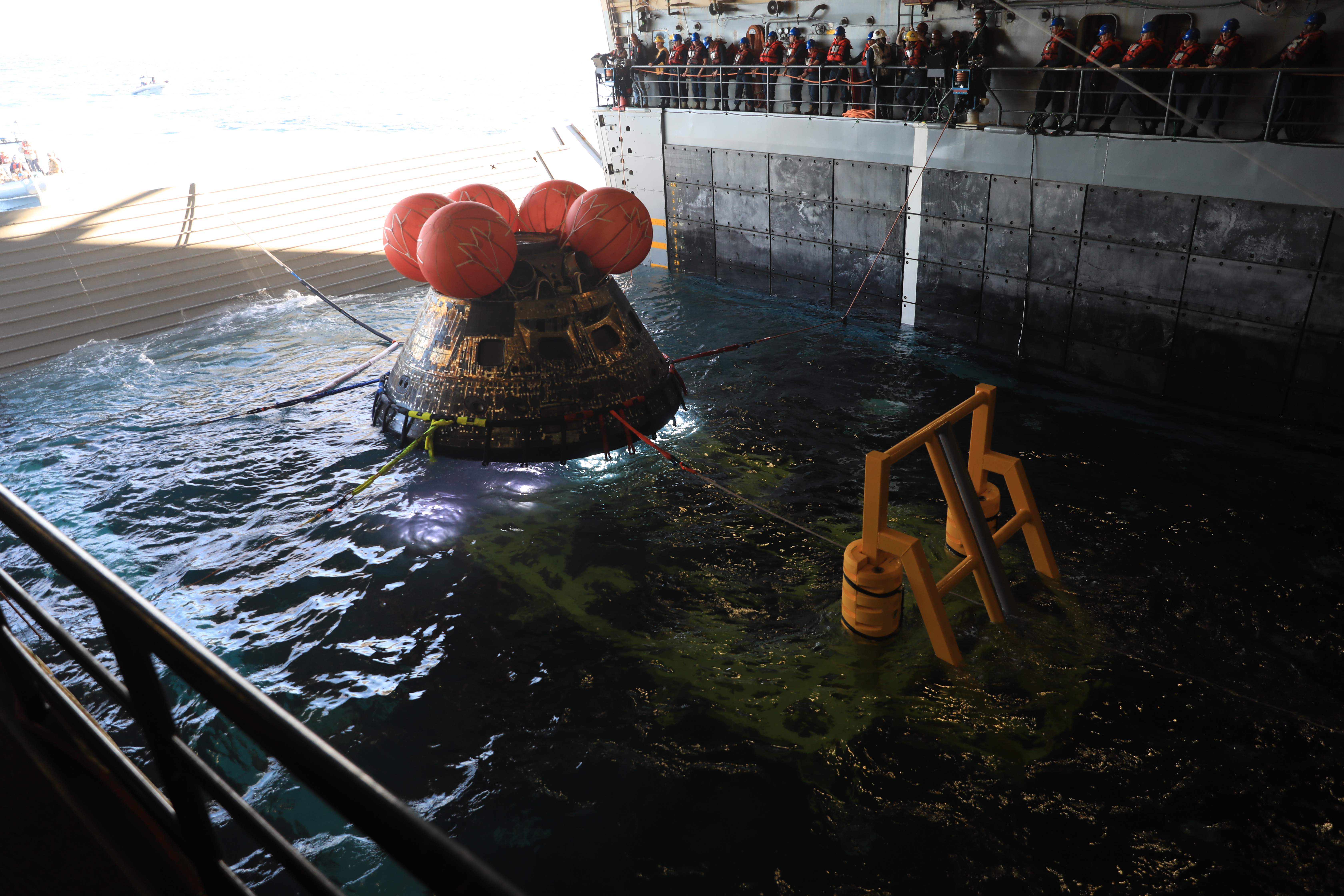
On Dec. 11, 2022, the Artemis I Moon mission concluded with the entry, descent, and splashdown of the Orion spacecraft. After 25.5 days in space, and a 1.3-million-mile (2.1-million-km) journey around the Moon, Orion splashed down in the Pacific Ocean off the coast of California at 12:40pm ET (17:40 UTC) on Sunday, Dec. 11. The exploration ground systems recovery team from NASA’s Kennedy Space Center (KSC) in Florida, working with the U.S. Navy recovered the spacecraft.
Live coverage for this event began at 11 a.m. EST (16:00 UTC).
Orion launched aboard the Space Launch System (SLS) rocket at 1:47 am EST (06:47 UTC) on Nov. 16, 2022, from historic Launch Complex 39B at NASA’s Kennedy Space Center.
The Artemis I mission is the first integrated test of NASA’s deep space exploration systems: the Orion spacecraft, the SLS rocket, and Kennedy Space Center's Exploration Ground Systems.
This will provide the foundation to send humans to the lunar surface, develop a long-term presence on and around the Moon, and pave the way for humanity to set foot on Mars.
Learn more:
https://www.nasa.gov/specials/artemis-i
Credit: NASA
Duration: 4 hours
#NASA #ESA #Space #Earth #Moon #Artemis #ArtemisI #Orion #Spacecraft #DeepSpace #MoonToMars #JourneyToMars #Science #Engineering #Technology #Exploration #HumanSpaceflight #SolarSystem #UnitedStates #Europe #International #STEM #Education #HD #Video
Orion Spacecraft Splashdown | NASA's Artemis I Moon Mission
At 12:40 p.m. EST, Dec. 11, 2022, NASA’s Orion spacecraft for the Artemis I mission splashed down in the Pacific Ocean after a 25.5 day mission to the Moon. Orion will be recovered by NASA’s Landing and Recovery team, U.S. Navy and Department of Defense partners aboard the USS Portland ship.
Orion launched on the Space Launch System (SLS) rocket from Launch Pad 39B at NASA’s Kennedy Space Center in Florida on Wednesday, Nov. 16, 2022. Artemis I is an uncrewed flight test of our SLS rocket, Orion spacecraft, and exploration ground systems for future Artemis missions—which will provide the foundation to send humans to the lunar surface, develop a long-term presence on and around the Moon, and pave the way for humanity to set foot on Mars.
More on Artemis I: https://www.nasa.gov/specials/artemis-i
Credit: NASA's Johnson Space Center (JSC)
Image Capture Date: Dec. 11, 2022
#NASA #ESA #Space #Earth #Moon #Artemis #ArtemisI #Orion #Spacecraft #DeepSpace #MoonToMars #JourneyToMars #Science #Engineering #Technology #Exploration #HumanSpaceflight #SolarSystem #UnitedStates #Europe #International #STEM #Education
Orion Prepares for Earth Landing | NASA's Artemis I Moon Mission
Orion launched on the Space Launch System (SLS) rocket from Launch Pad 39B at NASA’s Kennedy Space Center in Florida on Wednesday, Nov. 16, 2022. Artemis I is an uncrewed flight test of our SLS rocket, Orion spacecraft, and exploration ground systems for future Artemis missions—which will provide the foundation to send humans to the lunar surface, develop a long-term presence on and around the Moon, and pave the way for humanity to set foot on Mars.
More on Artemis I: https://www.nasa.gov/specials/artemis-i
Credit: NASA's Johnson Space Center (JSC)
Image Capture Date: Dec. 11, 2022
#NASA #ESA #Space #Earth #Moon #Artemis #ArtemisI #Orion #Spacecraft #DeepSpace #MoonToMars #JourneyToMars #Science #Engineering #Technology #Exploration #HumanSpaceflight #SolarSystem #UnitedStates #Europe #International #STEM #Education
Orion Spacecraft Recovery Practice | NASA's Artemis I Moon Mission
NASA and DoD members of the Artemis I recovery team run practice flight operations procedures aboard the USS Portland (LPD 27)
Space Historian Andy Chaikin Compares NASA's Apollo 17 & Artemis I Missions
The nearly month-long Artemis 1 mission to the Moon is slated to end on Sunday, Dec. 11, 2022, with a splashdown in the Pacific Ocean. On that very day 50 years ago, Dec. 11, 1972, the last Apollo astronauts set foot on the moon. Space historian Andy Chaikin, author of the definitive account of the Apollo missions “A Man on the Moon,” joins Miles O'Brien to discuss the parallels.
Credit: PBS NewsHour
Duration: 7 minutes
Release Date: Dec. 9, 2022
#NASA #ESA #Space #Earth #Moon #Apollo17 #Artemis #ArtemisI #Orion #Spacecraft #DeepSpace #MoonToMars #JourneyToMars #Science #Engineering #Technology #Exploration #HumanSpaceflight #SolarSystem #UnitedStates #STEM #History #Education #HD #Video
.jpg)


V1.jpg)
V2.jpg)
V3.jpg)
V4.jpg)
V5.jpg)
V3B.jpg)