Thursday, June 15, 2023

NASA's "Espacio A Tierra" | Buscando respuestas: 9 de junio de 2023

NASA's "Espacio A Tierra" | Buscando respuestas: 9 de junio de 2023

Espacio a Tierra, la versión en español de las cápsulas Space to Ground de la NASA, te informa semanalmente de lo que está sucediendo en la Estación Espacial Internacional. 

Para obtener más información sobre la ciencia de la NASA, suscríbete al boletín semanal: https://www.nasa.gov/suscribete

Ciencia de la NASA: https://ciencia.nasa.gov/


Credit: NASA's Johnson Space Center (JSC)

Duration: 3 minutes, 40 seconds

Release Date: June 14, 2023


#NASA #Space #Earth #Science #NASAenespañol #español #SpaceX #SpaceXCargoDragon #ISS #Astronauts #StephenBowen #WoodyHoburg #EVA #Spacewalk #IROSA #FrankRubio #SultanAlneyadi #UAE #MBRSC #HumanSpaceflight #Russia #Роскосмос #Microgravity #SpaceResearch #SpaceLaboratory #UnitedStates #Expedition69 #STEM #Education #HD #Video

Wednesday, June 14, 2023

Why is Planet Venus So Hot? – We Asked a NASA Scientist

Why is Planet Venus So Hot? – We Asked a NASA Scientist

Why is Venus so hot? 

The planet’s thick CO2-filled atmosphere is great at trapping heat. This creates a runaway greenhouse effect that makes Venus roughly 700°F (389°C) hotter than it would be otherwise. Planetary scientist, Dr. Amy Hofmann, at NASA's Jet Propulsion Laboratory provides all the sizzling details.

Explore more about Earth’s closest planetary neighbor: https://solarsystem.nasa.gov/planets/venus/overview/


Credit: National Aeronautics and Space Administration (NASA)

Producers: Scott Bednar, Jessica Wilde 

Editor: Daniel Salazar 

Duration: 1 minute, 19 seconds

Release Date: June 14, 2023


#NASA #Space #Astronomy #Science #Planet #Venus #PlanetaryScience #Atmosphere #Climate #CO2 #CarbonDioxide #GreehouseGases #GreenhouseEffect #Geology #Volcanism #Volcanoes #SolarSystem #SpaceExploration #JPL #Caltech #UnitedStates #Europe #STEM #Education #HD #Video

Planet Mars: Tracking NASA's Perseverance Rover | Mars Reconnaissance Orbiter

Planet Mars: Tracking NASA's Perseverance Rover | Mars Reconnaissance Orbiter


This 2022 image from Mars orbit shows some of the tracks left by the Perseverance rover as it traveled to the west of this location in Jezero Crater. Part of the justification for this observation is to extend color coverage of the rover’s traverse.

Celebrating 2+ Years on Mars (2021-2023)
Mission Name: Mars 2020
Rover Name: Perseverance
Main Job: Seek signs of ancient life and collect samples of rock and regolith (broken rock and soil) for possible return to Earth.
Mars Helicopter (Ingenuity)
Launch: July 30, 2020    
Landing: Feb. 18, 2021, Jezero Crater, Mars

For more information on NASA's Mars missions, visit: mars.nasa.gov

Image cutout is less than 1 km (under a mile) across and the spacecraft altitude was 279 km (173 mi). 

Acquisition Date: April 11, 2022

Local Mars time

15:41

Latitude (centered)

18.457°

Longitude (East)

77.460°

The University of Arizona, Tucson, operates the Mars Reconnaissance Orbiter's High Resolution Imaging Science Experiment (HiRISE) instrument, which was built by Ball Aerospace & Technologies Corp., Boulder, Colorado. 

NASA's Jet Propulsion Laboratory, a division of Caltech in Pasadena, California, manages the Mars Reconnaissance Orbiter Project for NASA's Science Mission Directorate, Washington.

“For 17 years, MRO has been revealing Mars to us as no one had seen it before,” said the mission’s project scientist, Rich Zurek of JPL.


Credit: NASA/JPL-Caltech/Arizona

Image Date: April 11, 2022

Release Date: June 13, 2023


#NASA #Space #Astronomy #Science #Mars #Planet #PerseveranceRover #Mars2020 #IngenuityHelicopter #JezeroCrater #Robotics #Geology #Landscape #Terrain #Geoscience #MRO #MarsReconnaissanceOrbiter #Spacecraft #HiRISE #Camera #JPL #Caltech #UniversityOfArizona #BallAerospace #STEM #Education

European Astronaut Andreas Mogensen in SpaceX Crew-7 Dragon Spacesuit

European Astronaut Andreas Mogensen in SpaceX Crew-7 Dragon Spacesuit


European Space Agency (ESA) astronaut Andreas Mogensen of Denmark poses for portraits taken at SpaceX headquarters in Hawthorne, California, during crew training. Mogensen will be the spacecraft pilot of NASA’s SpaceX Crew-7 mission—the first non-US astronaut assigned in this capacity. Crew-7 will be NASA’s seventh rotational mission to the International Space Station.

Andreas Mogensen will join NASA astronaut Jasmin Moghbeli and astronaut Satoshi Furukawa from the Japan Aerospace Exploration Agency (JAXA). An additional crew member will be assigned at a later date.

This will be the first long-duration mission for Mogensen. He previously served as a flight engineer on a ten-day mission to the International Space Station in 2015. Crew-7 will be his second trip to space.

Andreas Mogensen Official ESA Biography

https://www.esa.int/Science_Exploration/Human_and_Robotic_Exploration/Astronauts/Andreas_Mogensen


Credit: Space Exploration Technologies Corporation (SpaceX)

Release Date: June 8, 2023


#NASA #ESA #Space #Earth #ISS #Moon #ArtemisProgram #SpaceX #SpaceXCrew7 #CrewDragonSpacecraft #Spacesuit #Astronaut #AndreasMogensen #SpacecraftPilot #Denmark #Danmark #Leaders #Pioneers #HumanSpaceflight #Houston #Texas #JSC #UnitedStates #Photography #STEM #Education

Earth: A Year in Climate | NASA Goddard

Earth: A Year in Climate | NASA Goddard

Understanding Earth gives us the means to better protect it. Join NASA, as we monitor, study, and observe our planet 24 hours a day, 7 days a week, 365 days a year—to learn more and to protect and improve life on Earth.


Credit: NASA's Goddard Space Flight Center

Kathleen Gaeta (GSFC AIMMS): Lead Producer

Dr. Kate Calvin (NASA HQ): Lead Scientist

Dr. Peter Jacobs (NASA GSFC): Scientist

Duration: 1 minute, 42 seconds

Release Date: June 14, 2023


#NASA #Space #Satellites #Science #Earth #Planet #Atmosphere #Climate #Meteorology #Weather #GreenhouseGases #CO2 #Methane #ClimateChange #GlobalWarming #GlobalHeating #RemoteSensing #EarthObservation #AirborneScience #NASAGoddard #GSFC #UnitedStates #STEM #Education #HD #Video

South America to The Stars: The 25-year Journey of Europe's Ariane 5 Rocket

South America to The Stars: The 25-year Journey of Europe's Ariane 5 Rocket

For a quarter century, Ariane 5 has been Europe’s heavy-lift workhorse. Flying from Europe’s Spaceport in French Guiana, Ariane 5 has carried to space a long series of commercial and scientific missions. Notable payloads include the European Space Agency’s comet-chasing Rosetta, a dozen of Europe’s Galileo navigation satellites—orbited with just three launches—the NASA/European Space Agency/Canadian Space Agency James Webb Space Telescope and, in April 2023, the European Space Agency’s Juice mission to Jupiter.

Ariane 5 more than doubled the mass-to-orbit capacity of its predecessor, Ariane 4, which flew from 1988 until 2003 as a favorite of the telecommunications industry with its need to put large payloads into very high geosynchronous orbits. Ariane 5’s capacity enabled it to orbit two large telecommunications satellites on a single launch, or to push very large payloads into deep space.

After 117 flights, Ariane 5 is being replaced by an all-new launch vehicle, Ariane 6.


Credit: European Space Agency (ESA)

Duration: 1 minute, 47 seconds

Release Date: June 14, 2023


#NASA #ESA #Space #Astronomy #Science #Earth #Satellites #Spacecraft #Stars #Planets #Moons #SolarSystem #JWST #JUICE #SpaceExploration #ArianeGroup #Arianespace #Ariane5 #Rockets #Ariane5Rocket #CommercialSpace #Telecommunications #Spaceport #FrenchGuiana #SouthAmerica #Europe #STEM #Education #HD #Video

A China Space Station Tour: Robotic Arm Camera

A China Space Station Tour: Robotic Arm Camera

The China Space Station has a three-module configuration consisting of the core module Tianhe and two lab modules Wentian and Mengtian. The assembly of the space station's T-shape basic structure was completed in orbit during 2022. The successful completion of the China Space Station was an important milestone in China's human spaceflight space program.


Credit: China National Space Administration (CNSA)/China Manned Space Agency (CMSA)

Duration: 3 minutes, 45 seconds

Release Date: June 14, 2023


#NASA #Space #China #中国 #Earth #MicrogravityExperiments #SpaceResearch #SpaceLaboratory #CSS #ChinaSpaceStation #天和核心舱 #Tianhe #Wentian #Mengtian #Shenzhou #Taikonauts #Astronauts #CNSA #CMSA #国家航天局 #Science #Technology #HumanSpaceflight #STEM #Education #HD #Video

The Shark Nebula in Cepheus

The Shark Nebula in Cepheus


There is no sea on Earth large enough to contain The Shark Nebula. This predator apparition poses us no danger as it is composed only of interstellar gas and dust. Dark dust like that featured here is somewhat like cigarette smoke and created in the cool atmospheres of giant stars. After being expelled with gas and gravitationally recondensing, massive stars may carve intricate structures into their birth cloud using their high energy light and fast stellar winds as sculpting tools. The heat they generate evaporates the murky molecular cloud as well as causing ambient hydrogen gas to disperse and glow red. During disintegration, we humans can enjoy imagining these great clouds as common icons, like we do for water clouds on Earth. Including smaller dust nebulae such as Lynds Dark Nebula 1235 and Van den Bergh 149 & 150, the Shark nebula spans about 15 light years and lies about 650 light years away toward the constellation of the King of Aethiopia (Cepheus). The nebulas are blue because of the blue-white main sequence stars that illuminate the gas and dust which also causes infrared radiation.  

Image Credit & Copyright: Stephen Kennedy

Stephen's Instagram Page: https://www.instagram.com/occupyspacecreations/

Release Date: June 14, 2023


#NASA #Space #Astronomy #Science #Nebulae #SharkNebula #Nebula #LyndsDarkNebula1235 #VanDenBergh149 #VanDenBergh150 #Cepheus #Constellation #Astrophotographer #StephenKennedy #Astrophotography #Cosmos #Universe #STEM #Education #APoD

Tuesday, June 13, 2023

Barnard's Galaxy in Sagittarius: Wide-field View | ESO

Barnard's Galaxy in Sagittarius: Wide-field View | ESO

Also known as NGC 6822, this dwarf irregular galaxy is one of the Milky Way’s galactic neighbors 2 million light years away. This image is a color composite made from exposures from the Digitized Sky Survey 2 (DSS2). The field of view is approximatelly 2.9 x 2.9 degrees. 


Credit: European Southern Observatory (ESO)/Digitized Sky Survey 2

Acknowledgment: Davide De Martin

Release Date: July 30, 2010


#NASA #ESO #Astronomy #Space #Science #Galaxy #DwarfGalaxy #NGC6822 #IrregularGalaxy #Nebula #Sagittarius #Constellation #Cosmos #Universe #Telescope #LaSillaObservatory #Chile #Europe #STEM #Education

Zooming in on Barnard’s Galaxy in Sagittarius | European Southern Observatory

Zooming in on Barnard’s Galaxy in Sagittarius | European Southern Observatory

Zooming in on Barnard’s Galaxy, also known as NGC 6822. The galaxy contains regions of rich star formation and curious nebulae, such as the bubble clearly visible in the upper left of this remarkable vista. Astronomers classify NGC 6822 as an irregular dwarf galaxy because of its odd shape and relatively diminutive size by galactic standards. The strange shapes of these cosmic "misfits" help researchers understand how galaxies interact, evolve and occasionally “cannibalise” each other, leaving behind radiant, star-filled scraps. Distance: 2 million light years


Credit: European Southern Observatory (ESO), Digitized Sky Survey 2, A. Fujii.

Duration: 46 seconds

Release Date: Nov. 24, 2015


#NASA #ESO #Astronomy #Space #Science #Galaxy #DwarfGalaxy #NGC6822 #IrregularGalaxy #Nebula #Sagittarius #Constellation #Cosmos #Universe #Telescope #LaSillaObservatory #Chile #Europe #STEM #Education #HD #Video

Barnard's Galaxy with Bubble-shaped Nebula in Sagittarius | ESO

Barnard's Galaxy with Bubble-shaped Nebula in Sagittarius | ESO

Astronomers obtained this portrait of Barnard’s Galaxy using the Wide Field Imager attached to the 2.2-meter MPG/ESO telescope at the European Southern Observatory’s La Silla Observatory in northern Chile. The image was made from data obtained through four different filters (B, V, R, and H-alpha). The field of view is 35 x 34 arcmin.

This montage shows four star-forming gas clouds in NGC 6822, a barred irregular dwarf galaxy, about 1.6 million light-years away.  The observations were made with the Wide Field Imager attached to the 2.2-meter MPG/ESO telescope at ESO’s La Silla Observatory, the Very Large Array and by the Atacama Large Millimeter/submillimeter Array (ALMA).
Credit: ESO, ALMA (ESO/NAOJ/NRAO)/A. Schruba, VLA (NRAO)/Y. Bagetakos/Little THINGS

This image is a composite of older observations made with the Wide Field Imager attached to the 2.2-meter MPG/ESO telescope at ESO’s La Silla Observatory and new data collected by the Atacama Large Millimeter/submillimeter Array (ALMA). The observations by ALMA reveal the structure of star-forming gas clouds in unprecedented resolution.

Known as NGC 6822, this dwarf irregular galaxy is one of the Milky Way’s galactic neighbors 2 million light years away. The dwarf galaxy has no shortage of stellar splendor and pyrotechnics. Reddish nebulae in this image reveal regions of active star formation, wherein young, hot stars heat up nearby gas clouds. Also prominent in the upper left of this new image is a striking bubble-shaped nebula. At the nebula’s center, a clutch of massive, scorching stars send waves of matter smashing into surrounding interstellar material, generating a glowing structure that appears ring-like from our perspective. Other similar ripples of heated matter thrown out by feisty young stars are dotted across Barnard’s Galaxy.


Credit: European Southern Observatory (ESO)

Release Date: Oct. 14, 2009


#NASA #ESO #Astronomy #Space #Science #Galaxy #DwarfGalaxy #NGC6822 #IrregularGalaxy #Nebula #Sagittarius #Constellation #Cosmos #Universe #Telescope #LaSillaObservatory #Chile #Europe #STEM #Education

High Above Down Under Series Trailer | NASA Goddard

High Above Down Under Series Trailer | NASA Goddard

There are likely billions of planets in our galaxy. With over 5,000 already confirmed, how do we know which ones might hold life? Two NASA sounding rockets are launching from Australia to find out which stars make for habitable hosts. We are following these rocket teams Down Under to show you what it takes to launch a rocket and make groundbreaking scientific measurements. 

Hang on tight—we are going on an adventure High Above Down Under! Episodes released weekly starting June 27, 2023. 


Video Credits: NASA’s Goddard Space Flight Center

Host: Miles Hatfield (NASA/GSFC)

Writers/Videographers:

Miles Hatfield (NASA/GSFC)

Mara Johnson-Groh (NASA/GSFC)

Producers:

Beth Anthony (NASA/GSFC)

Joy Ng (NASA/GSFC)

Lacey Young (NASA/GSFC)

Animators:

Walt Feimer (NASA/GSFC)

Jenny McElligott (NASA/GSFC)

Scientific Advisor:

Kevin France (CU Boulder/LASP/SISTINE)

Duration: 1 minute

Release Date: June 13, 2023

#NASA #Space #Astronomy #Science #Stars #Exoplanets #Planets #Astrobiology #SoundingRockets #RocketLaunches #SouthernHemisphere #Australia #STEM #Education #Animation #HD #Video

New Planet Mars Images: June 2023 | NASA's Curiosity & Perseverance Rovers | JPL

New Planet Mars Images: June 2023 | NASA's Curiosity & Perseverance Rovers | JPL

Mars2020 - sol 820

Mars2020 - sol 821
Mars2020 - sol 818
Mars2020 - sol 821
Mars2020 - sol 821
MSL - sol 3855
MSL - sol 3855
MSL - sol 3854

Celebrating 10 Years+ on Mars (2012-2023)

Mission Name: Mars Science Laboratory (MSL)

Rover Name: Curiosity

Main Job: To determine if Mars was ever habitable to microbial life. 

Launch: Nov. 6, 2011

Landing Date: Aug. 5, 2012, Gale Crater, Mars


Celebrating 2+ Years on Mars (2021-2023)

Mission Name: Mars 2020

Rover Name: Perseverance

Main Job: Seek signs of ancient life and collect samples of rock and regolith (broken rock and soil) for possible return to Earth.

Mars Helicopter (Ingenuity)

Launch: July 30, 2020    

Landing: Feb. 18, 2021, Jezero Crater, Mars

For more information on NASA's Mars missions, visit: mars.nasa.gov


Image Credits: NASA/JPL-Caltech/Arizona State University/Malin Space Science Systems (MSSS)

Processing: Kevin M. Gill

Image Release Dates: June 9-13, 2023


#NASA #Space #Astronomy #Science #Mars #RedPlanet #Planet #Astrobiology #Geology #CuriosityRover #MSL #MountSharp #GaleCrater #PerseveranceRover #Mars2020 #IngenuityHelicopter #JezeroCrater #Robotics #Technology #Engineering #JPL #Caltech #ASU #MSSS #UnitedStates #MoonToMars #CitizenScience #KevinGill #STEM #Education

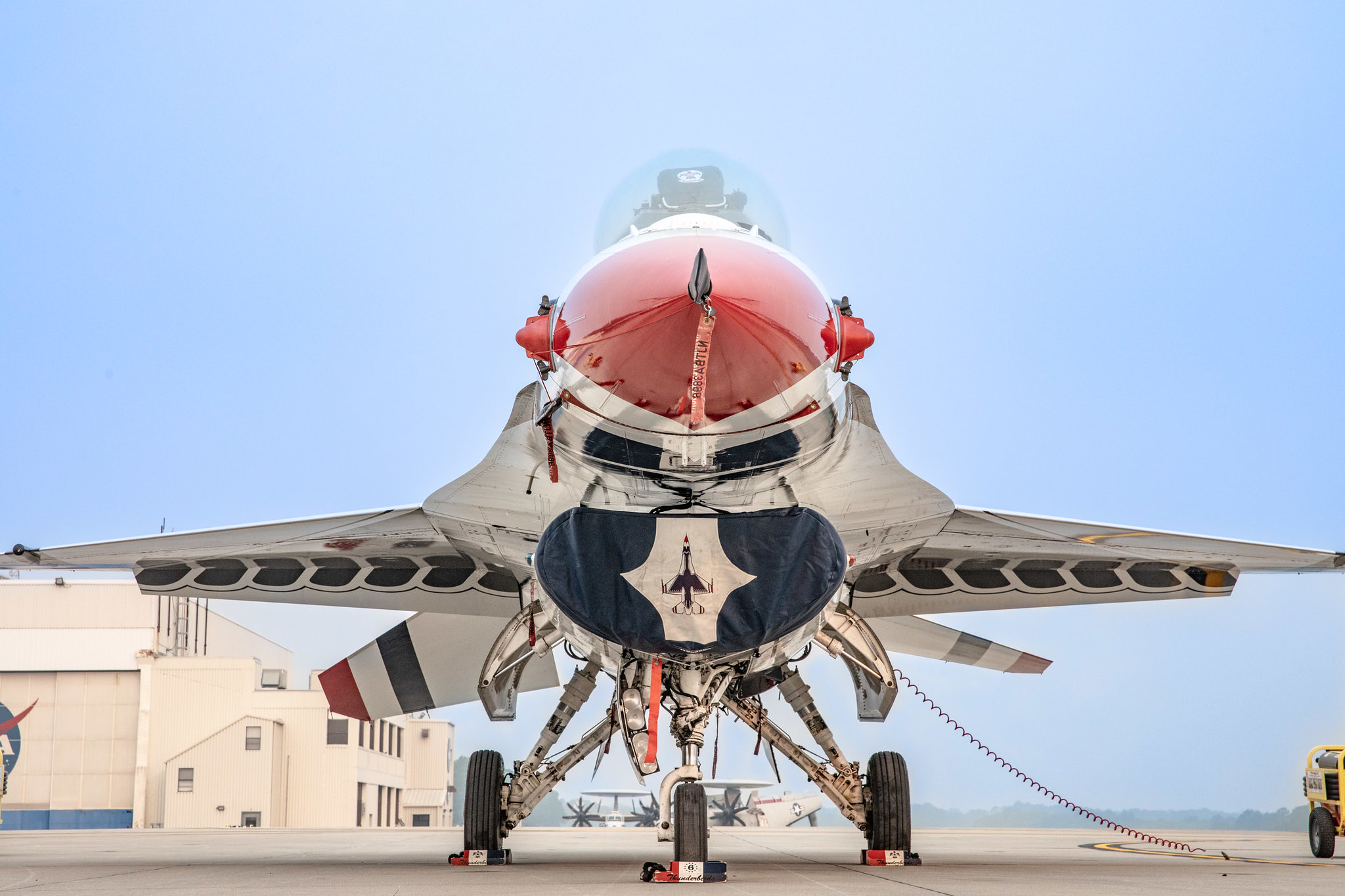
United States Air Force Thunderbirds Flight Team at NASA's Wallops Flight Facility

United States Air Force Thunderbirds Flight Team at NASA's Wallops Flight Facility

The United States Air Force Thunderbirds arrive at NASA's Wallops Flight Facility. The flight teams are stationed at Wallops while they participate in the Ocean City Air Show scheduled for June 11 and 12 in Ocean City, Maryland.


The United States Air Force Thunderbirds flight team prepares for practice flights at NASA's Wallops Flight Facility. The Thunderbird F-16 jets are lined up in a row on the tarmac at Wallops Flight Facility's airfield. The Thunderbirds are mostly white, with a red tip and blues stripes.

On June 9, 2023, Wallops hosted a tailgate party for employees, friends, and family to watch practice demonstrations and meet pilots staging for the Ocean City Airshow.
An award-winning principal from Pocomoke High School has been selected to fly with the U.S. Air Force Thunderbirds as part of their “Hometown Hero” program that honors deserving local people. On Friday, June 9, at 11 a.m. (from the NASA Wallops Flight Facility, Wallops Island, Virginia) Jenifer Rayne will get to experience the ride of her life in the backseat of an F-16 with Thunderbird No. 8 Capt. Jeffrey “Simmer” Downie as her pilot. Principal Rayne gives a thumbs up from the cockpit of No. 8 Thunderbird before her 45-minute flight.


A United States Air Force Thunderbird takes off for the Hometown Hero flight at NASA's Wallops Flight Facility. This year's Hometown Hero was Pocomoke High School Principal Jenifer Rayne flying with Thunderbird No. 8 Capt. Jeffrey “Simmer” Downie.

The United States Air Force Thunderbirds arrived at NASA’s Wallops Flight Facility in Virginia this week. The flight teams are stationed at Wallops while they participate in the Ocean City Air Show scheduled for June 11 and 12, 2023, in Ocean City, Maryland. Other teams being hosted at Wallops are the A-10 Thunderbolt IIS, F-18 Rhino team, and the F-35 II Demo team.

On Friday, June 9, Pocomoke High School Principal Jenifer Rayne flew with the Thunderbirds from Wallops as part of their Hometown Hero flights. She was chosen for receiving the Maryland State Education Association Human and Civil Rights Award for her work with the student-centered club Speak Up.

Learn more about The Thunderbirds:

https://www.airforce.com/thunderbirds/overview


Image Credits: NASA/Danielle Johnson/Patrick Black/Terry Zaperach

Release Date: June 9, 2023


#NASA #Earth #NASAWallops #WallopsFlightFacility #WFF #WallopsIsland #Virginia #AirShow #OceanCity #Maryland #UnitedStates #AirForce #USAF #TheThunderbirds #Pilots #FlightTeam #Aviation #Aerospace #F16Aircraft #F16FightingFalcon #Military #Photography #STEM #Education

NASA Astronaut Jasmin Moghbeli in New SpaceX Crew Dragon Spacesuit

NASA Astronaut Jasmin Moghbeli in New SpaceX Crew Dragon Spacesuit


NASA astronaut Jasmin Moghbeli poses for portraits taken at SpaceX headquarters in Hawthorne, California during crew training. Moghbeli will be the spacecraft commander of NASA’s SpaceX Crew-7 mission—the agency’s seventh rotational mission to the International Space Station. Moghbeli is a naval aviator and aerospace engineer. This will be the first spaceflight for Moghbeli, who became a NASA astronaut in 2017.

Astronaut Jasmin Moghbeli Official NASA Biography:

https://www.nasa.gov/astronauts/biographies/jasmin-moghbeli

https://www.nasa.gov/astronauts/biographies/jasmin-moghbeli/biography

NASA astronaut Jasmin Moghbeli will join European Space Agency (ESA) astronaut Andreas Mogensen and astronaut Satoshi Furukawa from the Japan Aerospace Exploration Agency (JAXA). An additional crew member will be assigned at a later date.

This will be the first long-duration mission for Mogensen. He previously served as a flight engineer on a 10-day mission to the space station in 2015. Crew-7 will be his second trip to space.

Furukawa spent 165 days aboard the orbiting laboratory in 2011 as a flight engineer with Expeditions 28 and 29. As part of his duties, he helped support the final space shuttle mission, STS-135.

Credit: Space Exploration Technologies Corporation (SpaceX)

Capture Date:  May 29, 2023

Release Date: June 8, 2023


#NASA #Space #Earth #ISS #Moon #ArtemisProgram #SpaceX #SpaceXCrew7 #CrewDragonSpacecraft #Spacesuit #Astronaut #JasminMoghbeli #NavalAviator #TestPilot #AerospaceEngineer #Marine #USMarines #USMC #Military #Women #Leaders #Pioneers #HumanSpaceflight #Houston #Texas #JSC #UnitedStates #Photography #STEM #Education

Nearly Two Million Galaxies, Quasars & Stars in Early Dark Energy Data | NOIRLab

Nearly Two Million Galaxies, Quasars & Stars in Early Dark Energy Data | NOIRLab

Nearly two million objects, including distant galaxies, quasars, and stars, comprise the early data release from the Lawrence Berkeley National Laboratory Dark Energy Spectroscopic Instrument (DESI) at Kitt Peak National Observatory, a Program of the National Science Foundation’s NOIRLab. These data will help researchers study the expansion history of the Universe in unprecedented detail and explore other frontier areas of astrophysical research. DESI is funded by the US Department of Energy and managed by Berkeley Lab.


Credit: CTIO/NOIRLab/NSF/AURA/DOE/LBL/N. Bartmann/D. Kirkby/DESI collaboration

Duration: 1 minute, 24 seconds

Release Date: June 12, 2023


#NASA #Astronomy #Space #Science #Galaxies #Quasars #Stars #DarkEnergy #Cosmos #Universe #Cosmology #Astrophysics #NOIRLab #DOE #NSF #AURA #KittPeakNationalObservatory #KittPeak #Arizona #UnitedStates #Canada #STEM #Education #HD #Video