Planet Mars Images: Aug. 18-20, 2026 | NASA's Curiosity & Perseverance Rovers
https://www.friendsofnasa.org/p/friends-of-nasa.html
Friends of NASA (FoN) is an independent non-governmental organization (NGO) dedicated to building international support for peaceful space exploration, commerce, scientific discovery, and STEM education.
Planet Mars Images: Aug. 18-20, 2026 | NASA's Curiosity & Perseverance Rovers
IC 883 in Canes Venatici: A Galactic Merger Remnant | Hubble Space Telescope
IC 883 displays a very disturbed, complex central region with two tidal tails of approximately the same length emerging at nearly right angles—one diagonally to the top right of the frame and the other to the bottom right. The twin tidal tails suggest that IC 883 is the remnant of the merger of two gas-rich disc galaxies. The collision appears to have triggered a burst of star formation, indicated by a number of bright star clusters in the central region. IC 883 is 300 million light-years away toward the constellation of Canes Venatici, the Hunting Dogs. It is Number 193 in Arp's Atlas of Peculiar Galaxies.
China Landspace Zhuque-3 Y2 Reusable Rocket: Payload Capacity Upgrades
The Zhuque-3 Y2 rocket has undergone multiple technological upgrades, ranging from its nozzle to the landing legs, to boost its payload capacity, said Dai Zheng, engineering chief for the Zhuque-3.
The rocket blasted off at 7:35am Beijing Time Wednesday, Aug. 19, 2026, from the Dongfeng commercial space innovation pilot zone in northwest China.
Its land-based recovery was completed as planned, with the rocket's first stage touching down smoothly at the designated position in the recovery site, and the second stage sending the onboard Honghu-03 satellite into the preset orbit.
The flight mission was a complete success.
It marked China's first land-based controlled recovery of a rocket's first stage using deployable landing legs, highlighting a major breakthrough in the country's reusable rocket technology.
Compared with the Zhuque-3 Y1, the Zhuque-3 Y2 optimized its landing propulsion system and adopted a vacuum nozzle design with a larger area ratio. This improves engine performance and rocket payload capacity, explained Dai.
"The second-stage vacuum nozzle is a large vacuum nozzle, whose area ratio has been increased from 50 in Y1 to 100 in Y2. What are the benefits of a larger area ratio? It increases the specific impulse of the second-stage engine, allowing for more complete convective expansion. A larger specific impulse also increases thrust, thus enhancing the overall payload capacity of the rocket," said Dai.
The landing legs are the main qualification focus for Y2. It had gone through numerous tests to ensure their performance and the mission success, said Dai.
"For the landing legs, we conducted numerous ground tests, including drop tests, deployment tests and locking tests. We also ran reliability verification to confirm they can perform their task at the very last moment," he said.
SpaceX Starship Single Engine Static Fire Pre-flight Test#14
Starship Flight Test#13 Summary:
On Friday, July 24, 2026, at 5:51 p.m. CT, Starship lifted off from Starbase, Texas on its thirteenth flight test. This was the second flight of the Starship and Super Heavy V3 vehicles and the first Starship flight to deploy the next generation Starlink V3 satellites.
The flight test began with Super Heavy igniting all 33 Raptor 3 engines and ascending over the Gulf of America. The successful first-stage ascent was followed by a hot-staging maneuver with Starship’s upper stage igniting its six Raptor engines to continue its flight to space.
Following stage separation, the Super Heavy booster performed a directional flip maneuver. The startup sequence was modified for this flight to be more robust to timing variability in engine startup and flip in the desired direction. This is done to increase overall performance. The booster successfully completed the high thrust portion of the boostback burn with all 33 engines, the first time with a Super Heavy V3, before ending the burn early. It attempted to relight its engines for the landing burn with a subset successfully igniting before experiencing a hard splashdown in the Gulf.
After completing a full-duration ascent burn on all six Raptor engines, Starship achieved its planned velocity and trajectory. Starship then successfully deployed all 20 Starlink V3 satellites. SpaceX engineers were able to successfully communicate with every satellite using radio frequency and laser links and downloaded key telemetry from the satellites. The Starlink satellites were deployed on the pre-planned trajectory and are expected to have demised upon reentry approximately 20 minutes after deployment.
The vehicle also reignited a single Raptor engine in an in-space demonstration of a core capability for future orbital missions.
Starship re-entered the Earth’s atmosphere and was able to gather critical data on the performance of its heatshield before executing a dynamic banking move to mimic the trajectory that future missions returning to Starbase will fly. Starship then guided itself using its four flaps to the pre-planned splashdown zone in the Indian Ocean. After relighting all three Raptor engines, Starship executed a landing flip, landing burn, and soft splashdown, coming to rest intact in the Indian Ocean and providing critical views of an intact heatshield for the first time.
NASA plans to use a lunar lander version of Starship to deliver astronauts and cargo to the Moon during the Artemis IV mission and beyond through the Human Landing System (HLS) Program.
Wide-field view: Flocculent Spiral NGC 2841 in Ursa Major | Digitized Sky Survey 2
This image shows the area around flocculent spiral galaxy NGC 2841. It is produced from Digitized Sky Survey 2 images. The Digitized Sky Survey (DSS) is a ground-based imaging survey of the entire sky in several colors of light produced by the Space Telescope Science Institute through its Guide Star Survey group.
Star formation is one of the most important processes shaping the Universe. It plays a pivotal role in the evolution of galaxies and it is also in the earliest stages of star formation that planetary systems first appear. Yet there is still much that astronomers do not understand, such as how do the properties of stellar nurseries vary according to the composition and density of gas present, and what triggers star formation in the first place? The driving force behind star formation is particularly unclear for a type of galaxy called a flocculent spiral, such as NGC 2841 shown here, which features short spiral arms rather than prominent and well-defined galactic limbs when viewed close-up.
Distance from Earth: 65 million light years
#NASA #ESA #Hubble #Astronomy #Space #Science #Stars #Galaxies #NGC2841 #SpiralGalaxies #UrsaMajorConstellation #Cosmos #Universe #HST #HubbleSpaceTelescope #WFC3 #GSFC #STScI #DSS2 #UnitedStates #Europe #STEM #Education
Journey to Flocculent Spiral NGC 2841 in Ursa Major | Hubble Space Telescope
Distance from Earth: 65 million light years
#NASA #ESA #Hubble #Astronomy #Space #Science #Stars #Galaxies #NGC2841 #SpiralGalaxies #UrsaMajorConstellation #Cosmos #Universe #HST #HubbleSpaceTelescope #WFC3 #GSFC #STScI #UnitedStates #Europe #STEM #Education #HD #Video
Close-up: Flocculent Spiral NGC 2841 in Ursa Major | Hubble Space Telescope
Distance from Earth: 65 million light years
#NASA #ESA #Hubble #Astronomy #Space #Science #Stars #Galaxies #NGC2841 #SpiralGalaxies #UrsaMajorConstellation #Cosmos #Universe #HST #HubbleSpaceTelescope #WFC3 #GSFC #STScI #UnitedStates #Europe #STEM #Education #HD #Video
Flocculent Spiral NGC 2841 in Ursa Major | Hubble Space Telescope
Star formation is one of the most important processes shaping the Universe. It plays a pivotal role in the evolution of galaxies and it is also in the earliest stages of star formation that planetary systems first appear. Yet there is still much that astronomers do not understand, such as how do the properties of stellar nurseries vary according to the composition and density of gas present, and what triggers star formation in the first place? The driving force behind star formation is particularly unclear for a type of galaxy called a flocculent spiral, such as NGC 2841 shown here, which features short spiral arms rather than prominent and well-defined galactic limbs.
Distance from Earth: 65 million light years
#NASA #ESA #Hubble #Astronomy #Space #Science #Stars #Galaxies #NGC2841 #SpiralGalaxies #UrsaMajorConstellation #Cosmos #Universe #HST #HubbleSpaceTelescope #WFC3 #GSFC #STScI #UnitedStates #Europe #STEM #Education
Private Chinese firm lands Zhuque-3 reusable rocket on its legs for first time
China successfully achieved its first-ever land-based recovery of a commercial first-stage booster after it launched the Zhuque-3 Y2 rocket into orbit on Wednesday morning, Aug. 19, 2026. Landing a rocket upright on its legs is incredibly difficult, a move previously mastered by only a few groups like Elon Musk's SpaceX.
This mission followed the successful sea-based net recovery of the Long March-10B's first stage on July 10.
Rivaling SpaceX's Falcon 9, the Zhuque-3, developed by Chinese commercial aerospace company LandSpace, leverages advanced materials and cleaner fuels. Unlike conventional single-use rockets, LandSpace can reuse this booster for no less than 20 times, making space travel much cheaper.
Industry experts believe it will help accelerate the deployment of China's low-Earth-orbit satellite constellations.
The Honghu 03 satellite that was launched into its designated orbit by Zhuque-3 will trial its unfoldable thermal radiator, sizeable solar panels, electric propulsion system, and a 100-gigabit optical laser link ahead of mass production for Internet connectivity constellations.
This Landspace mission was the second for the partially reusable Zhuque-3, and LandSpace’s 10th orbital launch attempt in the company’s history. This was also the 59th launch from China in 2026.
#NASA #Space #Satellites #InternetSatellites #Honghu03Satellite #HongqingTechnology #SatelliteConstellations #Earth #China #中国 #LandSpace #蓝箭 #Zhuque3Rocket #ZQ3 #Zhuque3Y2Rocket #ReusableRockets #SpaceTechnologies #JSLC #InnerMongolia #Gansu #CommercialSpace #STEM #Education #History #HD #Video
The California Nebula: NGC 1499 in Perseus | Kitt Peak National Observatory
#NASA #Space #Astronomy #Science #Nebulae #CaliforniaNebula #NGC1499 #EmissionNebulae #Stars #ZetaPersei #PerseusOB2 #PerseusConstellation #MilkyWayGalaxy #Cosmos #Universe #KPNO #KittPeakNationalObservatory #Arizona #NOIRLab #NSF #AURA #UnitedStates #STEM #Education
Does the Milky Way's central black hole rotate? This star could tell us | ESO
Astronomers have discovered the fastest known star in our galaxy, the Milky Way, orbiting Sagittarius A*, the black hole at its center. The star, named S301, was detected with the European Southern Observatory’s Very Large Telescope Interferometer (VLTI) and it reaches speeds of more than 8% the speed of light. It comes closer to the black hole than any other star observed before, so close that it feels the effects of the black hole’s rotation. This video summarizes the discovery.
0:00 - Tracking the S301 star
1:19 - How did S301 get there?
2:30 - Testing General Relativity
4:37 - Twisting space-time
5:43 - How to measure the spin of Sgr A*
#NASA #ESO #Astronomy #Space #Science #Stars #Galaxies #MilkyWay #BlackHoles #SagittariusA #StarS301 #Astrophysics #GeneralRelativity #Physics #Cosmos #Universe #VLT #VLTI #ParanalObservatory #Chile #Europe #STEM #Education #HD #Video
China Landspace Reusable Rocket Mission Recap: Launch & First Stage Landing
This mission followed the successful sea-based net recovery of the China Long March-10B rocket's first stage on July 10.
Today marked China's first successful land-based controlled recovery of a rocket's first stage using deployable landing legs, highlighting a major breakthrough in the country's reusable rocket technology.
Approximately 137 seconds after lift-off, the first and second stages separated. The second stage continued its flight and successfully delivered the Honghu 03 satellite, independently developed by Hongqing Technology, into its assigned orbit. At approximately 07:41, the first stage performed a successful soft touchdown at the LandSpace Landing Site#1 in Minqin County, Gansu Province, following the planned trajectory.
The Landspace ZhuQue-3 Y2 reusable launch vehicle achieved full success in orbital insertion and first-stage recovery with the power of its nine TQ-12A engines.
🎉This is China's first successful flight verification of land recovery for the first stage of a reusable launch vehicle, as well as its first successful verification of a landing using deployable landing legs.
The Honghu 03 satellite will trial its unfoldable thermal radiator, sizeable solar panels, electric propulsion system, and a 100-gigabit optical laser link ahead of mass production for connectivity constellations.
This Landspace mission was the 2nd for the partially reusable Zhuque-3, and LandSpace’s 10th orbital launch attempt in the company’s history. This was also the 59th launch from China in 2026.
#NASA #Space #Satellites #InternetSatellites #Honghu03Satellite #HongqingTechnology #SatelliteConstellations #Earth #China #中国 #LandSpace #蓝箭 #Zhuque3Rocket #ZQ3 #Zhuque3Y2Rocket #ReusableRockets #JSLC #InnerMongolia #Gansu #CommercialSpace #STEM #Education #History #HD #Video
Expedition 75: Menon & Adenot on Spacewalk | International Space Station
An international partnership of space agencies provides and operates the elements of the International Space Station (ISS). The principals are the space agencies of the United States, Russia, Europe, Japan, and Canada.
Credit: NASA's Johnson Space Center
Image Date: Aug. 18, 2026
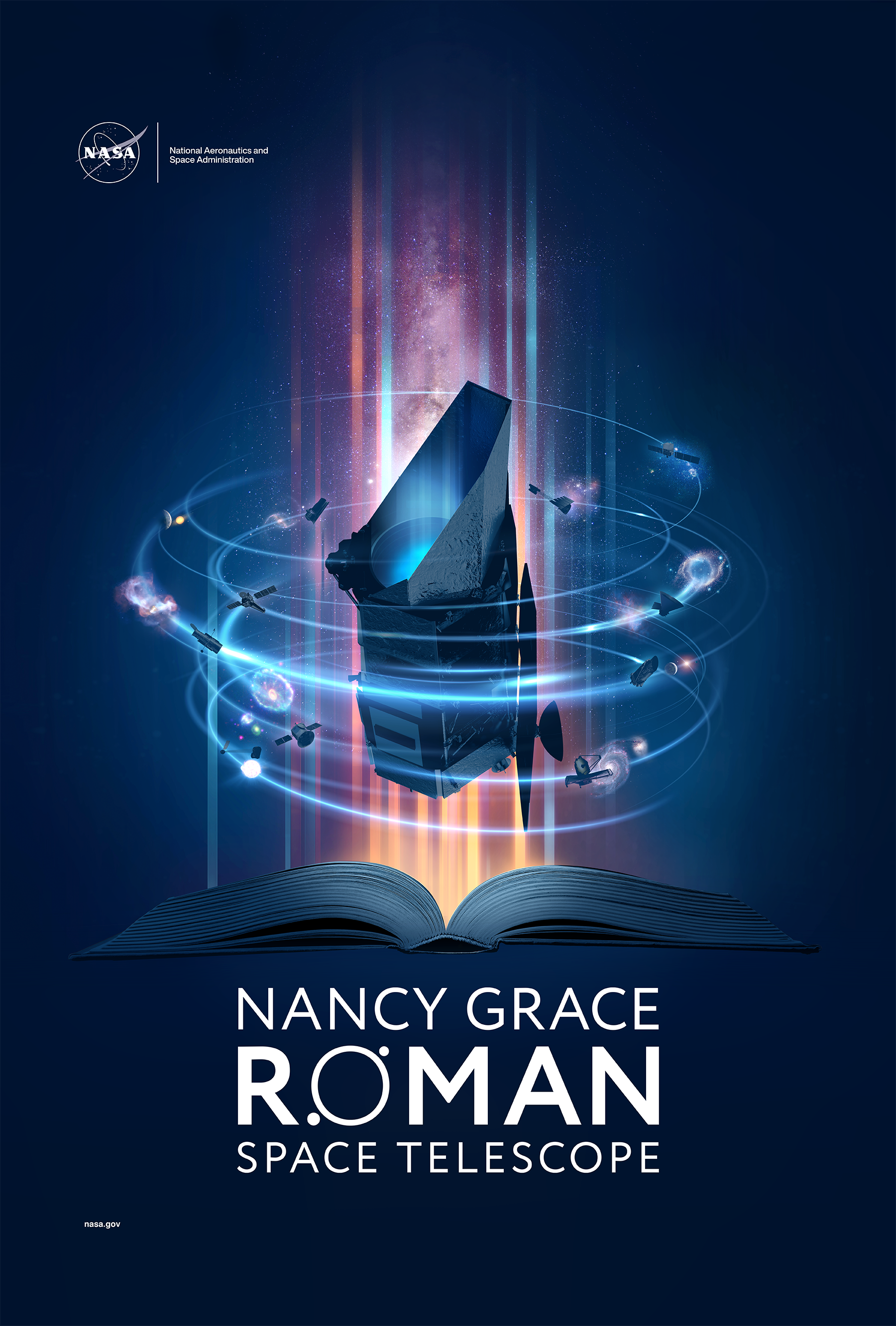
Plans for Studying Dark Energy | NASA's Nancy Grace Roman Space Telescope
Scientists have discovered that a mysterious pressure dubbed “dark energy” makes up about 68% of the total energy content of the cosmos.
Exploring the nature of dark energy is one of the primary reasons NASA built the Nancy Grace Roman Space Telescope. Its measurements will help illuminate the dark energy puzzle.
What exactly is dark energy?
More is unknown than known, but theorists are chasing down a couple of possible explanations. Discovering how dark energy has affected the universe’s expansion in the past will shed some light on how it will influence the expansion in the future. One theory suggests dark energy would eventually become dominant over the fundamental forces, causing everything that is currently bound together—galaxies, planets, people—to break apart.
Exploring dark energy will allow us to investigate, and possibly even foresee, the universe’s fate.
Download the free Nancy Grace Roman Space Telescope poster here:
China Prepares to Launch Chang'e-7 Lunar South Pole Probe in Hainan
The Chang'e-7 lunar probe is scheduled for launch at an appropriate time, according to the China Manned Space Agency (CMSA).
The combination of the Chang'e-7 lunar probe and the Long March-5 Y14 carrier rocket was transferred vertically on Wednesday, Aug. 19, 2026, to the launching area at the Wenchang Spacecraft Launch Site in south China's Hainan province, the CMSA said.
The lunar probe and rocket had arrived at the launch site in April and July, respectively, and have since completed assembly and testing. The CMSA said all facilities and equipment at the launch site are in good condition, and the functional checks, joint test and propellant filling will be carried out before the launch as scheduled.
The Chang'e-7 mission aims to achieve breakthroughs in multiple key technologies, such as high-precision soft landing on the lunar surface, legged movements, plus hopping and exploration of permanently shadowed craters.
According to the CMSA, the mission will employ a comprehensive detection approach. This involves orbiting, landing, roving and hopping to conduct environmental and resource surveys of the lunar south pole. It will also involve international cooperation.
China Prepares to Launch Chang'e-7 Lunar South Pole Probe in Hainan
The Chang'e-7 lunar probe is scheduled for launch at an appropriate time, according to the China Manned Space Agency (CMSA).
The combination of the Chang'e-7 lunar probe and the Long March-5 Y14 carrier rocket was transferred vertically on Wednesday, Aug. 19, 2026, to the launching area at the Wenchang Spacecraft Launch Site in south China's Hainan province, the CMSA said.
The lunar probe and rocket had arrived at the launch site in April and July, respectively, and have since completed assembly and testing. The CMSA said all facilities and equipment at the launch site are in good condition, and the functional checks, joint test and propellant filling will be carried out before the launch as scheduled.
The Chang'e-7 mission aims to achieve breakthroughs in multiple key technologies, such as high-precision soft landing on the lunar surface, legged movements, plus hopping and exploration of permanently shadowed craters.
According to the CMSA, the mission will employ a comprehensive detection approach. This involves orbiting, landing, roving and hopping to conduct environmental and resource surveys of the lunar south pole. It will also involve international cooperation.