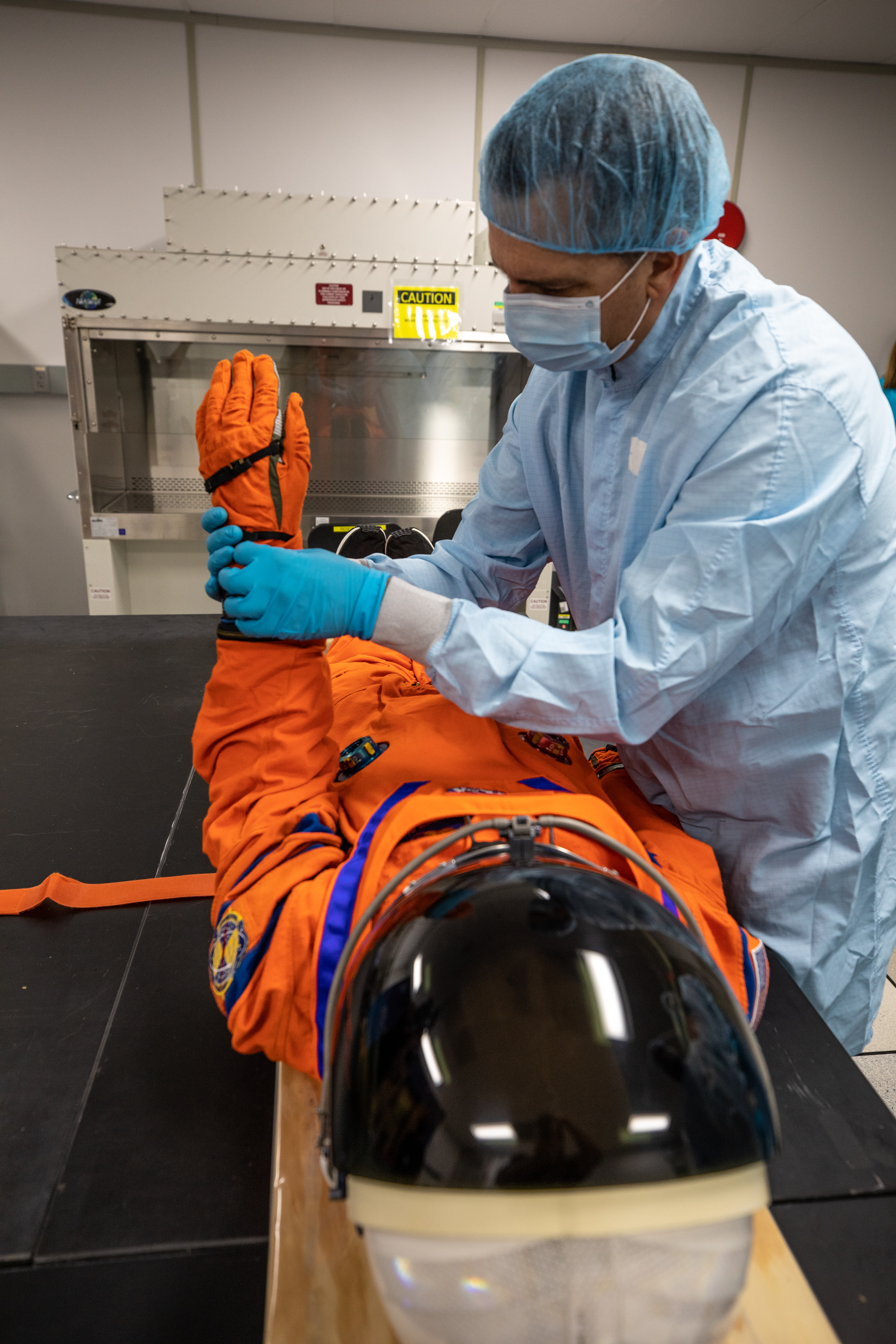
Moonikin “Campos” & The Manikins | NASA's Artemis I Moon Mission
Friends of NASA (FoN) is an independent non-governmental organization (NGO) dedicated to building international support for peaceful space exploration, commerce, scientific discovery, and STEM education.
Friday, August 12, 2022
Moonikin “Campos” & The Manikins | NASA's Artemis I Moon Mission
Thor’s Helmet Nebula: Wide-field View | ESO
This wide-field view shows the rich region of sky around the Thor’s Helmet Nebula (NGC 2359) in the constellation of Canis Major (The Great Dog). This view was created from images forming part of the Digitized Sky Survey 2.
Distance: 15,000 light years
Credit: European Southern Observatory (ESO)/Digitized Sky Survey 2. Acknowledgement: Davide De Martin
Release Date: October 5, 2012
#NASA #ESO #Astronomy #Space #Science #Stars #Nebula #ThorsHelmetNebula #NGC2359 #CanisMajor #Constellation #MilkyWay #Galaxy #Cosmos #Universe #Telescope #VLT #ParanalObservatory #Chile #Europe #STEM #Education
Panning across the Thor's Helmet Nebula | ESO
This video takes a close look at a Very Large Telescope (VLT) image of the Thor's Helmet Nebula. This object, also known as NGC 2359, lies in the constellation of Canis Major (The Great Dog). The helmet-shaped nebula is around 15,000 light-years away from Earth and is over 30 light-years across. The helmet is a cosmic bubble, blown as the wind from the bright, massive star near the bubble's center sweeps through the surrounding molecular cloud. This VLT image of the Thor’s Helmet Nebula was taken on the occasion of ESO’s 50th Anniversary with the help of Brigitte Bailleul—winner of a VLT competition.
Credit: European Southern Observatory (ESO)/B. Bailleul
Duration: 1 minute
Release Date: October 5, 2012
Zooming in on Thor's Helmet | ESO
This video sequence starts with a broad view of the Milky Way before closing in on the sky close to the familiar bright star Sirius. The final sequence shows a new VLT image of the Thor's Helmet Nebula taken on the occasion of ESO's 50th Anniversary, October 5, 2012, with the help of Brigitte Bailleul—winner of a VLT competition.
Credit: European Southern Observatory (ESO)
Duration: 1 minute
Release Date: October 5, 2012
#NASA #ESO #Astronomy #Space #Science #Stars #Star #Sirius #Nebula #ThorsHelmetNebula #NGC2359 #CanisMajor #Constellation #MilkyWay #Galaxy #Cosmos #Universe #Telescope #VLT #ParanalObservatory #Chile #Europe #STEM #Education #HD #Video
Thor’s Helmet Nebula | ESO
Distance: 15,000 light years
Credit: European Southern Observatory (ESO)/B. Bailleul
Release Date: October 5, 2012
#NASA #ESO #Astronomy #Space #Science #Stars #Nebula #ThorsHelmetNebula #NGC2359 #CanisMajor #Constellation #MilkyWay #Galaxy #Cosmos #Universe #Telescope #VLT #ParanalObservatory #Chile #Europe #STEM #Education
NASA's Space to Ground: Space Gardening | Week of August 12, 2022
NASA's Space to Ground is your weekly update on what's happening aboard the International Space Station. Healing wounds in space and growing crops in low-Earth orbit and beyond were among the major research topics aboard the International Space Station this week. Meanwhile, the Expedition 67 crew was also packing a U.S. cargo craft, SpaceX 's CRS-25, and preparing for a Russian spacewalk next week.
Expedition 67 Crew
Commander Oleg Artemyev (Russia)
Roscosmos Flight Engineers: Denis Matveev and Sergey Korsakov (Russia)
NASA Flight Engineers: Kjell Lindgren, Bob Hines, Jessica Watkins (USA)
European Space Agency (ESA) Flight Engineer: Samantha Cristoforetti (Italy)
An international partnership of space agencies provides and operates the elements of the International Space Station (ISS). The principals are the space agencies of the United States, Russia, Europe, Japan, and Canada. The ISS has been the most politically complex space exploration program ever undertaken.
https://www.nasa.gov/iss-science
For more information about STEM on Station:
https://www.nasa.gov/stemonstation
Credit: NASA's Johnson Space Center (JSC)
Duration: 2 minutes, 46 seconds
Release Date: August 12, 2022
#NASA #ESA #ISS #Earth #Planet #Plants #Science #Astronauts #KjellLindgren #JessicaWatkins #BobHines #SamanthaCristoforetti #Italy #Italia #Minerva #MissionMinerva #Laboratory #Research #Experiments #Expedition67 #Technology #STEM #Education #HD #Video
Binary Star System R Aquarii: Wide-field View | ESO
The image is a color composite made from exposures from the Digitized Sky Survey 2 (DSS2), and shows the region surrounding R Aquarii, the vivid orange point at the center of the image.
Credit: European Southern Observatory (ESO)/Digitized Sky Survey 2
Acknowledgment: Davide De Martin
Release Date: December 12, 2018
#NASA #ESO #Astronomy #Space #Science #BinaryStars #Stars #RAquarii #Cederblad211 #Nebula #Aquarius #Constellation #MilkyWay #Galaxy #Cosmos #Universe #Telescope #VLT #SPHERE #Chile #Europe #STEM #Education
Changing Brightness of R Aquarii Binary Star System | ESO
In 1810, astronomers discovered that the brightness of the star R Aquarii periodically changes and it has subsequently been found to vary with a period of approximately a year. During these cycles, R Aquarii has been seen to fade into obscurity and then become so bright as to almost be visible to the naked eye. This animation is an artistic representation of this change in brightness.
Credit: ESO/M. Kornmesser
Duration: 17 seconds
Release Date: December 12, 2018
#NASA #ESO #Astronomy #Space #Science #BinaryStars #Stars #RAquarii #Cederblad211 #Nebula #Aquarius #Constellation #MilkyWay #Galaxy #Cosmos #Universe #Telescope #VLT #Chile #Europe #STEM #Education #Art #Animation #HD #Video
Thursday, August 11, 2022
A Red Giant Star Dancing with the Enemy | ESO
ESOcast 188 Light: While testing a new subsystem on the SPHERE planet-hunting instrument on European Southern Observatory’s Very Large Telescope (VLT), astronomers were able to capture dramatic details of the turbulent stellar relationship in the binary star R Aquarii with unprecedented clarity—even compared to observations from Hubble.
Credit: European Southern Observatory (ESO)
Directed by: Nico Bartmann
Editing: Nico Bartmann
Web and technical support: Mathias André and Raquel Yumi Shida
Written by: Sara Rigby and Calum Turner
Music: tonelabs – Orion Fog
Footage and photos: ESO, Digitized Sky Survey 2, N. Risinger, Schmid et al., ESA, Hubble, M. Kornmesser, T. Liimets et al.
Scientific consultant: Paola Amico
Executive producer: Lars Lindberg Christensen
Duration: 1 minute, 27 seconds
Release Date: December 12, 2018
#NASA #ESO #Astronomy #Space #Science #BinaryStars #Stars #RAquarii #Cederblad211 #Nebula #Aquarius #Constellation #MilkyWay #Galaxy #Cosmos #Universe #Telescope #VLT #Chile #Europe #STEM #Education #HD #Video
Zooming in on R Aquarii | ESO
This zoom video starts with a wide view of the Milky Way and ends with a close-up look at the chaotic and fascinating binary star system R Aquarii.
The image shown in this final image of this video is data from the SPHERE/ZIMPOL instrument on the European Southern Observatory’s Very Large Telescope (VLT), and shows the binary star itself, as well as the jets of material spewing from the interacting stellar couple.
Credit: European Southern Observatory (ESO), Digitized Sky Survey 2, ESA/Hubble, Nick Risinger
Music: astral electronic
Duration: 50 seconds
Release Date: December 12, 2018
#NASA #ESO #Astronomy #Space #Science #BinaryStars #Stars #RAquarii #Cederblad211 #Nebula #Aquarius #Constellation #MilkyWay #Galaxy #Cosmos #Universe #Telescope #VLT #Chile #Europe #STEM #Education #HD #Video
Binary Star System R Aquarii | ESO
R Aquarii is a so-called “symbiotic binary”, comprising two stars surrounded by a large, dynamic cloud of gas (a nebula). Systems like this contain two stars in an unequal and complex relationship. R Aquarii is made up of one hot white dwarf and one red giant. The red giant is losing matter to its small companion and occasionally ejecting matter in weird spurts, loops and trails, forming the intriguing shapes seen here.
There is a lot going on between the performers in this cosmic double act. The red giant is a variable star, with a brightness that changes by a factor of 750 every year and three weeks. The faint nebula is named Cederblad 211 and is thought to be the result of a violent nova 250 years ago. Also visible is a narrow, vertical, S-shaped feature, with blobs of superheated material moving outward at tremendous speeds of 600 to 850 kilometers per second.
R Aquarii was also imaged 15 years ago—and several times in the intervening period—to track its ongoing activity. The system is very dynamic and complex, and has expanded and evolved significantly in recent years.
Credit: European Southern Observatory (ESO)
Release Date: December 10, 2018
#NASA #ESO #Astronomy #Space #Science #BinaryStars #Stars #RAquarii #Cederblad211 #Nebula #Aquarius #Constellation #MilkyWay #Galaxy #Cosmos #Universe #Telescope #VLT #FORS #Chile #Europe #STEM #Education
Artemis I Moonikin Campos | NASA
Moonikin Campos, named after former NASA engineer Arturo Campos, will be on Artemis I, an uncrewed flight test of the Orion spacecraft and Space Launch System rocket as an integrated system ahead of crewed flights to the Moon. Moonikin Campos, along with two phantom manikins, Helga and Zohar, will allow us to measure radiation, acceleration, and vibration data throughout the mission; the information gathered from these human body replicas will inform future crewed missions.
Image Date: November 9, 2021
#NASA #ESA #Space #Moon #MoonikinCampos #Artemis #ArtemisI #Orion #Spacecraft #SLS #Rocket #DeepSpace #Orion #Spacecraft #Astronauts #HumanSpaceflight #JourneyToMars #Science #Engineering #Technology #Exploration #SolarSystem #KSC #Spaceport #Florida #UnitedStates #Europe #STEM #Education
Planetary Nebula NGC 2899: Wide-field View | ESO
Credit: European Southern Observatory (ESO)/Digitized Sky Survey 2
Acknowledgement: Davide De Martin
Release Date: July 30, 2020
#NASA #ESO #Astronomy #Space #Science #Stars #Nebula #PlanetaryNebula #NGC2899 #Vela #Constellation #MilkyWay #Galaxy #Cosmos #Universe #Telescope #VLT #FORS #Chile #Europe #STEM #Education
Planetary Nebula NGC 2899: Stunning Space Butterfly | ESO
ESOcast 227 Light: Astronomers using European Southern Observatory's Very Large Telescope (VLT) have imaged a 'space butterfly', a planetary nebula known as NGC 2899. This video offers stunning views of this object and the science behind it.
Credit: European Southern Observatory (ESO)
Directed by: Herbert Zodet
Editing: Herbert Zodet
Web and technical support: Gurvan Bazin and Raquel Yumi Shida
Written by: Stephanie Rowlands, Emma Foxell and Bárbara Ferreira
Music: Stan Dart—The Long Way
Footage and photos: ESO, C. Malin, Digitized Sky Survey 2 and Nick Risinger
Scientific consultants: Paola Amico and Mariya Lyubenova
Duration: 1 minute, 26 seconds
Zooming in on Planetary Nebula NGC 2899 | ESO
This video sequence starts from a wide field of the region of the sky around NGC 2899 and closes in on the planetary nebula. The final very detailed view comes from the European Southern Observatory’s Very Large Telescope at the Paranal Observatory in Chile.
Credits: European Southern Observatory (ESO)/Digitized Sky Survey 2/N. Risinger
Music: Astral Electronic
Duration: 50 seconds
Release Date: July 30, 2020
#NASA #ESO #Astronomy #Space #Science #Stars #Nebula #PlanetaryNebula #NGC2899 #Vela #Constellation #MilkyWay #Galaxy #Cosmos #Universe #Telescope #VLT #FORS #ParanalObservatory #Chile #Europe #STEM #Education #HD #Video
NGC 2899 Planetary Nebula | ESO
Credit: European Southern Observatory (ESO)
Release Date: July 30, 2020
#NASA #ESO #Astronomy #Space #Science #Stars #Nebula #PlanetaryNebula #NGC2899 #Vela #Constellation #MilkyWay #Galaxy #Cosmos #Universe #Telescope #VLT #FORS #Chile #Europe #STEM #Education