NASA's Artemis I Moon Rocket: Preflight | Kennedy Space Center
Friends of NASA (FoN) is an independent non-governmental organization (NGO) dedicated to building international support for peaceful space exploration, commerce, scientific discovery, and STEM education.
Sunday, August 28, 2022
NASA's Artemis I Moon Rocket: Preflight | Kennedy Space Center
NASA's Artemis I Moon Rocket: Vehicle Assembly Building | Kennedy Space Center
NASA's Artemis I Moon Rocket in Vehicle Assembly Building | Kennedy Space Center
The mobile launcher with NASA’s Space Launch System (SLS) rocket and Orion spacecraft aboard is seen inside the Vehicle Assembly Building (VAB) before it was rolled out to Launch Complex 39B for launch, Tuesday, Aug. 16, 2022, at NASA’s Kennedy Space Center (KSC) in Florida.
As part of the agency’s Artemis I flight test, the fully stacked and integrated SLS rocket and Orion spacecraft is scheduled to liftoff on Monday, Aug. 29, 2022.
The first in a series of increasingly complex missions, Artemis I will provide a foundation for human deep space exploration and demonstrate our commitment and capability to extend human presence to the Moon and beyond. The primary goal of Artemis I is to thoroughly test the integrated systems before crewed missions by launching Orion atop the SLS rocket, operating the spacecraft in a deep space environment, testing Orion’s heat shield, and recovering the crew module after reentry, descent, and splashdown.
All about Artemis I:
https://www.nasa.gov/specials/artemis-i/
Image Credits: NASA/Ben Smegelsky/Kim Shiflett
Image Capture Dates: Aug. 3-16, 2022
#NASA #ESA #Space #Moon #Artemis #ArtemisI #Orion #Spacecraft #SLS #NASASLS #SpaceLaunchSystem #Rocket #DeepSpace #Astronauts #MoonToMars #Science #Engineering #Technology #Exploration #SolarSystem #KennedySpaceCenter #Florida #UnitedStates #Europe #ArtemisGeneration #STEM #Education
Starburst Galaxy NGC 1569: Wide-field View | Hubble
The galaxy, called NGC 1569, sparkles with the light from millions of newly formed young stars. NGC 1569 is pumping out stars at a rate that is 100 times faster than the rate observed in our Milky Way Galaxy. This frenzied pace has been almost continuous for the past 100 million years.
The core's centrepiece is a grouping of three giant star clusters, each containing more than a million stars. (Two of the clusters are so close they appear as one grouping.) The clusters reside in a large, central cavity. The gas in the cavity has been blown out by the multitude of massive, young stars that already exploded as supernovae. These explosions also triggered a violent flow of gas and particles that is sculpting giant gaseous structures. The sculpted structure at lower right is about 3,700 light-years long.
Huge bubbles of gas, such as the two at left, appear like floating islands. The largest bubble is about 378 light-years wide and the smallest 119 light-years wide. They are being illuminated by the radiation from the bright, young stars within them. Some of those stars are peaking through their gaseous cocoons.
The biggest and brightest objects surrounding the core are stars scattered throughout our Milky Way Galaxy. In contrast, the thousands of tiny white dots in the image are stars in the halo of NGC 1569. The galaxy is 11 million light-years from Earth.
A new analysis of NGC 1569 shows that it is one and a half times farther from Earth than astronomers previously thought. The extra distance places the galaxy in the middle of a group of about 10 galaxies centered on the spiral galaxy IC 342. Gravitational interactions among the group's galaxies may be compressing gas in NGC 1569 and igniting the star-birthing frenzy.
Hubble's Wide Field Planetary Camera 2 and Advanced Camera for Surveys made the observations of NGC 1569 in September 1999, November 2006, and January 2007.
Credit for Advanced Camera Data: NASA, European Space Agency (ESA), A. Aloisi (STScI/ESA), J. Mack and A. Grocholski (STScI), M. Sirianni (STScI/ESA), R. van der Marel (STScI), L. Angeretti, D. Romano, and M. Tosi (INAF-OAB), and F. Annibali, L. Greggio, and E. Held (INAF-OAP)
Credit for Wide Field Planetary Camera 2 Data: NASA, ESA, P. Shopbell (California Institute of Technology), R. Dufour (Rice University), D. Walter (South Carolina State University, Orangeburg), and A. Wilson (University of Maryland, College Park)
Release Date: November 20, 2008
#NASA #ESA #Astronomy #Hubble #Space #Science #Galaxy #DwarfGalaxy #NGC1569 #Stars #StarClusters #Supernovae #Camelopardalis #Constellation #Cosmos #Universe #SpaceTelescope #GSFC #STScI #UnitedStates #Europe #STEM #Education
Bursting at the Seams: Starburst Galaxy NGC 1569 | Hubble
Distance: 11 million light years
This galaxy is currently a hotbed of vigorous star formation. NGC 1569 is a starburst galaxy, meaning that—as the name suggests—it is bursting at the seams with stars, and is currently producing them at a rate far higher than that observed in most other galaxies. For almost 100 million years, NGC 1569 has pumped out stars over 100 times faster than the Milky Way!
As a result, this glittering galaxy is home to super star clusters, three of which are visible in this image—one of the two bright clusters is actually the superposition of two massive clusters. Each containing more than a million stars, these brilliant blue clusters reside within a large cavity of gas carved out by multiple supernovae, the energetic remnants of massive stars.
In 2008, Hubble observed the galaxy's cluttered core and sparsely populated outer fringes. By pinpointing individual red giant stars, Hubble’s Advanced Camera for Surveys enabled astronomers to calculate a new—and much more precise—estimate for NGC 1569’s distance. This revealed that the galaxy is actually one and a half times further away than previously thought, and a member of the IC 342 galaxy group.
Astronomers suspect that the IC 342 cosmic congregation is responsible for the star-forming frenzy observed in NGC 1569. Gravitational interactions between this galactic group are believed to be compressing the gas within NGC 1569. As it is compressed, the gas collapses, heats up and forms new stars.
Credit: European Space Agency (ESA)/Hubble & NASA, Aloisi, Ford
Acknowledgement: Judy Schmidt (Geckzilla)
Pan over Starburst Galaxy NGC 1569 | Hubble
Credit: European Space Agency (ESA)/Hubble (M. Kornmesser & L. L. Christensen)
Duration: 24 seconds
Release Date: Oct 24, 2017
#NASA #ESA #Astronomy #Space #Science #Galaxy #DwarfGalaxy #NGC1569 #Stars #StarClusters #Supernovae #Camelopardalis #Constellation #Cosmos #Universe #SpaceTelescope #GSFC #STScI #UnitedStates #Europe #STEM #Education #HD #Video
Zoom on Starburst Galaxy NGC 1569 | Hubble
The nearby dwarf galaxy NGC 1569 is a hotbed of vigorous star birth activity which blows huge bubbles and super-bubbles that riddle the main body of the galaxy. The galaxy's vigorous star factories are also manufacturing brilliant blue star clusters. This galaxy had a sudden and relatively recent onset of star birth 25 million years ago, which subsided about the time the very earliest human ancestors appeared on Earth.
Credit: European Space Agency (ESA), NASA & Peter Anders (Gottingen University Galaxy Evolution Group, Germany)
Duration: 21 seconds
Release Date: October 24, 2017
#NASA #ESA #Astronomy #Space #Science #Galaxy #DwarfGalaxy #NGC1569 #Stars #StarClusters #Supernovae #Camelopardalis #Constellation #Cosmos #Universe #SpaceTelescope #GSFC #STScI #UnitedStates #Europe #STEM #Education #HD #Video
Supernova Blast Bonanza in Nearby Galaxy NGC 1569 | Hubble
Distance: 11 million light years
In this image, taken with the NASA/European Space Agency Hubble Space Telescope, the bubble structure is sculpted by the galactic super-winds and outflows caused by a colossal input of energy from collective supernova explosions that are linked with a massive episode of star birth.
The bubble-like structures seen in this image are made of hydrogen gas that glows when hit by the fierce winds and radiation from hot young stars and is racked by supernovae shocks. The first supernovae blew up when the most massive stars reached the end of their lifetimes roughly 20-25 million years ago. The environment in NGC 1569 is still turbulent and the supernovae may not only deliver the gaseous raw material needed for the formation of further stars and star clusters, but also actually trigger their birth in the tortured swirls of gas.
Credit: European Space Agency (ESA), NASA & Peter Anders (Göttingen University Galaxy Evolution Group, Germany)
Release Date: February 3, 2004
#NASA #ESA #Astronomy #Space #Science #Galaxy #DwarfGalaxy #NGC1569 #Stars #StarClusters #Supernovae #Camelopardalis #Constellation #Cosmos #Universe #SpaceTelescope #GSFC #STScI #UnitedStates #Europe #STEM #Education
Zooming in on Binary Star AR Scorpii
This zoom sequence takes the viewer from a wide-field view of the spectacular central parts of the Milky Way into the bright constellation of Scorpius (The Scorpion). The final view is centered on the exotic binary star AR Scorpii.
Distance: 400 light years
Credit: European Space Agency (ESA)/Hubble, Digitized Sky Survey 2, N, Risinger
Duration: 50 seconds
Release Date: July 27, 2016
#NASA #ESA #Astronomy #Space #Science #Star #BinaryStarSystem #ARScorpii #Scorpius #Constellation #MilkyWay #Galaxy #Cosmos #Universe #SpaceTelescope #GSFC #STScI #UnitedStates #Europe #STEM #Education #HD #Video
Saturday, August 27, 2022
Binary Star System AR Scorpii: Artist’s Impression Video | ESA
This artist’s impression video shows the strange object AR Scorpii. In this unique double star a rapidly spinning white dwarf star powers electrons up to almost the speed of light. These high energy particles release blasts of radiation that lash the companion red dwarf star and cause the entire system to pulse dramatically every 1.97 minutes with radiation ranging from the ultraviolet to radio.
Credit: European Space Agency (ESA)/Hubble, L. Calçada, University of Warwick
Duration: 30 seconds
Release Date: July 27, 2016
Binary Star System AR Scorpii: Artist’s Impression | ESA
Distance: 400 light years
Credit: M. Garlick/University of Warwick, European Space Agency (ESA)/Hubble
Release Date: July 27, 2016
#NASA #ESA #Astronomy #Space #Science #Star #BinaryStarSystem #ARScorpii #Scorpius #Constellation #MilkyWay #Galaxy #Cosmos #Universe #SpaceTelescope #GSFC #STScI #UnitedStates #Europe #Art #ArtistImpression #STEM #Education
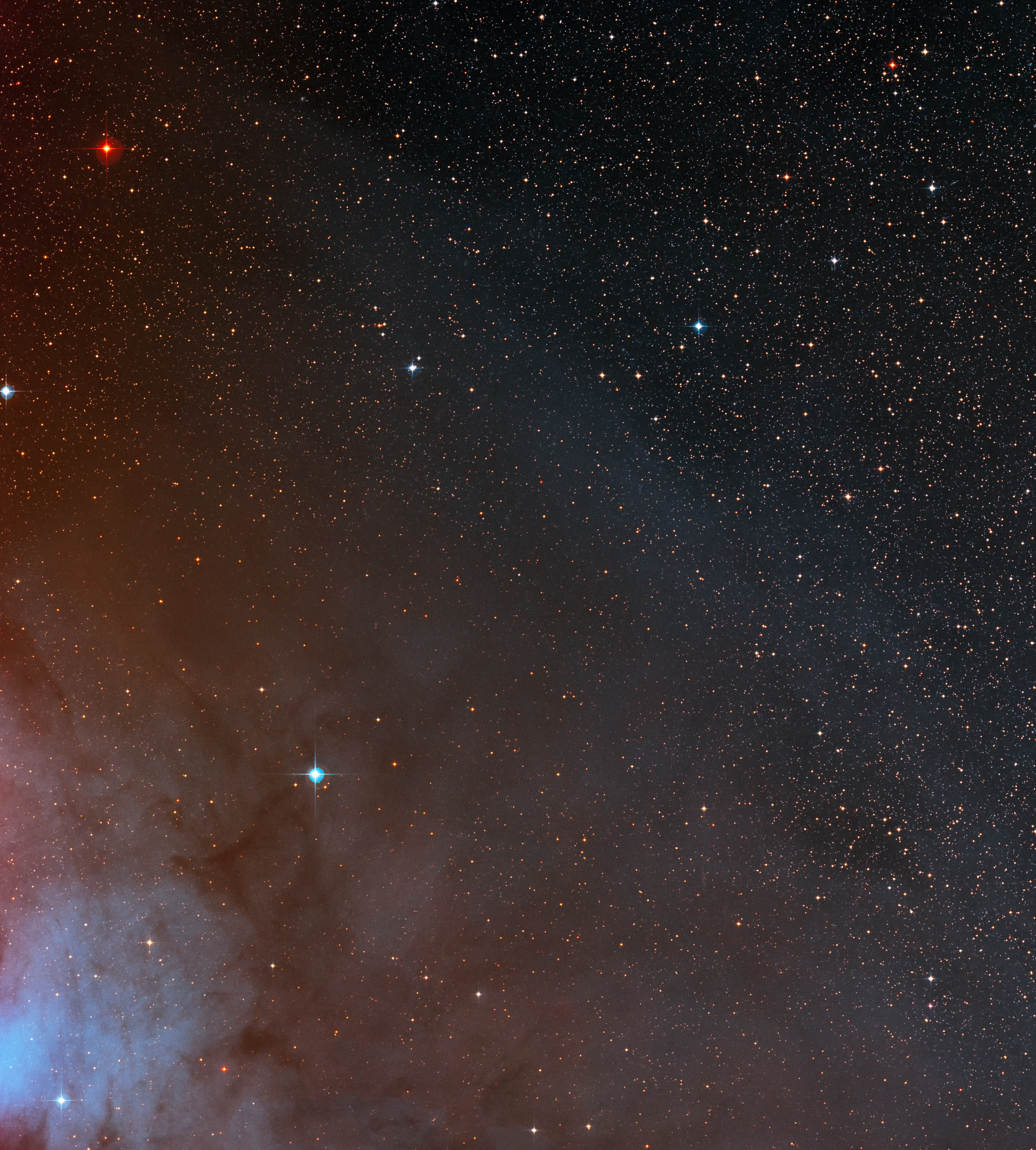
Binary Star System AR Scorpii: Wide-field View | Hubble
Distance: 400 light years
Credit: Digitized Sky Survey 2
Acknowledgement: Davide De Martin
Release Date: July 27, 2016
#NASA #ESA #Astronomy #Space #Science #Star #BinaryStarSystem #ARScorpii #Scorpius #Constellation #MilkyWay #Galaxy #Cosmos #Universe #SpaceTelescope #GSFC #STScI #UnitedStates #Europe #STEM #Education
Pan across The Serpens Nebula | Hubble
This video pans over NASA/European Space Agency Hubble Space Telescope observations of the Serpens Nebula, about 1,300 light-years from Earth. It is a reflection nebula that owes most of its sheen to the light emitted by stars in its surroundings or embedded within it.
It is also home to two cosmic shadows, created by stars which are orbited by protoplanetary discs.
Credit: European Space Agency (ESA)/Hubble, NASA
Duration: 25 seconds
Release Date: December 19, 2018
#NASA #ESA #Astronomy #Space #Science #Star #HBC672 #SerpensNebula #ReflectionNebula #SerpensCauda #Constellation #MilkyWay #Galaxy #Cosmos #Universe #SpaceTelescope #GSFC #STScI #UnitedStates #Europe #STEM #Education #HD #Video
Serpens Nebula: Hubble Optical & VLT Infrared Views
Credit: NASA, European Space Agency (ESA)/Hubble, European Southern Observatory (ESO)
Duration: 26 seconds
Release Date: October 31, 2018
#NASA #ESA #ESO #Astronomy #Space #Science #Star #HBC672 #ProtoplanetaryDisc #SerpensNebula #BatShadow #SerpensCauda #Constellation #MilkyWay #Galaxy #Cosmos #Universe #SpaceTelescope #VLT #HAWKI #Infrared #Chile #UnitedStates #Europe #Animation #STEM #Education #HD #Video
Serpens Nebula: Infrared View | ESO's VLT HAWK-I
Distance: 1,300 light years
Credit: European Southern Observatory (ESO)
Release Date: October 31, 2018
#NASA #ESO #Astronomy #Space #Science #Star #HBC672 #ProtoplanetaryDisc #SerpensNebula #BatShadow #SerpensCauda #Constellation #MilkyWay #Galaxy #Cosmos #Universe #Telescope #VLT #HAWKI #Infrared #UnitedStates #Chile #Europe #STEM #Education
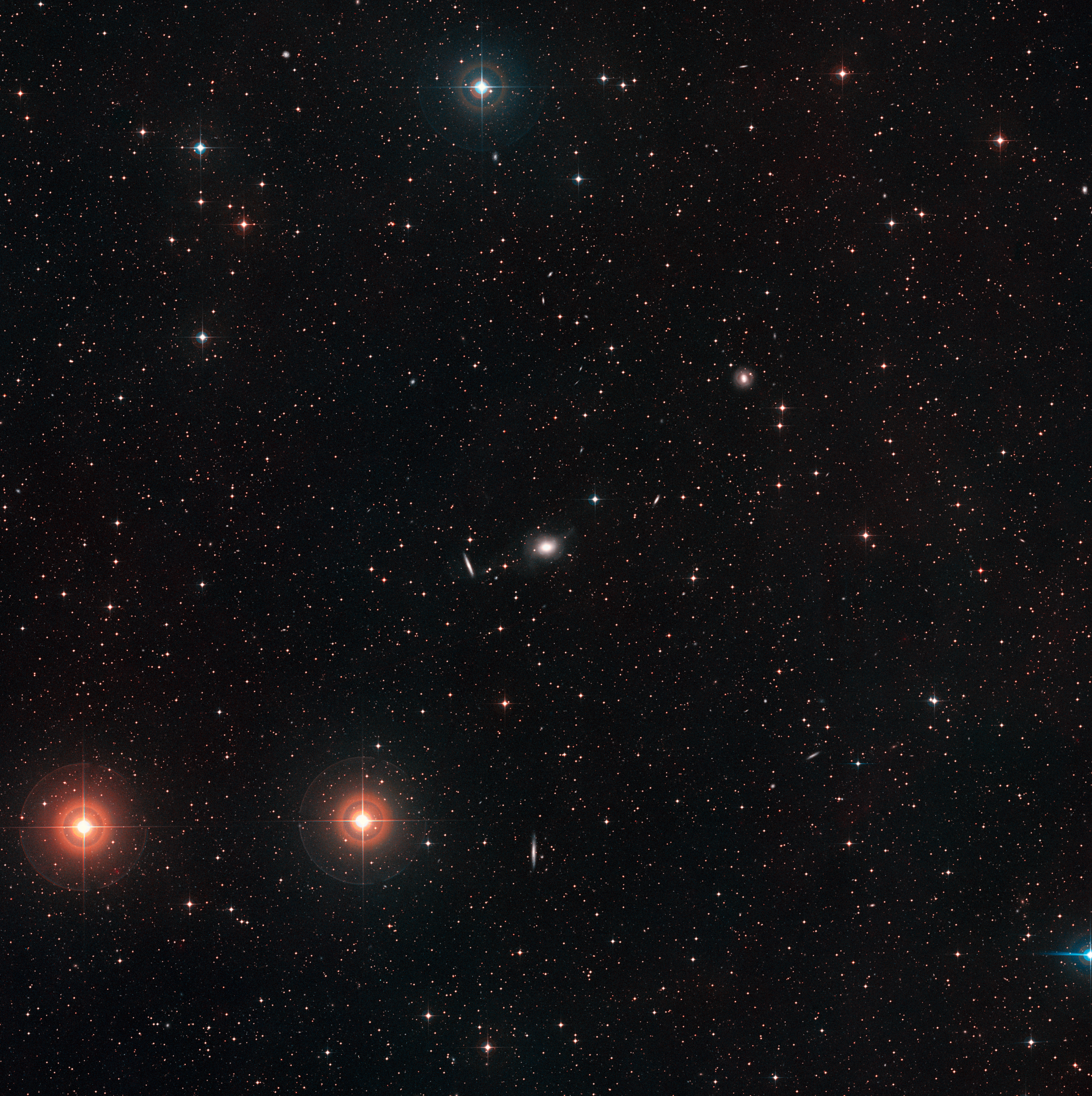
Elliptical Galaxy NGC 5018: Wide-field View | ESO
Credit: ESO/Digitized Sky Survey 2
Acknowledgment: Davide De Martin
Release Date: August 8, 2018
#NASA #ESO #Astronomy #Space #Science #Galaxies #Elliptical #Galaxy #NGC5018 #Virgo #Constellation #Cosmos #Universe #Telescope #Chile #Europe #STEM #Education
Students Enjoy Visiting NASA's Artemis I Moon Rocket & Orion Spacecraft
"Best day of my whole life. Ever." Watch the reactions of a group of students, joined by NASA Administrator Bill Nelson and NASA Associate Administrator Bob Cabana, who hopped on a tour bus at Kennedy Space Center for an opportunity of a lifetime to view the Artemis I Space Launch System rocket and Orion spacecraft in the Vehicle Assembly Building's High Bay 3.
Artemis I is scheduled to launch no earlier than Aug. 29, 2022, at 8:33 a.m. EDT from the center’s Launch Complex 39B on a flight test around the Moon and back to Earth.
All about Artemis I: https://www.nasa.gov/specials/artemis-i/
Credit: National Aeronautics and Space Administration (NASA)
Editor: Christopher Chamberland
Producers: Sami Aziz and John Sackman
Duration: 2 minutes
Release Date: August 27, 2022
#NASA #ESA #Space #Moon #Artemis #ArtemisI #Orion #Spacecraft #SLS #NASASLS #SpaceLaunchSystem #Rocket #DeepSpace #Astronauts #MoonToMars #Science #Engineering #Technology #Exploration #SolarSystem #KennedySpaceCenter #Florida #UnitedStates #Europe #ArtemisGeneration #STEM #Education #HD #Video