Sunday, June 14, 2026

Elliptical Galaxy Messier 49 in Virgo: 200 Billion Stars Plus | Hubble

Elliptical Galaxy Messier 49 in Virgo: 200 Billion Stars Plus | Hubble


This fuzzy orb of light is a giant elliptical galaxy filled with an incredible 200 billion stars. Unlike spiral galaxies that have a well-defined structure and boast picturesque spiral arms, elliptical galaxies appear fairly smooth and featureless. This is likely why this galaxy, named Messier 49, was discovered by French astronomer Charles Messier in 1771. At a distance of 56 million light-years, and measuring 157,000 light-years across, M49 was the first member of the Virgo Cluster of galaxies to be discovered, and it is more luminous than any other galaxy at its distance or nearer.

Elliptical galaxies tend to contain a larger portion of older stars than spiral galaxies and also lack young blue stars. Messier 49 itself is very yellow. This indicates that the stars within it are mostly older and redder than the Sun. In fact, the last major episode of star formation was about six billion years ago—before the Sun was even born!

Messier 49 is also rich in globular clusters; it hosts about 6,000, a number that dwarfs the 150 found in and around the Milky Way. On average, these clusters are 10 billion years old. Messier 49 is also known to host a supermassive black hole at its center with the mass of more than 500 million Suns, identifiable by the x-rays pouring out from the heart of the galaxy (as this Hubble image comprises infrared observations, these x-rays are not visible here).


Credit: ESA/Hubble & NASA, J. Blakenslee, P Cote et al.
Release Date: March 18, 2019

#NASA #Astronomy #Space #Science #Galaxies #Messier49 #M49 #EllipticalGalaxies #VirgoConstellation #Cosmos #Universe #HST #HubbleSpaceTelescope #GSFC #STScI #UnitedStates #Europe #STEM #Education

Saturday, June 13, 2026

Meet the Earth “Space Eye” Detecting Climate Heating Gases | China Space Station

Meet the Earth “Space Eye” Detecting Climate Heating Gases | China Space Station

🌍🚀 The Multi-Spectral Imaging Carbon Observatory (MUSICO), also known as the Tianyun Camera, was launched aboard the Tianzhou-10 cargo spacecraft last month. Designed to detect carbon dioxide (CO₂) and methane (CH₄) emissions from orbit, MUSICO provides high-resolution monitoring of greenhouse gases across low- and mid-latitude regions worldwide, helping to pinpoint major emission sources. It was jointly developed by the Hong Kong University of Science and Technology, in collaboration with the Changchun Institute of Optics, Fine Mechanics and Physics, Chinese Academy of Sciences.

It represents a new step forward for space-based climate science.


Video Credit: Chinese Academy of Sciences (CAS)
Duration: 25 seconds
Date: June 12, 2026

#NASA #Space #Science #Planets #Earth #Atmospheres #Climate #ClimateChange #MUSICO #GreenhouseGases #China #中国 #Taikonauts #Astronauts #ChinaSpaceStation #中国空间站 #TiangongSpaceStation #SpaceLaboratory #SpaceResearch #CAS #HKUST #CMSA #HumanSpaceflight #EarthObservation #RemoteSensing #STEM #Education #HD #Video

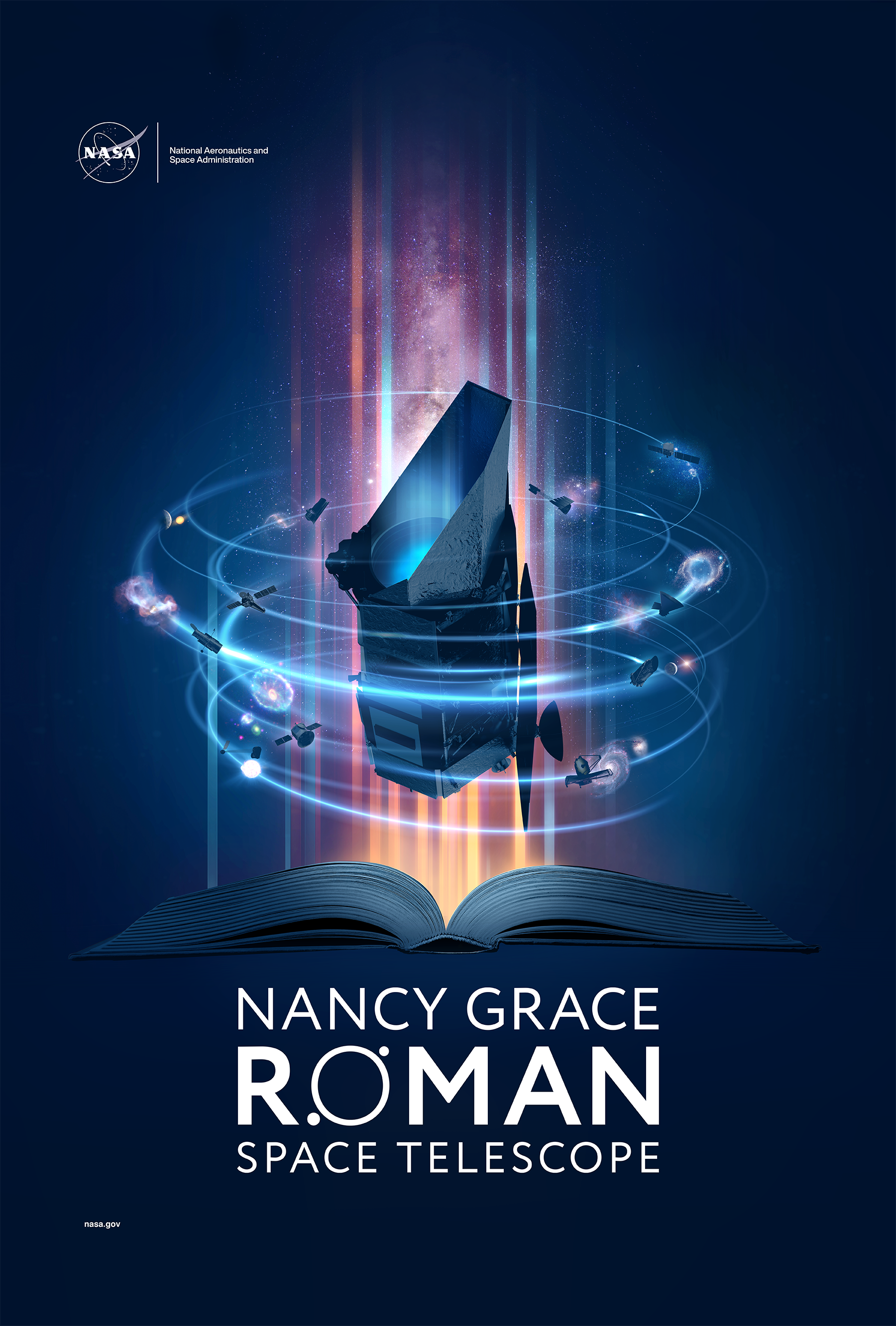
Send Your Name to Space with NASA's Nancy Grace Roman Space Telescope

Send Your Name to Space with NASA's Nancy Grace Roman Space Telescope


You can send your name along with NASA's Nancy Grace Roman Space Telescope that will be placed a million miles away for planet Earth. It is currently scheduled to launch on August 30, 2026. 

Sign up here: https://go.nasa.gov/4ejkRcR 

Submissions close July 12.

Submitted names will be uploaded to a Secure Digital (SD) card attached to the observatory. Stay tuned for the latest mission updates, including information about launch, at nasa.gov/roman.

Plus, download a free Nancy Grace Roman Space Telescope poster here: 


Named after NASA’s first chief astronomer, the ‘mother of the Hubble Space Telescope,’ the Nancy Grace Roman Space Telescope will have a field of view at least 100 times larger than Hubble's, potentially measuring light from a billion galaxies in its lifetime. This observatory will also be able to block starlight to directly see exoplanets and planet-forming disks, complete a statistical census of planetary systems in our galaxy, and address key questions in the areas of dark energy, exoplanets, and infrared astrophysics. The Nancy Grace Roman Space Telescope is scheduled to launch no earlier than September 2026.

The Roman telescope and the discoveries it will enable: 
https://www.stsci.edu/roman

Learn more about Dr. Nancy Grace Roman: 
https://science.nasa.gov/people/nancy-roman/

Image Credits: NASA's Goddard Space Flight Center
Release Date: June 12, 2026

#NASA #Space #Astronomy #Science #NASARoman #RomanSpaceTelescope #NancyGraceRomanSpaceTelescope #Posters #FreeDownload #NancyGraceRoman #Exoplanets #Planets #SolarSystem #Stars #MilkyWayGalaxy #Galaxies #Cosmos #Universe #SpaceTelescopes #NASAGoddard #GSFC #STScI #UnitedStates #Infographics #STEM #Education

Distant & Ancient Galaxy Cluster SPT0615 in Pictor | Hubble Space Telescope

Distant & Ancient Galaxy Cluster SPT0615 in Pictor | Hubble Space Telescope


Dotted across the sky in the constellation of Pictor (The Painter’s Easel) is the galaxy cluster highlighted here by the NASA/European Space Agency Hubble Space Telescope: SPT-CL J0615-5746, or SPT0615 for short. First discovered by the South Pole Telescope less than a decade ago, SPT0615 is exceptional among the myriad clusters so far cataloged in our map of the Universe—it is among the highest-redshift clusters that has a full, strong lens model published.

SPT0615 is a massive cluster of galaxies, one of the farthest observed to cause gravitational lensing. Gravitational lensing occurs when light from a background object is deflected around mass between the object and the observer. Among the identified background objects, there is SPT0615-JD (highlighted in the second image's inset), a galaxy that is thought to have emerged just 500 million years after the Big Bang. This puts it among the very earliest structures to form in the Universe. It is also the farthest galaxy ever imaged by means of gravitational lensing. Though a few other primitive galaxies have been seen at this early epoch, they have essentially all looked like red dots, given their small size and tremendous distances.

Image analysis shows that the galaxy weighs in at no more than 3 billion solar masses (roughly 1/100th the mass of our Milky Way galaxy). It is less than 2500 light-years across, half the size of the Small Magellanic Cloud (SMC), a satellite galaxy of the Milky Way. The object is considered prototypical of young galaxies that emerged during the epoch shortly after the Big Bang.

Just as ancient paintings can tell us about the period of history when they were painted, so too can ancient galaxies tell us about the era of the Universe when they existed. To learn about cosmological history, astronomers explore the most distant reaches of the Universe, probing ever further out into the cosmos. The light from distant objects travels to us from so far away that it takes an immensely long time to reach us, meaning that it carries information from the past—information about the time when it was emitted.

By studying such distant objects, astronomers are continuing to fill the gaps in our picture of what the very early Universe looked like, and uncover more about how it evolved into its current state.


Image Credits: ESA/Hubble & NASA, I. Karachentsev et al., F. High et al., and B. Salmon (STScI)
Release Dates: May 6, 2019 (image 1), January 12, 2018 (image 2)


#NASA #ESA #Astronomy #Space #Science #Galaxies #SPT0615JD #GalaxyClusters #SPTCLJ06155746 #PictorConstellation #GravitationalLensing #Astrophysics #Cosmology #Cosmos #EarlyUniverse #Universe #HubbleSpaceTelescope #HST #Europe #GSFC #STScI #UnitedStates #STEM #Education

The Cat's Eye Galaxy: Messier 94 in Canes Venatici | Kitt Peak National Observatory

The Cat's Eye Galaxy: Messier 94 in Canes Venatici | Kitt Peak National Observatory


Messier 94 (also known as NGC 4736, Cat's Eye Galaxy, Crocodile Eye Galaxy, or Croc's Eye Galaxy) is a spiral galaxy in the mid-northern constellation Canes Venatici. It was discovered by Pierre Méchain in 1781, and cataloged by Charles Messier two days later. 

Spiral galaxy M94 in the constellation Canes Venatici has been considered to be in a group including M64 and other fainter galaxies. It has an extremely bright innner region surrounded by a blue ring of young star clusters, then a fainter yellowish region of older stars also surrounded by traces of young stars, and even further out a very much fainter outer ring. All of these features are visible in this picture, due to the use of a drastically compressed intensity mapping. This stretch also reveals quite a few small faint background galaxies. This picture was taken in May 1998 at the KPNO 0.9-meter telescope. Image size 17.0 arc minutes.


Credit: Hillary Mathis, N.A.Sharp/NOIRLab/NSF/AURA/
Release Date: Dec. 16, 2002


#NASA #Astronomy #Space #Science #Galaxies #Messier94 #M94 #NGC4736 #SpiralGalaxies #StarburstGalaxies #StarburstRings #DoubleRingGalaxies #CanesVenaticiConstellation #Cosmos #Universe #KPNO #KittPeakNationalObservatory #Arizona #NOIRLab #NSF #AURA #UnitedStates #STEM #Education

Planets, Stars and Clouds: View from Italy

Planets, Stars and Clouds: View from Italy

Astrophotographer Paolo Bardelli: "Fantastic evening. A cluster of lenticular altocumulus clouds in front of this evening's parade of planets with the colors of the sunset."

Castor is the second-brightest object in the zodiac constellation of Gemini. With an apparent visual magnitude of 1.58, it is one of the brightest stars in the night sky. Castor appears singular to the naked eye, but it is actually a sextuple star system organized into three binary pairs.

Pollux is the brightest star in the constellation of Gemini. This is an orange-hued, evolved red giant located at a distance of 34 light-years, making it the closest red giant (and giant star) to the Sun. In 2006, an exoplanet (designated Pollux b or β Geminorum b, later named Thestias) was announced to be orbiting it.


Image Credit: Paolo Bardelli
Location: Sumirago (Varese), Italy
Image Details: Canon 6D + 50mm lens
Date: June 12, 2026

#NASA #Space #Astronomy #Science #Stars #Sun #Pollux #Castor #SolarSystem #Planets #Earth #Atmosphere #Clouds #LenticularAltocumulusClouds #Mercury #Venus #Jupiter #PlanetaryConjunctions #Astrophotography #Astrophotographers #PaoloBardelli #CitizenScience #Sumirago #Varese #Italy #Italy #STEM #Education

Friday, June 12, 2026

Japan H3 Rocket No. 6 Satellite Launch | Tanegashima Space Center

Japan H3 Rocket No. 6 Satellite Launch | Tanegashima Space Center

🚀H3 Rocket No. 6 was successfully launched from Tanegashima Space Center in southwestern Japan at 9:53:59 a.m. on June 12, 2026. This was the debut of the H3-30 configuration: three LE-9 engines and no strap-on solid rocket boosters (SRBs). Onboard was a test satellite for flight data verification, plus six university/organization microsatellites. The Japan Aerospace Exploration Agency (JAXA) says the model is lighter and less expensive than other H3 types. It is the country's first rocket launch powered solely by liquid-fuel engines.

The H3 is a Japanese medium-lift launch vehicle developed by JAXA and Mitsubishi Heavy Industries (MHI). A hydrolox-fuelled rocket, it is the successor to the H-IIA and H-IIB launch vehicles. The H3 uses the LE-9 main engine, which was designed to be less expensive to produce as part of a broader effort to lower launch costs. The rocket has a modular design. Its first stage is powered by two or three LE-9 engines and can be fitted with zero, two, or four SRB-3 solid rocket boosters. The second stage uses the LE-5B-3 engine, an upgraded version of the engine family used since the H-I rocket.

In addition to launching satellites into Earth orbit, the H3 is used to launch Japan's HTV-X cargo spacecraft to the International Space Station.


Video Credit: JAXA
Duration: 53 seconds
Date: June 12, 2026


#NASA #Space #Satellites #H3RocketNo6 #MitsubishiHeavyIndustries #三菱重工業株式会社 #Japan #日本 #KagoshimaPrefecture #TanegashimaSpaceCenter #種子島宇宙センター #JAXA #宇宙航空研究開発機構 #STEM #Education #HD #Video

NASA Artemis II Crew View Solar Eclipse on Lunar Flyby

NASA Artemis II Crew View Solar Eclipse on Lunar Flyby

During their lunar flyby, the Artemis II crew enjoyed the rare opportunity to experience a solar eclipse from their Orion spacecraft. With the Sun hidden behind the Moon, the astronauts were able to capture views of the Sun’s outermost atmosphere, also known as the solar corona.

The first crewed test flight of NASA’s Artemis Program lifted off from Launch Pad 39B at the agency’s Kennedy Space Center in Florida on April 1, 2026, carrying the first astronauts to travel to the Moon in more than half a century. 

During their nearly 10-day mission, the crew completed a record-setting lunar flyby, taking them 252,756 miles at their farthest distance from Earth and 4,067 miles above the lunar surface at their closest approach. 

Artemis II splashed down on April 10 in the Pacific Ocean off the coast of San Diego. 

Under Artemis, NASA will send astronauts on increasingly difficult missions to explore more of the Moon for scientific discovery, economic benefits, and to build on our foundation for the first crewed missions to Mars.

Learn more about NASA's Artemis II Mission:
https://www.nasa.gov/mission/artemis-ii/


Video Credit: NASA
Duration: 2 minutes, 50 seconds
Capture Date: April 7, 2026

#NASA #Space #Science #Earth #Moon #SolarEclipse #ArtemisProgram #ArtemisII #OrionSpacecraft #Astronauts #ReidWiseman #VictorGlover #ChristinaKoch #JeremyHansen #CSA #Canada #HumanSpaceflight #SolarSystem #SpaceExploration #UnitedStates #STEM #Education #HD #Video

Japan H3 Rocket No. 6 Satellite Launch | Tanegashima Space Center

Japan H3 Rocket No. 6 Satellite Launch Tanegashima Space Center


🚀H3 Rocket No. 6 was successfully launched from Tanegashima Space Center in southwestern Japan at 9:53:59 a.m. on June 12, 2026. This was the debut of the H3-30 configuration: three LE-9 engines and no strap-on solid rocket boosters (SRBs). Onboard was a test satellite for flight data verification, plus six university/organization microsatellites. The Japan Aerospace Exploration Agency (JAXA) says the model is lighter and less expensive than other H3 types. It is the country's first rocket launch powered solely by liquid-fuel engines.

The H3 is a Japanese medium-lift launch vehicle developed by JAXA and Mitsubishi Heavy Industries (MHI). A hydrolox-fuelled rocket, it is the successor to the H-IIA and H-IIB launch vehicles. The H3 uses the LE-9 main engine, which was designed to be less expensive to produce as part of a broader effort to lower launch costs. The rocket has a modular design. Its first stage is powered by two or three LE-9 engines and can be fitted with zero, two, or four SRB-3 solid rocket boosters. The second stage uses the LE-5B-3 engine, an upgraded version of the engine family used since the H-I rocket.

In addition to launching satellites into Earth orbit, the H3 is used to launch Japan's HTV-X cargo spacecraft to the International Space Station.


Image Credit: JAXA
Image Dates: March 12-June 12, 2026


#NASA #Space #Satellites #H3RocketNo6 #MitsubishiHeavyIndustries #三菱重工業株式会社 #Japan #日本 #KagoshimaPrefecture #TanegashimaSpaceCenter #種子島宇宙センター #JAXA #宇宙航空研究開発機構 #STEM #Education

How to Use NASA’s Eyes on Exoplanets Tool | Jet Propulsion Laboratory

How to Use NASA’s Eyes on Exoplanets Tool | Jet Propulsion Laboratory


Welcome to NASA’s Eyes on Exoplanets! 
Use this tutorial to start exploring worlds beyond our own. With this 3D interactive tool, you can visit all the stars beyond the Sun where we have found other planets, called exoplanets. 

Choose a star or exoplanet and see an artist’s concept of what it might look like. Spin it around to see its sun and planetary system. Learn how long a trip there from Earth would take at light speed—or by jet plane, or family car!

Study the real versions of planets and stars cited in your favorite science fiction. See planets residing in habitable zones, where liquid water could exist on their surfaces. Or, search “Where We Explore,” stars that future space telescopes will target when looking for Earth-like planets. You can also choose your location on Earth and see what is in the sky above you right now. 

See all the different techniques we have used to confirm the 6,000+ exoplanets discovered so far—among the billions we believe exist in the galaxy—and the many observatories, on Earth and in space, that have detected them. You can also browse some of our favorite weird worlds, or destinations featured in our Exoplanet Travel Bureau. 

Where will you explore?

Explore the interactive tool: https://eyes.nasa.gov/apps/exo/ 

Learn more about exoplanets: https://science.nasa.gov/exoplanets/


Credit: NASA/JPL-Caltech
Duration: 2 minutes, 41 seconds
Release Date: June 12, 2026

#NASA #Space #Astronomy #Science #Stars #Planets #Exoplanets #EyesOnExoplanets #JPL #Pasadena #California #UnitedStates #STEM #Education #HD #Video

Nebula NGC 6357 in Scorpius: Carved by Massive Stars | ESO

Nebula NGC 6357 in Scorpius: Carved by Massive Stars | ESO

This image, captured by the European Southern Observatory’s Very Large Telescope (VLT) at Paranal, shows a small part of the well-known emission nebula, NGC 6357, located about 8,000 light-years away, in the tail of the southern constellation of Scorpius (The Scorpion). The image glows with the characteristic red of an H II region, and contains a large amount of ionized and excited hydrogen gas.

The cloud is bathed in intense ultraviolet radiation—mainly from the open star cluster Pismis 24, home to massive, young, blue stars, that it re-emits as visible light, in this distinctive red hue.

The cluster itself is out of the field of view of this picture, its diffuse light seen illuminating the cloud on the center-right of the image. We are looking at a close-up of the surrounding nebula, showing a mesh of gas, dark dust, and newly born and still forming stars.


Credit: European Southern Observatory (ESO)
Date: Aug. 26, 2013

#NASA #ESO #Astronomy #Space #Science #Nebulae #EmissionNebulae #NGC6357 #StellarNurseries #ScorpiusConstellation #Cosmos #Universe #VLT #ParanalObservatory #Chile #Europe #STEM #Education

Thursday, June 11, 2026

Aurora Australis over Indian Ocean | International Space Station

Aurora Australis over Indian Ocean | International Space Station


The aurora australis arcs over Earth during an active solar event in these photographs from the International Space Station as it orbited 271 miles above the Indian Ocean southwest of Perth, Australia.

Also known as the northern lights (aurora borealis) or southern lights (aurora australis), auroras are colorful, dynamic, and often visually delicate displays of an intricate dance of particles and magnetism between the Sun and Earth called space weather. When energetic particles from space collide with atoms and molecules in the atmosphere, they can cause the colorful glow that we call auroras.

Learn more about auroras: 
https://science.nasa.gov/sun/auroras/


Expedition 74 Crew
Station Commander: Sergey-Kud Sverchkov (Russia)
Roscosmos (Russia) Flight Engineers:
Andrey Fedyaev, Sergei Mikaev
European Space Agency Flight Engineer: Sophie Adenot
NASA Flight Engineers: Jessica Meir, Jack Hathaway, Chris Williams

An international partnership of space agencies provides and operates the elements of the International Space Station (ISS). The principals are the space agencies of the United States, Russia, Europe, Japan, and Canada.


Image Credit: NASA/JSC/Jessica Meir
Date: June 5, 2026

#NASA #Space #Science #Astronomy #ISS #Earth #IndianOcean #Aurorae #AuroraAustralis #SouthernLights #SouthernHemisphere #Astronauts #AstronautPhotography #JessicaMeir #Cosmonauts #Russia #Россия #Roscosmos #Роскосмос #HumanSpaceflight #InternationalCooperation #Expedition74 #NASAJohnson #UnitedStates #ESA #Europe #SpaceLaboratory #STEM #Education

Planet Mars Images: June 6-11, 2026 | NASA's Curiosity & Perseverance Rovers

Planet Mars Images: June 6-11, 2026 | NASA's Curiosity & Perseverance Rovers

MSL - sol 4920
MSL - sol 4921
Mars 2020 - sol 1319
Mars 2020 - sol 1303
Mars 2020 - sol 1882
Mars 2020 - sol 1317
MSL - sol 4918

Become a monthly Friends of NASA supporter on our website:
Friends of NASA (FoN) is an independent non-governmental organization (NGO) dedicated to building international support for peaceful space exploration, commerce, scientific discovery, and STEM education. 
We depend on public donations.
One-time Donations to Friends of NASA (PayPal) accepted here: 

Celebrating 13+ Years on Mars (2012-2025)
Mission Name: Mars Science Laboratory (MSL)
Rover Name: Curiosity
Main Job: To determine if Mars was ever habitable to microbial life. 
Launch: Nov. 6, 2011
Landing Date: Aug. 5, 2012, Gale Crater, Mars

Celebrating 5+ Years on Mars
Mission Name: Mars 2020
Rover Name: Perseverance
Main Job: Seek signs of ancient life and collect samples of rock and regolith (broken rock and soil) for return to Earth.
Launch: July 30, 2020
Landing: Feb. 18, 2021, Jezero Crater, Mars

For more information on NASA's Mars missions, visit: mars.nasa.gov

Image Credits: NASA/JPL-Caltech/ASU/MSSS
Processing: Kevin M. Gill
Release Dates: June 6-11, 2026

#NASA #Space #Astronomy #Science #Planets #Mars #Astrobiology #Geology #CuriosityRover #MSL #MountSharp #GaleCrater #PerseveranceRover #Mars2020 #JezeroCrater #Robotics #SpaceTechnology #SpaceEngineering #MSSS #JPL #Caltech #UnitedStates #CitizenScience #KevinGill #SpaceExploration #SolarSystem #STEM #Education

China's Long March 5 Heavy-lift Rocket Launch of Communications Satellite

China's Long March 5 Heavy-lift Rocket Launch of Communications Satellite


China's Long March 5 heavy-lift carrier rocket lifted off at 3:30 pm on June 11, 2026, at the coastal Wenchang Space Launch Site in south China's Hainan Province, delivering a new communication technology test satellite, the TJSW-25, into geostationary orbit.

TJSW-25 was built by the China Academy of Space Technology (CAST). It is also known as the Communication Technology Experimental Satellite-25. Just like the many other satellites of its fleet, it is tasked with demonstrating multi-band, high-throughput communications technologies for radio, television, and data transmission.

TJSW-25 is the second of its line to launch this year, a few weeks after May’s TJSW-24 also lifted off from Wenchang. Both spacecraft are part of a significant expansion of the communications technology demonstration fleet, as nine TJSW spacecraft were deployed in 2025.

Speaking on improvements to the Long March 5’s pre-flight preparation work, the China Academy of Launch Vehicle Technology (CALT) shared that testing time on the launch pad has been shortened from six days to four, while manufacturer of the four boosters, the Shanghai Academy of Spaceflight Technology, mentioned overall optimizations in handling and storing each of the stages. Those and further improvements will be needed to hit a goal of up to ten missions per year.

Additionally, the launch vehicle’s 18.5-meter-long fairing was in use for its fifth time to date, allowing larger satellites to be carried into space. The longer fairing has been used to secure the TJSW-23 satellite in December 2025, the TJSW-20 spacecraft in October 2025, and the TJSW-11 satellite in February 2024. It was first used for Yaogan-41 in December 2023.

Today’s launch was the 11th mission for the Long March 5, the 18th launch for the Long March 5 series, and the 650th launch of the Long March launch vehicle series. This was also the 39th launch from China in 2026.


Credit: CAST/CALT
Date: June 11, 2026


#NASA #Space #Science #Earth #Satellites #CommunicationsSatellites #TJSW25 #China #中国 #CAST #通信技术试验卫星二十五号 #CALT #中国运载火箭技术研究院 #Rockets #LongMarch5Rockets #长征五号 #LongMarch5Y11 #HeavyLiftRockets #SpaceTechnology #CommercialSpace #CommercialSpaceflight #Spaceports #Wenchang #Hainan #STEM #Education

China's Long March 5 Heavy-lift Rocket Launch of Communications Satellite

China's Long March 5 Heavy-lift Rocket Launch of Communications Satellite

China's Long March 5 heavy-lift carrier rocket lifted off at 3:30 pm on June 11, 2026, at the coastal Wenchang Space Launch Site in south China's Hainan Province, delivering a new communication technology test satellite, the TJSW-25, into geostationary orbit.

TJSW-25 was built by the China Academy of Space Technology (CAST). It is also known as the Communication Technology Experimental Satellite-25. Just like the many other satellites of its fleet, it is tasked with demonstrating multi-band, high-throughput communications technologies for radio, television, and data transmission.

TJSW-25 is the second of its line to launch this year, a few weeks after May’s TJSW-24 also lifted off from Wenchang. Both spacecraft are part of a significant expansion of the communications technology demonstration fleet, as nine TJSW spacecraft were deployed in 2025.

Speaking on improvements to the Long March 5’s pre-flight preparation work, the China Academy of Launch Vehicle Technology (CALT) shared that testing time on the launch pad has been shortened from six days to four, while manufacturer of the four boosters, the Shanghai Academy of Spaceflight Technology, mentioned overall optimizations in handling and storing each of the stages. Those and further improvements will be needed to hit a goal of up to ten missions per year.

Additionally, the launch vehicle’s 18.5-meter-long fairing was in use for its fifth time to date, allowing larger satellites to be carried into space. The longer fairing has been used to secure the TJSW-23 satellite in December 2025, the TJSW-20 spacecraft in October 2025, and the TJSW-11 satellite in February 2024. It was first used for Yaogan-41 in December 2023.

Today’s launch was the 11th mission for the Long March 5, the 18th launch for the Long March 5 series, and the 650th launch of the Long March launch vehicle series. This was also the 39th launch from China in 2026.


Credit: CAST/CALT
Duration: 29 seconds
Date: June 11, 2026


#NASA #Space #Science #Earth #Satellites #CommunicationsSatellites #TJSW25 #China #中国 #CAST #通信技术试验卫星二十五号 #CALT #中国运载火箭技术研究院 #Rockets #LongMarch5Rockets #长征五号 #LongMarch5Y11 #HeavyLiftRockets #SpaceTechnology #CommercialSpace #CommercialSpaceflight #Spaceports #Wenchang #Hainan #STEM #Education #HD #Video

NASA Artemis II Moon Flyby Views: New Photo Release

NASA Artemis II Moon Flyby Views: New Photo Release

This photo of a crescent Moon and crescent Earth was taken by an Artemis II astronaut during lunar flyby on flight day 6. This captures one of the final moments before their loss of signal with Earth as the Orion spacecraft flew around the far side of the Moon, reemerging and regaining contact approximately 40 minutes later.
The Moon appears half-illuminated in this photo captured by the Artemis II crew on flight day 6. The terminatorthe place between light and darknessprovides a stark contrast and even greater perspective of the Moon's rocky, uneven, and otherworldly surface features. The near side that what we can see from Earth, appears in the dark gray regions at the top of this image.
The Artemis II crew was tasked with capturing many key features visible in this image of the Moon, captured on flight day 6. The terminator, the place where light and darkness meet, is visible on the top left. The large dark gray area toward center-left is Orientale Basin with characteristic dark patches of ancient lava flow that we see on the near side, visible on the right half of this image.
This photo of the Moon was captured by the Artemis II crew aboard the Orion spacecraft a few hours before the lunar flyby. During the flyby, the crew captured critical science observations as they traveled around the farside of the Moon, traveling farther than any humans ever before.

The first crewed test flight of NASA’s Artemis Program lifted off from Launch Pad 39B at the agency’s Kennedy Space Center in Florida on April 1, 2026, carrying the first astronauts to travel to the Moon in more than half a century. 

During their nearly 10-day mission, the crew completed a record-setting lunar flyby, taking them 252,756 miles at their farthest distance from Earth and 4,067 miles above the lunar surface at their closest approach. 

Artemis II splashed down on April 10 in the Pacific Ocean off the coast of San Diego. Following splashdown and recovery, the four crew members underwent post-mission medical evaluations before returning to shore and boarding an aircraft bound for Houston. Upon arrival, the crew was welcomed by and reunited with their families, friends, and agency workforce. The crew has begun their postflight reconditioning, medical and human performance evaluations, and lunar science debriefs.

Under Artemis, NASA will send astronauts on increasingly difficult missions to explore more of the Moon for scientific discovery, economic benefits, and to build on our foundation for the first crewed missions to Mars.

Learn more about NASA's Artemis II Mission:
https://www.nasa.gov/mission/artemis-ii/


Image Credit: NASA
Capture Date: April 6, 2026

#NASA #Space #Science #Earth #Moon #ArtemisProgram #ArtemisII #OrionSpacecraft #Astronauts #ReidWiseman #VictorGlover #ChristinaKoch #JeremyHansen #CSA #Canada #HumanSpaceflight #SolarSystem #SpaceExploration #UnitedStates #History #STEM #Education