Tuesday, June 23, 2026

Ancient Galaxy MXDFz4.4 in Fornax Excites Astronomers | Hubble Space Telescope

Ancient Galaxy MXDFz4.4 in Fornax Excites Astronomers | Hubble Space Telescope

Astronomers, using NASA’s Hubble Space Telescope, have observed ultraviolet light escaping from a galaxy that has existed since only 1.4 billion years after the big bang. The galaxy, called MXDFz4.4, appears during a critical period known as the Era of Reionization, when the universe transformed from a dense cosmic fog into the clear cosmos we see today. This finding implies that similar galaxies in the distant, early universe were responsible for clearing the neutral fog of hydrogen gas that once filled the cosmos. 


Credit: NASA's Goddard Space Flight Center 
Paul Morris: Lead Producer
Duration: 1 minute, 44 seconds
Release Date: June 23, 2026

#NASA #Hubble #Astronomy #Space #Science #Galaxies #AncientGalaxies #MXDFz44  #FornaxConstellation #Astrophysics #Cosmology #Cosmos #EarlyUniverse #Universe #HubbleSpaceTelescope #HST #UltravioletAstronomy #UVAstronomy #ESA #Europe #GSFC #STScI #UnitedStates #STEM #Education #HD #Video

The Cigar Galaxy: Hubble & Webb Space Telescope Views

The Cigar Galaxy: Hubble & Webb Space Telescope Views

This video transitions between two views of the edge-on starburst galaxy Messier 82 (M82), nicknamed the Cigar Galaxy. The first image shown is the galaxy as seen by the NASA/ESA Hubble Space Telescope, released in April 2006. The second image shows Webb's new view of M82, as seen by the near-infraRed camera instrument.

Located 12 million light-years away and undergoing rapid star formation, edge-on spiral galaxy Messier 82 is a scientifically unique sight to behold, and now the NASA/European Space Agency/Canadian Space Agency James Webb Space Telescope has revealed previously unseen details. Messier 82 (also known as NGC 3034) is a starburst galaxy in the constellation Ursa Major.

The telescope’s near-infrared-light view is a snapshot of a scene that has been evolving over a couple hundred million years. Webb’s image contains approximately 16.5 million individual stars dispersed throughout the galaxy. The starlight from these stellar sources is depicted as luminous blue granules. This is only a small portion of the total amount of stars astronomers think reside in a galaxy like M82, with the majority too faint to be seen.

M82’s intense star formation, thought to be the result of a galaxy merger, will be a short-lived event in astronomical terms, estimated to last a few hundred million years in its entirety. This temporary phase of extreme star formation relative to the galaxy’s mass, as well as its location in the local Universe, are among the factors that make M82, also known as the Cigar galaxy, a one-of-a-kind environment to study.

A team of astronomers recently completed an imaging survey with Webb. This program entailed a total of 65 hours of observation time with Webb’s NIRCam instrument and revealed never-seen-before details of the starburst galaxy, including its distended disc structure and millions of individual stars. Webb’s high-resolution imaging, specifically of the main plane of the disc, has unlocked vital information for astronomers as they seek to uncover M82’s formation history. Additionally, the Webb data will help scientists understand the current processes occurring within the starburst galaxy. 

Prior to Webb, many observatories observed the starburst galaxy, including the NASA/European Space Agency Hubble Space Telescope. However, the sheer volume of dust within that galaxy limited the amount of information astronomers could acquire on M82 at high resolution. While Webb has previously looked at this galaxy, the duration of the new imaging survey, combined with the telescope’s infrared sensitivity was an optimal combination that enabled it to pierce through the thick dust.

Moving inward, the increase in brightness and the asymmetrical shape of the galactic disc hints at the spiral galaxy’s unique underlying structure. The differing radii between the two sides suggests that M82 has a distorted shape. This can happen during intense galaxy mergers.

Because of the extreme star formation within the galaxy, ten times faster than the Milky Way galaxy’s star formation rate, stellar birth will eventually be disrupted. M82’s stellar frenzy is causing bipolar plumes of material to be ejected above and below the disc. Although it looks like a tumultuous region, the hourglass-shaped outflows appear to have a layered structure. The yellow tendrils of material closest to the galaxy’s disc represent ionized gas, whereas the orange material farther away depicts small dust grains. These grains are called polycyclic aromatic hydrocarbons and are helpful in tracing material in the space between the galaxy’s stars, also known as the interstellar medium.

The information collected as part of this Webb study is just one dataset scientists will analyze as they seek to piece together this starburst galaxy’s formation history.

Credit: NASA, ESA, CSA, A. Smercina (STScI), T. Williams (University of Manchester), A. Pagan (STScI), N. Bartmann (ESA/Webb)
Duration: 30 seconds
Date: June 23, 2026

#NASA #ESA #Astronomy #Space #Science #Stars #Galaxies #Messier82 #M82 #CigarGalaxy #StarburstGalaxies #UrsaMajorConstellation #Cosmos #Universe #JWST #InfraredAstronomy #HubbleSpaceTelescope #HST #SpaceTelescopes #Europe #GSFC #STScI #UnitedStates #STEM #Education #HD #Video

A New Detailed View of The Cigar Galaxy | James Webb Space Telescope

A New Detailed View of The Cigar Galaxy | James Webb Space Telescope

Located 12 million light-years away and undergoing rapid star formation, edge-on spiral galaxy Messier 82 (M82) is a scientifically unique sight to behold, and now the NASA/European Space Agency/Canadian Space Agency James Webb Space Telescope has revealed previously unseen details. Messier 82 (also known as NGC 3034 and the Cigar Galaxy) is a starburst galaxy in the constellation Ursa Major.

The telescope’s near-infrared-light view is a snapshot of a scene that has been evolving over a couple hundred million years. Webb’s image contains approximately 16.5 million individual stars dispersed throughout the galaxy. The starlight from these stellar sources is depicted as luminous blue granules. This is only a small portion of the total amount of stars astronomers think reside in a galaxy like M82, with the majority too faint to be seen.

M82’s intense star formation, thought to be the result of a galaxy merger, will be a short-lived event in astronomical terms, estimated to last a few hundred million years in its entirety. This temporary phase of extreme star formation relative to the galaxy’s mass, as well as its location in the local Universe, are among the factors that make M82, also known as the Cigar galaxy, a one-of-a-kind environment to study.

A team of astronomers recently completed an imaging survey with Webb. This program entailed a total of 65 hours of observation time with Webb’s NIRCam instrument and revealed never-seen-before details of the starburst galaxy, including its distended disc structure and millions of individual stars. Webb’s high-resolution imaging, specifically of the main plane of the disc, has unlocked vital information for astronomers as they seek to uncover M82’s formation history. Additionally, the Webb data will help scientists understand the current processes occurring within the starburst galaxy. 

Prior to Webb, many observatories observed the starburst galaxy, including the NASA/European Space Agency Hubble Space Telescope. However, the sheer volume of dust within that galaxy limited the amount of information astronomers could acquire on M82 at high resolution. While Webb has previously looked at this galaxy, the duration of the new imaging survey, combined with the telescope’s infrared sensitivity was an optimal combination that enabled it to pierce through the thick dust.

Moving inward, the increase in brightness and the asymmetrical shape of the galactic disc hints at the spiral galaxy’s unique underlying structure. The differing radii between the two sides suggests that M82 has a distorted shape. This can happen during intense galaxy mergers.

Because of the extreme star formation within the galaxy, ten times faster than the Milky Way galaxy’s star formation rate, stellar birth will eventually be disrupted. M82’s stellar frenzy is causing bipolar plumes of material to be ejected above and below the disc. Although it looks like a tumultuous region, the hourglass-shaped outflows appear to have a layered structure. The yellow tendrils of material closest to the galaxy’s disc represent ionized gas, whereas the orange material farther away depicts small dust grains. These grains are called polycyclic aromatic hydrocarbons and are helpful in tracing material in the space between the galaxy’s stars, also known as the interstellar medium.

The information collected as part of this Webb study is just one dataset scientists will analyze as they seek to piece together this starburst galaxy’s formation history.

Credit: NASA, ESA, CSA, A. Smercina (STScI), T. Williams (University of Manchester)
Image Processing: A. Pagan (STScI)
Directed by: Bethany Downer and Nico Bartmann  
Editing: Nico Bartmann  
Written by: Bethany Downer  
Footage and photos: NASA, ESA, CSA, A. Smercina (STScI), T. Williams (University of Manchester), A. Pagan (STScI), N. Bartmann (ESA/Webb)
Duration: 1 minute
Release Date: June 23, 2026

#NASA #ESA #Astronomy #Space #Science #Stars #Galaxies #Messier82 #M82 #CigarGalaxy #StarburstGalaxies #UrsaMajorConstellation #Cosmos #Universe #JWST #InfraredAstronomy #HubbleSpaceTelescope #HST #SpaceTelescopes #Europe #GSFC #STScI #UnitedStates #STEM #Education #HD #Video

Journey to The Cigar Galaxy—Millions of Stars | Hubble & Webb Space Telescopes

Journey to The Cigar Galaxy—Millions of Stars | Hubble & Webb Space Telescopes

This video takes the viewer on a journey through space to edge-on starburst galaxy Messier 82 (M82), nicknamed the Cigar Galaxy. Located 12 million light-years away and undergoing rapid star formation, edge-on spiral galaxy Messier 82 (M82) is a scientifically unique sight to behold, and now the NASA/European Space Agency/Canadian Space Agency James Webb Space Telescope has revealed previously unseen details. Messier 82 (also known as NGC 3034) is located in the constellation Ursa Major.

The telescope’s near-infrared-light view is a snapshot of a scene that has been evolving over a couple hundred million years. Webb’s image contains approximately 16.5 million individual stars dispersed throughout the galaxy. The starlight from these stellar sources is depicted as luminous blue granules. This is only a small portion of the total amount of stars astronomers think reside in a galaxy like M82, with the majority too faint to be seen.

M82’s intense star formation, thought to be the result of a galaxy merger, will be a short-lived event in astronomical terms, estimated to last a few hundred million years in its entirety. This temporary phase of extreme star formation relative to the galaxy’s mass, as well as its location in the local Universe, are among the factors that make M82, also known as the Cigar galaxy, a one-of-a-kind environment to study.

A team of astronomers recently completed an imaging survey with Webb. This program entailed a total of 65 hours of observation time with Webb’s NIRCam instrument and revealed never-seen-before details of the starburst galaxy, including its distended disc structure and millions of individual stars. Webb’s high-resolution imaging, specifically of the main plane of the disc, has unlocked vital information for astronomers as they seek to uncover M82’s formation history. Additionally, the Webb data will help scientists understand the current processes occurring within the starburst galaxy. 

Prior to Webb, many observatories observed the starburst galaxy, including the NASA/European Space Agency Hubble Space Telescope. However, the sheer volume of dust within that galaxy limited the amount of information astronomers could acquire on M82 at high resolution. While Webb has previously looked at this galaxy, the duration of the new imaging survey, combined with the telescope’s infrared sensitivity was an optimal combination that enabled it to pierce through the thick dust.

Moving inward, the increase in brightness and the asymmetrical shape of the galactic disc hints at the spiral galaxy’s unique underlying structure. The differing radii between the two sides suggests that M82 has a distorted shape. This can happen during intense galaxy mergers.

Because of the extreme star formation within the galaxy, ten times faster than the Milky Way galaxy’s star formation rate, stellar birth will eventually be disrupted. M82’s stellar frenzy is causing bipolar plumes of material to be ejected above and below the disc. Although it looks like a tumultuous region, the hourglass-shaped outflows appear to have a layered structure. The yellow tendrils of material closest to the galaxy’s disc represent ionized gas, whereas the orange material farther away depicts small dust grains. These grains are called polycyclic aromatic hydrocarbons and are helpful in tracing material in the space between the galaxy’s stars, also known as the interstellar medium.

The information collected as part of this Webb study is just one dataset scientists will analyze as they seek to piece together this starburst galaxy’s formation history.

Credit: NASA, ESA, CSA, A. Smercina (STScI), T. Williams (University of Manchester). Image processing: A. Pagan (STScI)
Duration: 1 minute
Date: June 23, 2026

#NASA #ESA #Astronomy #Space #Science #Stars #Galaxies #Messier82 #M82 #CigarGalaxy #NGC3034 #StarburstGalaxies #UrsaMajorConstellation #Cosmos #Universe #JWST #InfraredAstronomy #HubbleSpaceTelescope #HST #SpaceTelescopes #Europe #GSFC #STScI #UnitedStates #STEM #Education #HD #Video

Close-up: The Cigar Galaxy—Millions of Stars | Hubble & Webb Space Telescopes

Close-up: The Cigar GalaxyMillions of Stars | Hubble & Webb Space Telescopes

Located 12 million light-years away and undergoing rapid star formation, edge-on spiral galaxy Messier 82 (M82) is a scientifically unique sight to behold, and now the NASA/European Space Agency/Canadian Space Agency James Webb Space Telescope has revealed previously unseen details. Messier 82 (also known as NGC 3034 and the Cigar Galaxy) is a starburst galaxy in the constellation Ursa Major.

The telescope’s near-infrared-light view is a snapshot of a scene that has been evolving over a couple hundred million years. Webb’s image contains approximately 16.5 million individual stars dispersed throughout the galaxy. The starlight from these stellar sources is depicted as luminous blue granules. This is only a small portion of the total amount of stars astronomers think reside in a galaxy like M82, with the majority too faint to be seen.

M82’s intense star formation, thought to be the result of a galaxy merger, will be a short-lived event in astronomical terms, estimated to last a few hundred million years in its entirety. This temporary phase of extreme star formation relative to the galaxy’s mass, as well as its location in the local Universe, are among the factors that make M82, also known as the Cigar galaxy, a one-of-a-kind environment to study.

A team of astronomers recently completed an imaging survey with Webb. This program entailed a total of 65 hours of observation time with Webb’s NIRCam instrument and revealed never-seen-before details of the starburst galaxy, including its distended disc structure and millions of individual stars. Webb’s high-resolution imaging, specifically of the main plane of the disc, has unlocked vital information for astronomers as they seek to uncover M82’s formation history. Additionally, the Webb data will help scientists understand the current processes occurring within the starburst galaxy. 

Prior to Webb, many observatories observed the starburst galaxy, including the NASA/European Space Agency Hubble Space Telescope. However, the sheer volume of dust within that galaxy limited the amount of information astronomers could acquire on M82 at high resolution. While Webb has previously looked at this galaxy, the duration of the new imaging survey, combined with the telescope’s infrared sensitivity was an optimal combination that enabled it to pierce through the thick dust.

Moving inward, the increase in brightness and the asymmetrical shape of the galactic disc hints at the spiral galaxy’s unique underlying structure. The differing radii between the two sides suggests that M82 has a distorted shape. This can happen during intense galaxy mergers.

Because of the extreme star formation within the galaxy, ten times faster than the Milky Way galaxy’s star formation rate, stellar birth will eventually be disrupted. M82’s stellar frenzy is causing bipolar plumes of material to be ejected above and below the disc. Although it looks like a tumultuous region, the hourglass-shaped outflows appear to have a layered structure. The yellow tendrils of material closest to the galaxy’s disc represent ionized gas, whereas the orange material farther away depicts small dust grains. These grains are called polycyclic aromatic hydrocarbons and are helpful in tracing material in the space between the galaxy’s stars, also known as the interstellar medium.

The information collected as part of this Webb study is just one dataset scientists will analyze as they seek to piece together this starburst galaxy’s formation history.

Credit: NASA, ESA, CSA, A. Smercina (STScI), T. Williams (University of Manchester). Image processing: A. Pagan (STScI)
Duration: 30 seconds
Date: June 23, 2026

#NASA #ESA #Astronomy #Space #Science #Stars #Galaxies #Messier82 #M82 #CigarGalaxy #StarburstGalaxies #UrsaMajorConstellation #Cosmos #Universe #JWST #InfraredAstronomy #HubbleSpaceTelescope #HST #SpaceTelescopes #Europe #GSFC #STScI #UnitedStates #STEM #Education #HD #Video

Millions of Stars within The Cigar Galaxy | Hubble & Webb Space Telescopes

Millions of Stars within The Cigar Galaxy | Hubble & Webb Space Telescopes

M82 Cigar Galaxy (Webb + Hubble)
M82 Cigar Galaxy (NIRCam Image)
M82 Cigar Galaxy (Hubble/Webb Side-by-Side)

Located 12 million light-years away and undergoing rapid star formation, edge-on spiral galaxy Messier 82 (M82) is a scientifically unique sight to behold, and now the NASA/European Space Agency/Canadian Space Agency James Webb Space Telescope has revealed previously unseen details. Messier 82 (also known as NGC 3034, Cigar Galaxy or M82) is a starburst galaxy in the constellation Ursa Major.

The telescope’s near-infrared-light view is a snapshot of a scene that has been evolving over a couple hundred million years. Webb’s image contains approximately 16.5 million individual stars dispersed throughout the galaxy. The starlight from these stellar sources is depicted as luminous blue granules. This is only a small portion of the total amount of stars astronomers think reside in a galaxy like M82, with the majority too faint to be seen.

M82’s intense star formation, thought to be the result of a galaxy merger, will be a short-lived event in astronomical terms, estimated to last a few hundred million years in its entirety. This temporary phase of extreme star formation relative to the galaxy’s mass, as well as its location in the local Universe, are among the factors that make M82, also known as the Cigar galaxy, a one-of-a-kind environment to study.

A team of astronomers recently completed an imaging survey with Webb. This program entailed a total of 65 hours of observation time with Webb’s NIRCam instrument and revealed never-seen-before details of the starburst galaxy, including its distended disc structure and millions of individual stars. Webb’s high-resolution imaging, specifically of the main plane of the disc, has unlocked vital information for astronomers as they seek to uncover M82’s formation history. Additionally, the Webb data will help scientists understand the current processes occurring within the starburst galaxy. 

Prior to Webb, many observatories observed the starburst galaxy, including the NASA/European Space Agency Hubble Space Telescope. However, the sheer volume of dust within that galaxy limited the amount of information astronomers could acquire on M82 at high resolution. While Webb has previously looked at this galaxy, the duration of the new imaging survey, combined with the telescope’s infrared sensitivity was an optimal combination that enabled it to pierce through the thick dust.

Moving inward, the increase in brightness and the asymmetrical shape of the galactic disc hints at the spiral galaxy’s unique underlying structure. The differing radii between the two sides suggests that M82 has a distorted shape. This can happen during intense galaxy mergers.

Because of the extreme star formation within the galaxy, ten times faster than the Milky Way galaxy’s star formation rate, stellar birth will eventually be disrupted. M82’s stellar frenzy is causing bipolar plumes of material to be ejected above and below the disc. Although it looks like a tumultuous region, the hourglass-shaped outflows appear to have a layered structure. The yellow tendrils of material closest to the galaxy’s disc represent ionized gas, whereas the orange material farther away depicts small dust grains. These grains are called polycyclic aromatic hydrocarbons and are helpful in tracing material in the space between the galaxy’s stars, also known as the interstellar medium.

The information collected as part of this Webb study is just one dataset scientists will analyze as they seek to piece together this starburst galaxy’s formation history.

Credit: NASA, ESA, CSA, A. Smercina (STScI), T. Williams (University of Manchester). Image processing: A. Pagan (STScI)
Date: June 23, 2026

#NASA #ESA #Astronomy #Space #Science #Stars #Galaxies #Messier82 #M82 #CigarGalaxy #StarburstGalaxies #UrsaMajorConstellation #Cosmos #Universe #JWST #InfraredAstronomy #HubbleSpaceTelescope #HST #SpaceTelescopes #Europe #GSFC #STScI #UnitedStates #STEM #Education

Young at Home in an Ancient Star Cluster: NGC 6752 in Pavo | Hubble

Young at Home in an Ancient Star Cluster: NGC 6752 in Pavo | Hubble

Looking like a hoard of gems fit for an emperor’s collection, this deep sky object called NGC 6752 is in fact far more worthy of admiration. It is a globular cluster, and at over 10 billion years old is one the most ancient collections of stars known. It has been blazing for well over twice as long long as our Solar System has existed.

NGC 6752 contains a high number of “blue straggler” stars, a portion of these are visible in this image. These stars display characteristics of stars younger than their neighbors, despite models suggesting that most of the stars within globular clusters should have formed at approximately the same time. Their origin is therefore something of a mystery.

Studies of NGC 6752 may shed light on this situation. It appears that a very high number —up to 38%—of the stars within its core region are binary systems. Collisions between stars in this turbulent area could produce the blue stragglers that are so prevalent.

Lying 13,000 light-years distant, NGC 6752 is far beyond our reach, yet the clarity of Hubble’s images brings it tantalizingly close.


Credit: ESA/Hubble & NASA
Release Date: Jan. 30, 2012


#NASA #Hubble #Astronomy #Space #Science #Stars #StarCluster #NGC6752 #GlobularStarClusters #PavoConstellation #MilkyWayGalaxy #Cosmos #Universe #HubbleSpaceTelescope #HST #ESA #Europe #GSFC #STScI #UnitedStates #STEM #Education

Monday, June 22, 2026

NASA's Nancy Grace Roman Space Telescope Arrival | Kennedy Space Center

NASA's Nancy Grace Roman Space Telescope Arrival | Kennedy Space Center

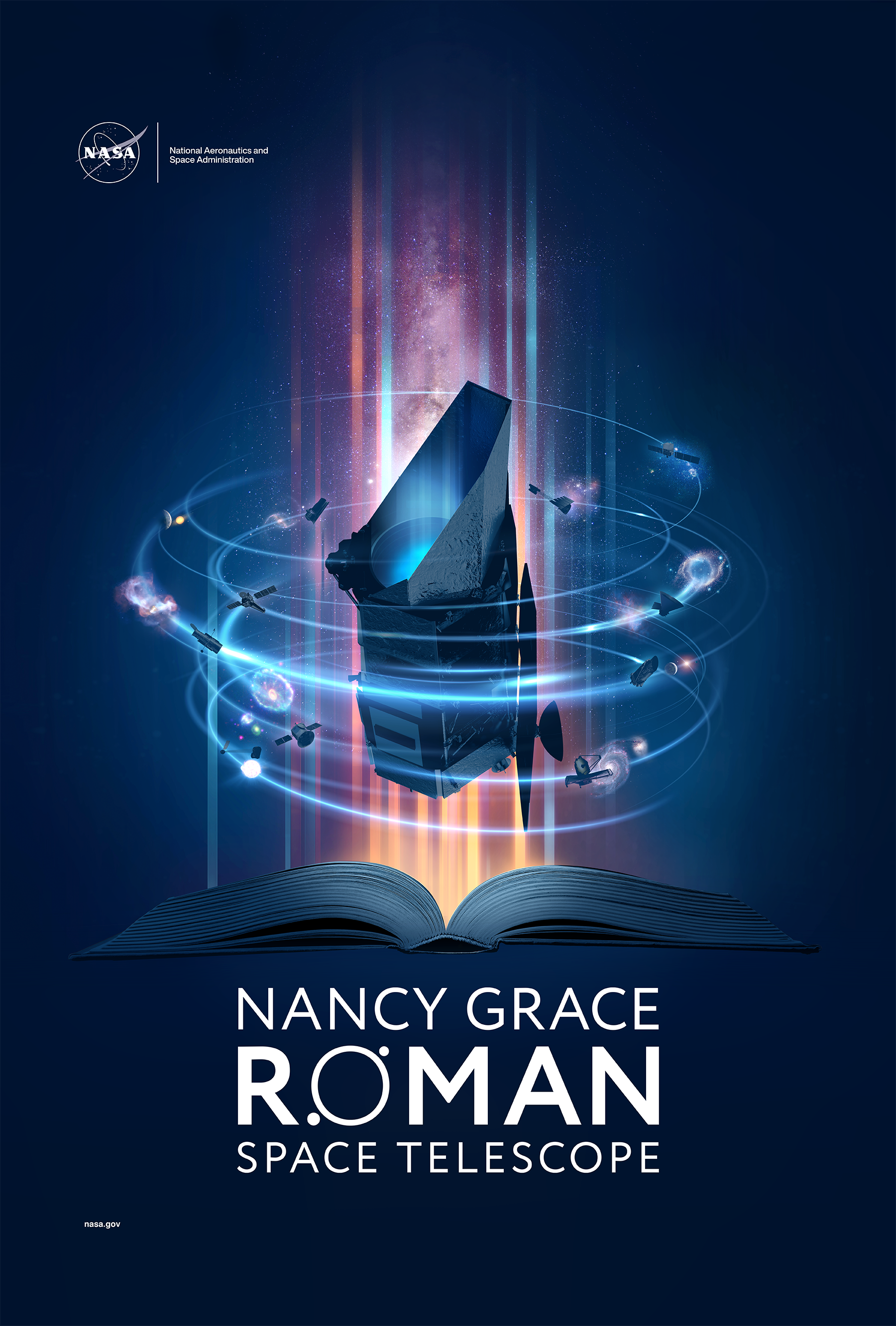
Named for NASA’s first chief astronomer and “mother of the Hubble Space Telescope,” the Nancy Grace Roman Space Telescope will offer a field of view over 100 times larger than Hubble’s to study up to a billion galaxies, directly image exoplanets and planet‑forming disks, and address fundamental questions about dark energy, exoplanets, and infrared astrophysics.

The Roman telescope and the discoveries it will support:
https://www.stsci.edu/roman


You can send your name along with NASA's Nancy Grace Roman Space Telescope that will be placed a million miles away for planet Earth. It is currently scheduled to launch on August 30, 2026. 
Sign up here: https://go.nasa.gov/4ejkRcR
Submissions close July 12.

Image Credit: NASA's Kennedy Space Center
Duration: 47 seconds
Date: June 21, 2026

#NASA #Space #Astronomy #Science #NASARoman #RomanSpaceTelescope #NancyGraceRomanSpaceTelescope #NancyGraceRoman #Exoplanets #Planets #SolarSystem #Stars #MilkyWayGalaxy #Galaxies #Cosmos #Universe #SpaceTelescopes #NASAGoddard #GSFC #STScI #NASAKennedy #Florida #UnitedStates #STEM #Education #HD #Video

NASA's SpaceX Crew-11 Visit Kennedy Space Center

NASA's SpaceX Crew-11 Visit Kennedy Space Center

From left, NASA astronauts Zena Cardman and Mike Fincke, and Japan Aerospace Exploration Agency (JAXA) astronaut Kimiya Yui speak to employees in the Vehicle Assembly Building (VAB) during a visit to NASA’s Kennedy Space Center in Florida on Thursday, June 11, 2026.
NASA astronaut Zena Cardman, commander for NASA’s SpaceX Crew-11 mission, speaks to employees in Kennedy Space Center's Vehicle Assembly Building (VAB)
Japan Aerospace Exploration Agency (JAXA) astronaut Kimiya Yui, mission specialist for NASA’s SpaceX Crew-11 mission, speaks to employees during a visit to NASA’s Kennedy Space Center
NASA astronaut Mike Fincke, pilot for NASA’s SpaceX Crew-11 mission, speaks to employees during a visit to NASA’s Kennedy Space Center in Florida
NASA astronaut Zena Cardman, commander for NASA’s SpaceX Crew-11 mission, speaks to employees during a visit to NASA’s Kennedy Space Center
From left, NASA astronauts Zena Cardman and Mike Fincke speak to employees during a visit to NASA’s Kennedy Space Center 
From left, NASA astronauts Mike Fincke and Zena Cardman, and Japan Aerospace Exploration Agency (JAXA) astronaut Kimiya Yui speak to employees during a visit to NASA’s Kennedy Space Center
From left, NASA astronauts Mike Fincke and Zena Cardman, JAXA (Japan Aerospace Exploration Agency) astronaut Kimiya Yu, and NASA Kennedy Space Center Director Brian Hughes pose for a photograph with employees during a visit to NASA’s Kennedy Space Center

NASA astronauts Zena Cardman and Mike Fincke, along with Japan Aerospace Exploration Agency (JAXA) astronaut Kimiya Yui speak to employees during a visit to NASA’s Kennedy Space Center in Florida on Thursday, June 11, 2026. The three crew members, including Roscosmos cosmonaut Oleg Platonov of Russia, spent five and a half months aboard the International Space Station.

Crew 11’s mission was a long-duration one living and working aboard the microgravity laboratory in order to advance scientific knowledge and demonstrate new technologies for future human and robotic exploration flights as part of NASA’s Moon and Mars exploration approach, including lunar missions through NASA’s Artemis program.

An international partnership of space agencies provides and operates the elements of the International Space Station (ISS). The principals are the space agencies of the United States, Russia, Europe, Japan, and Canada.

Follow Expedition 74:
https://blogs.nasa.gov/spacestation/


Image Credit: NASA/Amber Jean Notvest
Date: June 11, 2026

 #NASA #Space #ISS #Science #Earth #SpaceXCrew11 #Astronauts #JAXA #Japan #Cosmonauts #Russia #Россия #Roscosmos #Роскосмос #HumanSpaceflight #MicrogravityResearch #InternationalCooperation #CommercialCrewProgram #Expedition74 #NASAKennedy #Spaceports #MerrittIsland #UnitedStates #STEM #Education

New Clues to Ancient, Distant Origin of Comet 3I/ATLAS | Webb Telescope

New Clues to Ancient, Distant Origin of Comet 3I/ATLAS | Webb Telescope

Webb’s Near-Infrared Spectrograph (NIRSpec) instrument can map specific chemical and molecular signatures, as seen here in its three images of comet 3I/ATLAS, each highlighting a part of the comet’s contents.
Researchers use NIRSpec’s Integral Field Unit. It provides a spectrum of every image pixel, to dive deeper into the details of cosmic objects than they can with the telescope’s imaging instruments alone. This is crucial for a rare object like 3I/ATLAS. It is only the third comet from outside the Solar System ever studied, and the first to be observed by an instrument capable of capturing as much detail as NIRSpec. With NIRSpec’s data, researchers can build a picture of where the comet may have come from and what its home system was like and then compare that to familiar conditions in the Solar System.

Image Description: Comparison of three telescope images side by side. They are roughly spherical but pixelated with more intense color saturation in the center. From left to right: smallest sphere is blue and labeled H2O, orange is larger and labeled CO2, and red is largest and labeled CO. A scale bar at the lower left is labeled 1300 km/1 arcsecond and is about one fourth of each of the three images. A compass at the lower right shows north pointing up to 12 o’clock, east pointing left to 9 o’clock, and a fainter arrow labeled to Sun pointing down to 8 o’clock.
Measurements of specific element varieties by Webb’s NIRSpec (Near-Infrared Spectrograph) instrument show how different the interstellar comet 3I/ATLAS is from comets originating in our own Solar System. Researchers used NIRSpec to measure carbon-13, which contains an extra neutron, relative to the more common carbon-12. They also measured the abundance of heavy hydrogen, which is a hydrogen atom with an added neutron.
Webb’s NIRSpec found a surprisingly large amount of heavy hydrogen, with a low abundance of carbon-13, indicating that 3I/ATLAS came from a place very different from our own Solar System. Researchers say early analysis of these results indicates that 3I/ATLAS was ejected from its origin system billions of years ago.
Image Description: Infographic showing the differences in measured ratios of heavy carbon and heavy hydrogen between Solar System comets and interstellar comet 3I/ATLAS. The top portion of the infographic has headline Heavy Carbon, plus a horizontal scale in increments of 50 ranging from zero to 250 measuring the ratio of Carbon-12 to Carbon-13. Three Solar System comets appear just below 100 on the scale, while 3I/ATLAS appears above 150 for carbon monoxide and about 170 for carbon dioxide. The bottom portion of the infographic has the headline Heavy Hydrogen, and a horizontal scale ranging from 10 to the negative fifth power on the left to approximately 10 to the negative first power on the right, though 10 to the first is not labeled. This scale is labeled Ratio of Heavy Hydrogen Measured in Water. Eleven Solar System comets appear on the graph, all falling to the right of 10 to the negative fourth power. Comet 3I/ATLAS appears at 10 to the negative second power.

The third identified interstellar comet in human history has a surprising chemical makeup, raising questions as to how common, or unusual, conditions in our own Solar System may be.

As interstellar comet 3I/ATLAS began moving away from the Sun in December 2025, astronomers used the NASA/European Space Agency/Canadian Space Agency James Webb Space Telescope to capture detailed measurements of its chemical components. The comet was freshly warmed from its closest pass by the Sun, and its ancient ice had been converted to a bright coma of gas ideal for observation.

Webb captured detailed data, including chemical ratios of carbon and deuterium, also known as heavy hydrogen, that are not found in Solar System comets. The results surprised researchers. Working backward, astronomers used the components that make up comet 3I/ATLAS to understand the environment where it formed.

A paper detailing the findings was published on June 22, 2026, in the journal Nature.

The comet’s name comes from its status as the third confirmed interstellar comet, meaning it originated outside the Solar System, and the telescope that first spotted it, the NASA-funded Asteroid Terrestrial-impact Last Alert System (ATLAS).

“This was a unique opportunity to study an ancient object from the distant Galaxy, probably pre-dating our Sun and Solar System,” said astro-chemist Martin Cordiner of NASA’s Goddard Space Flight Center in Greenbelt, Maryland, and lead author of the study. “On the one hand, we get direct insight into that distant time and place, and on the other, we learn something about how unusual our own Solar System may be.”

Cordiner and the research team joined astronomers from many sub-disciplines in taking the opportunity to get a look at 3I/ATLAS on its journey through the Solar System. They received approval to interrupt Webb’s planned schedule of observations to make use of its Near-Infrared Spectrograph (NIRSpec) instrument to study the comet.

NIRSpec revealed exceptionally high levels of deuterium, about 30 times more than seen in Solar System comets. This implies that 3I/ATLAS may have originated in a very cold system much earlier in the history of our galaxy. During its formation, the material that became incorporated into 3I/ATLAS was likely exposed to plenty of radiation, but not any long-term warmth that would have reprocessed its “heavy water” ice, with deuterium, into the type of H2O ice we are familiar with on Earth.

Additionally, NIRSpec showed only traces of carbon-13 compared to lighter-weight carbon-12. This also points to a very old origin for 3I/ATLAS, as stellar systems become enriched with carbon-13 over time as generations of stars are born and die in the galaxy. That is why there are higher levels of carbon-13 in our system, around our Sun, which formed relatively recently, 4.5 billion years ago.

The research team estimates that 3I/ATLAS could have formed as long as 10 to 12 billion years ago, during the Universe’s “cosmic noon,” when star formation was at its height. Its young origin system was likely ensconced in a relatively cold, dense cloud. The abundance of heavy water shows that 3I/ATLAS spent its formative years in a deeply frozen state.

A separate study using the European Southern Observatory's Very Large Telescope, led by astronomer Cyrielle Opitom of the University of Edinburgh, complements Webb’s findings with an analysis of 3I/ATLAS’s carbon and nitrogen varieties in the form of the chemical cyanide.

“For us as scientists, finding these rare isotopes is fascinating, but the bigger picture here is looking at the possibilities of prebiotic chemistry elsewhere in the galaxy,” said Stefanie Milam of NASA Goddard and co-author of the study with Cordiner. “So far, we know of only one place in the vast cosmos where chemical ingredients led to life—our Solar System, our Earth. Analysis of these interstellar objects is a major step towards learning how common, or uncommon, the conditions for the evolution of life are in the Universe.”

Webb is an international partnership between NASA, ESA and the Canadian Space Agency (CSA).


Image Credit: NASA, ESA, CSA, STScI, M.Cordiner (Catholic University of America, GSFC)
Release Date: June 22, 2026


#NASA #Astronomy #Science #Space #InterstellarObjects #InterplanetaryBodies #InterstellarComets #InterstellarComet3I #Comet3I #StarSystems #SolarSystem #MilkyWayGalaxy #Universe #JWST #NIRSpec #InfraredAstronomy #SpaceTelescopes #GSFC #STScI #UnitedStates #ESA #Europe #CSA #Canada #Infographics #STEM #Education

CRS-34 Cargo Dragon Spacecraft Departure | International Space Station

CRS-34 Cargo Dragon Spacecraft Departure | International Space Station


At 5:11 a.m. PDT (8:11 a.m. EDT), June 17, 2026, the unpiloted SpaceX Dragon cargo spacecraft splashed down off the coast of California near Oceanside, marking the return of the 34th SpaceX commercial resupply services mission to the International Space Station for NASA.

Dragon undocked at 12:25 p.m. EDT on June 16 carrying samples. Research returning includes bioprinted organ and cartilage tissue, data on improving cryogenic fuel storage for future space missions, and DNA‑inspired materials to develop new cancer treatments. The returning hardware includes an ocular imaging device used to monitor crew members’ eye health, an absorbent bed that filters trace contaminants from cabin air, and a separator pump from the waste and hygiene compartment.

The spacecraft arrived at the space station on May 17 after launching two days earlier on a Falcon 9 rocket from Space Launch Complex 40 at Cape Canaveral in Florida.


Expedition 74 Crew
Station Commander: Sergey-Kud Sverchkov (Russia)
Roscosmos (Russia) Flight Engineers:
Andrey Fedyaev, Sergei Mikaev
European Space Agency Flight Engineer: Sophie Adenot
NASA Flight Engineers: Jessica Meir, Jack Hathaway, Chris Williams

An international partnership of space agencies provides and operates the elements of the International Space Station (ISS). The principals are the space agencies of the United States, Russia, Europe, Japan, and Canada.


Video Credit: NASA/JSC/Jessica Meir
Duration: 33 seconds
Date: June 16, 2026

#NASA #Space #Science #Astronomy #ISS #Earth #SpaceX #CRS34 #CargoDragonSpacecraft #Aurorae #AuroraAustralis #SouthernLights #IndianOcean #Astronauts #AstronautPhotography #Cosmonauts #Russia #Россия #Roscosmos #Роскосмос #HumanSpaceflight #InternationalCooperation #TimelapseVideo #HD #Video

Sunday, June 21, 2026

Galaxy Caldwell 101 in Pavo | Hubble Space Telescope

Galaxy Caldwell 101 in Pavo | Hubble Space Telescope

Like more than two-thirds of the known galaxies in the universe, Caldwell 101 has a spiral shape. It stretches far beyond the edges of this Hubble view, more than 200,000 light-years across in all. Larger than our own Milky Way galaxy, it is one of the relatively few large spiral galaxies in the neighboring universe. Besides its larger size, this galaxy is very similar to the Milky Way. In fact, if there are observers somewhere in this sibling galaxy looking back at the Milky Way, they might see a very similar image—looking at Caldwell 101 is almost like seeing the Milky Way’s reflection in a giant, intergalactic mirror. In this Hubble image, taken in visible and ultraviolet light with the Wide Field Camera 3, colorful regions encircle the center of the giant galaxy. While the blue sites are full of young star clusters, the pink ones are regions of active star formation.

Also cataloged as NGC 6744, Caldwell 101 is similar to our home galaxy in more ways than one. Like the Milky Way, its yellowish core is dominated by the light from old, cool stars. Stretching outward from the elongated core are spiral arms that are littered with dust. This goes hand-in-hand with star formation.

Caldwell 101 was discovered by astronomer James Dunlop in 1826. This nearby “island universe” lies 30 million light-years away in the southern constellation Pavo. Its disk is tilted relative to our line of sight, providing a stunning view of the starry spiral arms. In small telescopes, the magnitude-8.6 galaxy appears as a faint, extended object with a bright core. Caldwell 101 is best viewed in the winter from the Southern Hemisphere. Northern Hemisphere observers will have to be located near the equator and look for it during the summer months.

Hubble’s observations of the heart of Caldwell 101 were taken as part of the Legacy ExtraGalactic UV Survey (LEGUS), the sharpest, most comprehensive ultraviolet-light survey of star-forming galaxies in the nearby universe, creating a valuable resource for understanding the complexities of star formation and galaxy evolution. Additional studies of the galaxy have revealed that Caldwell 101 likely underwent a merger with another galaxy around a billion years ago. 

In 2005, a supernova named SN 2005at (not visible in this image) was discovered within Caldwell 101, attracting even more attention to the galaxy. SN 2005at was a Type Ic supernova. This means that it formed when a massive star collapsed on itself and lost its hydrogen envelope.


Credit: NASA, ESA, and the LEGUS team
Date: May 17, 2018

#NASA #Astronomy #Space #Science #Galaxies #Caldwell101 #NGC6744 #PavoGalaxy #SpiralGalaxies #VelaConstellation #LEGUS #UltravioletAstronomy #Cosmos #Universe #HST #HubbleSpaceTelescope #GSFC #STScI #UnitedStates #Europe #STEM #Education

The Moon & Planet Venus over Italy

The Moon & Planet Venus over Italy

Astrophotographer Marco Meniero: This photo "shows Venus and the Moon between the branches of eucalyptus trees."

In astronomy, a conjunction refers to an event where two or more celestial bodies appear to meet or pass each other in the sky. A conjunction is an apparent phenomenon caused by an observer's perspective. However, the two objects involved are not actually close to one another in space.

Eucalyptus, commonly called gum trees, belong to the Myrtaceae family and include more than 700 species, ranging from small shrubs to towering trees like Eucalyptus regnans—the tallest flowering plant on planet Earth. 

Civitavecchia is a city and major sea port on the Tyrrhenian Sea 60 kilometers (37 miles) west-northwest of Rome, Lazio, Italy. Administratively, it is a comune (municipality) of the Metropolitan City of Rome Capital. Civitavecchia's harbor is formed by two piers and a breakwater on which stands a lighthouse.

Image Credit: Marco Meniero 
Location: Civitavecchia, Italy
Release Date: June 20, 2026


#NASA #Astronomy #Space #Science #SolarSystem #Planets #Venus #Earth #Moon #Conjunctions #Astrophotography #MarcoMeniero #Astrophotographers #Civitavecchia #Rome #Italy #STEM #Education

NASA's Nancy Grace Roman Space Telescope Arrival | Kennedy Space Center

NASA's Nancy Grace Roman Space Telescope Arrival | Kennedy Space Center


NASA’s Pegasus barge has arrived at the Launch Complex 39 turn basin at the agency’s Kennedy Space Center in Florida carrying NASA’s Nancy Grace Roman Space Telescope on Sunday, June 21, 2026. Teams will offload and transport the observatory to the spaceport’s Payload Hazardous Servicing Facility where it will undergo processing ahead of launch, targeted no earlier than Sunday, Aug. 30, 2026. 

Named for NASA’s first chief astronomer and “mother of the Hubble Space Telescope,” Roman will offer a field of view over 100 times larger than Hubble’s to study up to a billion galaxies, directly image exoplanets and planet‑forming disks, and address fundamental questions about dark energy, exoplanets, and infrared astrophysics.

The Roman telescope and the discoveries it will support:
https://www.stsci.edu/roman


You can send your name along with NASA's Nancy Grace Roman Space Telescope that will be placed a million miles away for planet Earth. It is currently scheduled to launch on August 30, 2026. 
Sign up here: https://go.nasa.gov/4ejkRcR
Submissions close July 12.

Image Credit: NASA/Amber Jean Notvest
Date: June 21, 2026

#NASA #Space #Astronomy #Science #NASARoman #RomanSpaceTelescope #NancyGraceRomanSpaceTelescope #NancyGraceRoman #Exoplanets #Planets #SolarSystem #Stars #MilkyWayGalaxy #Galaxies #Cosmos #Universe #SpaceTelescopes #NASAGoddard #GSFC #STScI #NASAKennedy #Florida #UnitedStates #STEM #Education

The Moon & Planet Venus over Italy

The Moon & Planet Venus over Italy


Astrophotographer Marco Meniero: This photo "shows Venus and the Moon with Oleandres in bloom."

In astronomy, a conjunction refers to an event where two or more celestial bodies appear to meet or pass each other in the sky. A conjunction is an apparent phenomenon caused by an observer's perspective. However, the two objects involved are not actually close to one another in space.

Oleander flowers are known for their vibrant and fragrant blooms that can be single or double and come in a variety of colors including white, pink, red, yellow, and peach. The flowers are funnel-shaped and bloom abundantly in warm seasons, with peak flowering occurring in summer.

Civitavecchia is a city and major sea port on the Tyrrhenian Sea 60 kilometers (37 miles) west-northwest of Rome, Lazio, Italy. Administratively, it is a comune (municipality) of the Metropolitan City of Rome Capital. Civitavecchia's harbor is formed by two piers and a breakwater on which stands a lighthouse.

Image Credit: Marco Meniero 
Location: Civitavecchia, Italy
Release Date: June 20, 2026


#NASA #Astronomy #Space #Science #SolarSystem #Planets #Venus #Earth #Moon #Conjunctions #Astrophotography #MarcoMeniero #Astrophotographers #Civitavecchia #Rome #Italy #STEM #Education

Aurora Australis with Nearby Galaxies & Meteor: View from New Zealand

Aurora Australis with Nearby Galaxies & Meteor: View from New Zealand


Astrophotographer Taichi Nakamura: "Nice auroras that kept coming back throughout the night. I finished up with a meteor and a drop of rain in the changable mountain weather of the national park."

Also known as the northern lights (aurora borealis) or southern lights (aurora australis), auroras are colorful, dynamic, and often visually delicate displays of an intricate dance of particles and magnetism between the Sun and Earth called space weather. When energetic particles from space collide with atoms and molecules in the atmosphere, they can cause the colorful glow that we call auroras.

Learn more about auroras: 
https://science.nasa.gov/sun/auroras/

The Large Magellanic Cloud galaxy is around 163,000 light-years from Earth. The Small Magellanic Cloud galaxy is about 200,000 light-years away.

New Zealand is an island country in the southwestern Pacific Ocean. It consists of two main landmasses—the North Island (Te Ika-a-Māui) and the South Island (Te Waipounamu)—and over 600 smaller islands. It is the sixth-largest island country by area and lies east of Australia across the Tasman Sea and south of the islands of New Caledonia, Fiji, and Tonga.


Image Credit: Taichi Nakamura 
Location: Aoraki Mount Cook National Park, South Island, New Zealand
Image Details: Canon R100 astromodified Sigma Arts 20mm ISO6400 f/1.8 8sec
Taichi's website: https://www.facebook.com/traceoflightphotography
Date: June 12, 2026 


#NASA #Space #Astronomy #Science #Sun #SolarSystem #Planets #Earth #Aurora #AuroraAustralis #SouthernLights #Meteors #LMC #SMC #Stars #Astrophotography #TaichiNakamura #Astrophotographer #AorakiMountCookNationalPark #SouthIsland #NewZealand #STEM #Education