Saturday, August 29, 2026

NASA Artemis II Moon Mission Astronauts Awarded American Medals of Honor

NASA Artemis II Moon Mission Astronauts Awarded American Medals of Honor

NASA astronaut Artemis II commander Reid Wiseman speaks during an event to award the Congressional Space Medal of Honor to the Artemis II crew, Friday, Aug. 28, 2026, at NASA's Johnson Space Center in Houston, Texas.
NASA astronaut Artemis II mission specialist Christina Koch is seen during an event to award the Congressional Space Medal of Honor to the Artemis II crew, Friday, Aug. 28, 2026, at NASA's Johnson Space Center in Houston, Texas.
The Congressional Space Medal of Honor awarded to NASA astronaut Artemis II pilot Victor Glover is seen, Friday, Aug. 28, 2026, at NASA's Johnson Space Center in Houston, Texas.
Canadian Space Agency (CSA) astronaut Artemis II mission specialist Jeremy Hansen is seen during an event to award the Congressional Space Medal of Honor to the Artemis II crew, Friday, Aug. 28, 2026, at NASA's Johnson Space Center in Houston, Texas.
The Artemis II crew, consisting of Candian Space Agency astronaut mission specialist Jeremy Hansen and NASA astronauts mission specialist Christina Koch, pilot Victor Glover, and commander Reid Wiseman are seen during an event to award the Congressional Space Medal of Honor to them on Friday, Aug. 28, 2026, at NASA's Johnson Space Center in Houston, Texas.
Vanessa Wyche, director of NASA's Johnson Space Center, speaks during an event to award the Congressional Space Medal of Honor to the Artemis II crew, Friday, Aug. 28, 2026, at NASA's Johnson Space Center in Houston, Texas.
Artemis II Mission Emblem

In early April 2026, the Artemis II crew became the first to travel beyond the Moon in more than 50 years and traveled farther in space than humans have ever before. For their achievements, each was awarded with the United States Congressional Space Medal of Honor on Friday, August 28, 2026. They are the 31st, 32nd, 33rd, and 34th astronauts to receive the award. Congratulations! 

These are sample outtakes of that event . . .

The Congressional Space Medal of Honor was authorized by the United States Congress in 1969 to recognize "any astronaut who in the performance of his or her duties has distinguished himself or herself by exceptionally meritorious efforts and contributions to the welfare of the Nation and mankind". It is awarded by the president of the United States in Congress's name based on recommendations from the administrator of the National Aeronautics and Space Administration (NASA). 

The Artemis II Mission involved a ten-day test flight that carried NASA’s Reid Wiseman, Victor Glover, Christina Koch, and Canadian Space Agency (CSA) astronaut Jeremy Hansen 252,756 miles from Earth before splashing down off the coast of San Diego. This mission tested Orion’s life-support, navigation, and deep-space systems and set the stage for future U.S.-crewed lunar landings and, eventually, the first missions to Mars.

Learn more at: https://www.nasa.gov/artemis-ii


Image Credit: NASA/John Kraus
Date: Aug. 28, 2026

#NASA #Space #Science #Earth #Moon #ArtemisProgram #ArtemisII #OrionSpacecraft #Astronauts #ReidWiseman #VictorGlover #ChristinaKoch #JeremyHansen #HumanSpaceflight #SolarSystem #SpaceExploration #CSA #Canada #NASAJohnson #JSC #UnitedStates #STEM #Education

Planet Mars Images: Aug. 26-28, 2026 | NASA's Curiosity & Perseverance Rovers

Planet Mars Images: Aug. 26-28, 2026 | NASA's Curiosity & Perseverance Rovers

MSL - sol 4995
Mars 2020 - sol 1960
Mars 2020 - sol 1961
MSL - sol 4995
MSL - sol 4995
Mars 2020 - sol 1960
MSL - sol 4998

We invite you tobecome a monthly Friends of NASA supporter on our website:
https://www.friendsofnasa.org/p/friends-of-nasa.html

Friends of NASA (FoN) is an independent non-governmental organization (NGO) dedicated to building international support for peaceful space exploration, commerce, scientific discovery, and STEM education. 
We rely on public donations.
One-time Donations to Friends of NASA (PayPal) accepted here: 

Celebrating 14+ Years on Mars (2012-2026)
Mission Name: Mars Science Laboratory (MSL)
Rover Name: Curiosity
Main Job: To determine if Mars was ever habitable to microbial life. 
Launch: Nov. 6, 2011
Landing Date: Aug. 5, 2012, Gale Crater, Mars

Celebrating 5+ Years on Mars
Mission Name: Mars 2020
Rover Name: Perseverance
Main Job: Seek signs of ancient life and collect samples of rock and regolith (broken rock and soil) for return to Earth.
Launch: July 30, 2020
Landing: Feb. 18, 2021, Jezero Crater, Mars

For more information on NASA's Mars missions, visit: mars.nasa.gov

Image Credits: NASA/JPL-Caltech/ASU/MSSS
Release Dates: Aug. 26-28, 2026

#NASA #Space #Astronomy #Science #Planets #Mars #Astrobiology #Geology #CuriosityRover #MSL #MountSharp #GaleCrater #PerseveranceRover #Mars2020 #JezeroCrater #Robotics #SpaceTechnology #SpaceEngineering #MSSS #JPL #Caltech #UnitedStates #CitizenScience #KevinGill #SpaceExploration #SolarSystem #STEM #Education

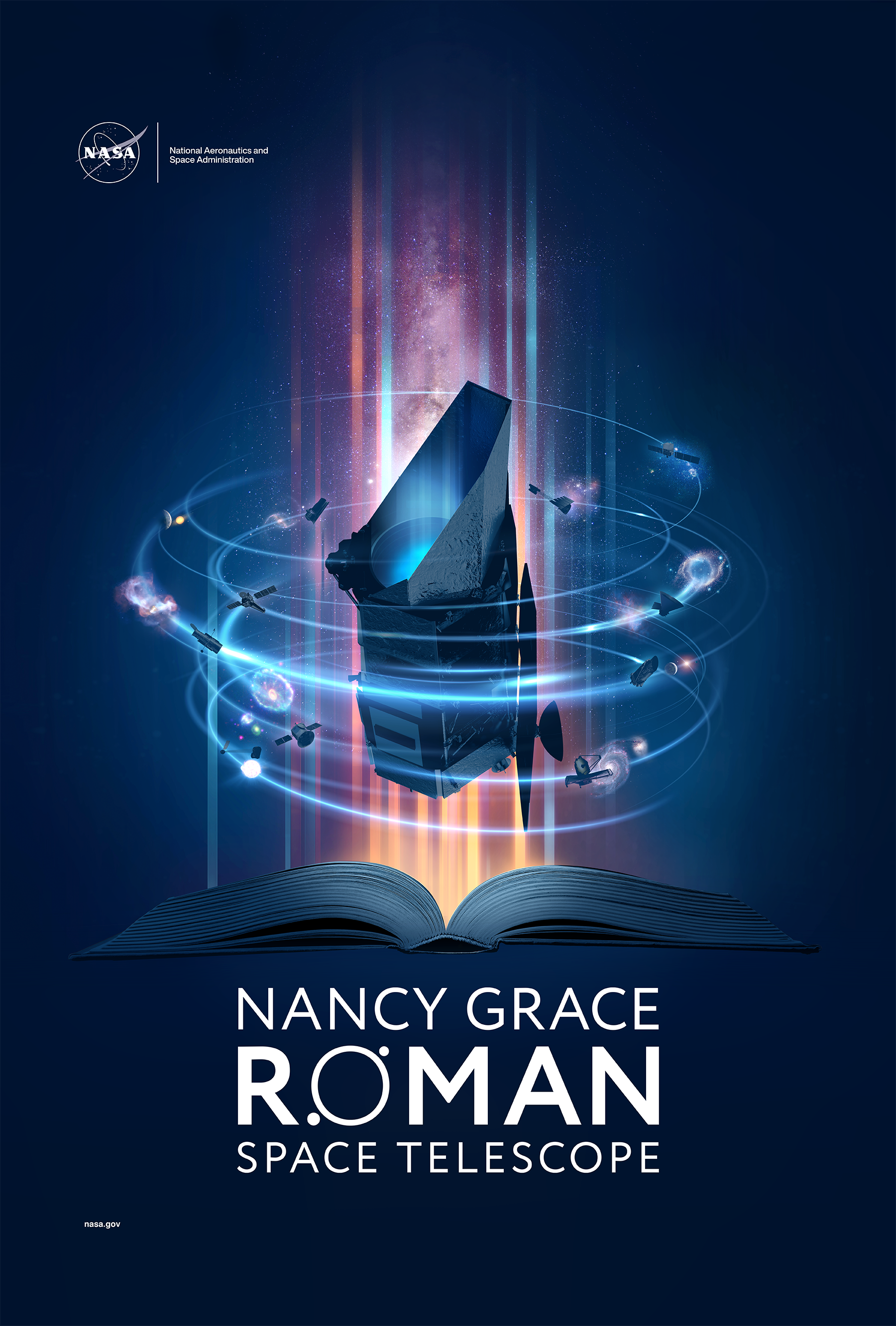
Prelaunch: Nancy Grace Roman Space Telescope on Falcon Heavy | NASA Kennedy

Prelaunch: Nancy Grace Roman Space Telescope on Falcon Heavy | NASA Kennedy


Dr. Nancy Grace Roman (1925-2018) visited the James Webb Space Telescope (JWST) and the Hubble Project Team on March 31, 2017.

NASA’s Nancy Grace Roman Space Telescope, encapsulated in a protective payload fairing atop a SpaceX Falcon Heavy rocket, is seen at sunrise, Saturday, Aug. 29, 2026, at Launch Complex 39A at NASA’s Kennedy Space Center in Florida. Liftoff from NASA Kennedy is targeted for Sunday, Aug. 30, 2026. 

Roman’s primary mission is to settle essential questions about dark energy, exoplanets, and infrared astrophysics by conducting wide-field surveys that explore the universe’s structure, evolution, and composition. 

The Roman telescope and the discoveries it will support:
https://www.stsci.edu/roman

Roman’s namesake—Dr. Nancy Grace Roman, NASA’s first chief astronomer—made it her personal mission to make cosmic vistas readily accessible to all by paving the way for telescopes based in space.

“The mission will acquire enormous quantities of astronomical imagery that will permit scientists to make groundbreaking discoveries for decades to come, honoring Dr. Roman’s legacy in promoting scientific tools for the broader community,” said Jackie Townsend, Roman’s deputy project manager at NASA Goddard. “I like to think Dr. Roman would be extremely proud of her namesake telescope and thrilled to see what mysteries it will uncover in the coming years.”


Image Credit: NASA/Joel Kowsky
Date: Aug. 29, 2026

#NASA #Space #Astronomy #Science #SpaceX #FalconHeavyRocket #NASARoman #RomanSpaceTelescope #Encapsulation #NancyGraceRomanSpaceTelescope #NancyGraceRoman #Exoplanets #Planets #SolarSystem #Stars #MilkyWayGalaxy #Galaxies #Cosmos #Universe #SpaceTelescopes #NASAGoddard #GSFC #STScI #NASAKennedy #Florida #UnitedStates #STEM #Education

Friday, August 28, 2026

NASA Artemis II Moon Mission Astronauts Awarded American Medals of Honor

NASA Artemis II Moon Mission Astronauts Awarded American Medals of Honor

In early April 2026, the Artemis II crew became the first to travel beyond the Moon in more than 50 years and traveled farther in space than humans have ever before. For their achievements, each was awarded with the United States Congressional Space Medal of Honor today, Friday, August 28, 2026. Congratulations!

The Congressional Space Medal of Honor was authorized by the United States Congress in 1969 to recognize "any astronaut who in the performance of his or her duties has distinguished himself or herself by exceptionally meritorious efforts and contributions to the welfare of the Nation and mankind". It is awarded by the president of the United States in Congress's name based on recommendations from the administrator of the National Aeronautics and Space Administration (NASA). 

The Artemis II Mission involved a ten-day test flight that carried NASA’s Reid Wiseman, Victor Glover, Christina Koch, and Canadian Space Agency (CSA) astronaut Jeremy Hansen 252,756 miles from Earth before splashing down off the coast of San Diego. This mission tested Orion’s life-support, navigation, and deep-space systems and set the stage for future U.S.-crewed lunar landings and, eventually, the first missions to Mars.

Learn more at: https://www.nasa.gov/artemis-ii


Image Credit: NASA
Date: Aug. 28, 2026

#NASA #Space #Science #Earth #Moon #ArtemisProgram #ArtemisII #OrionSpacecraft #Astronauts #ReidWiseman #VictorGlover #ChristinaKoch #JeremyHansen #HumanSpaceflight #SolarSystem #SpaceExploration #CSA #Canada #NASAJohnson #JSC #UnitedStates #STEM #Education

NASA's Nancy Grace Roman Space Telescope: "Go For Launch" | NASA Goddard

NASA's Nancy Grace Roman Space Telescope: "Go For Launch" | NASA Goddard

NASA’s Nancy Grace Roman Space Telescope is prepped for launch, and one phase of Roman is ending. It began with the 2010 Astronomy and Astrophysics Decadal Survey, where the community called for a wide-field infrared survey telescope: WFIRST. This was Roman’s start. 

Institutes and businesses across the country began developing new hardware to support this mission. At the observatory’s heart was a mirror the same size as Hubble’s and a set of 18 state-of-the-art detectors that allowed for both a massive field of view and extremely high angular resolution. This combination would allow Roman to create vast and detailed surveys of the universe unlike anything seen before. Roman also holds a Coronagraph Instrument to test hardware never before flown in space. It will be able to see distant planets orbiting other stars and is a major step toward finding life outside the solar system.

Much of Roman’s hardware was developed and built in-house at NASA’s Goddard Space Flight Center. Other key systems came from places like NASA’s Jet Propulsion Laboratory (JPL), BAE Systems, and L3Harris. Beginning in 2023, all the parts converged on Goddard. Inside Goddard’s enormous clean room, a team of dedicated engineers and technicians spent over three years assembling the pieces. Throughout the process, they also used Goddard’s testing facilities to evaluate the hardware’s ability to survive launch and space. Pieces, assembled sections, and finally the entire observatory were subjected to tests like vibration and acoustic shaking, thermal vacuum freezing, and centrifuge g-force loading.

The early completion and future success of the Roman Space Telescope is a testament to the unwavering commitment and effort of thousands of people working together toward a common goal. Thanks to all their efforts, Roman will broaden our understanding of the universe and our place within it.

The Roman telescope and the discoveries it will support:
https://www.stsci.edu/roman

Roman’s namesake—Dr. Nancy Grace Roman, NASA’s first chief astronomer—made it her personal mission to make cosmic vistas readily accessible to all by paving the way for telescopes based in space.

“The mission will acquire enormous quantities of astronomical imagery that will permit scientists to make groundbreaking discoveries for decades to come, honoring Dr. Roman’s legacy in promoting scientific tools for the broader community,” said Jackie Townsend, Roman’s deputy project manager at NASA Goddard. “I like to think Dr. Roman would be extremely proud of her namesake telescope and thrilled to see what mysteries it will uncover in the coming years.”


Credit: NASA’s Goddard Space Flight Center
Producer: Scott Wiessinger (eMITS)
Narrator: Jacob Pinter (eMITS)
Videographers:
 eMITS: Sophia Roberts, Scott Wiessinger, Rob   Andreoli , John Philyaw 
 ASRC Federal: Jolearra Tshiteya 
 Rocz: Sydney Rohde 
Drone Pilots: 
 Francis Reddy (University of Maryland College   Park)
 Rob Fortunato
 Christopher Albert
Animator: Adriana Manrique Gutierrez (eMITS)
Science Writer: Ashley Balzer (eMITS)
Editor: Scott Wiessinger (eMITS)
Duration: 3 minutes
Release Date: Aug. 28, 2026

#NASA #Space #Astronomy #Science #NASARoman #RomanSpaceTelescope #NancyGraceRomanSpaceTelescope #NancyGraceRoman #Exoplanets #Planets #SolarSystem #Stars #MilkyWayGalaxy #Galaxies #Cosmos #Universe #SpaceTelescopes #NASAGoddard #GSFC #STScI #NASAKennedy #Florida #UnitedStates #STEM #Education #HD #Video

Lunar Eclipse

Lunar Eclipse


A deep partial lunar eclipse peaked late last night on August 27 into the early hours of August 28, 2026, covering over 96 percent of the Moon in Earth's dark shadow. It was widely visible across North America, South America, western Europe, and western Africa.

Lunar eclipses occur at the full Moon phase. When Earth is positioned precisely between the Moon and Sun, Earth’s shadow falls upon the surface of the Moon, dimming it and sometimes turning the lunar surface a striking red over the course of a few hours. Each lunar eclipse is visible from half of Earth.

Learn more: https://science.nasa.gov/moon/eclipses/


Image Credit: FrankAstro
Date: Aug. 28, 2026 

#NASA #Space #Astronomy #Science #Sun #SolarSystem #Moon #Earth #LunarEclipse #Umbra #Penumbra #Astrophotography #FrankAstro #Astrophotographers #STEM #Education

Lunar Eclipse over Massachusetts

Lunar Eclipse over Massachusetts


Lunar eclipses occur at the full Moon phase. When Earth is positioned precisely between the Moon and Sun, Earth’s shadow falls upon the surface of the Moon, dimming it and sometimes turning the lunar surface a striking red over the course of a few hours. Each lunar eclipse is visible from half of Earth.

Learn more: https://science.nasa.gov/moon/eclipses/

Massachusetts, officially the Commonwealth of Massachusetts, is a state in the New England region of the Northeastern United States. It borders the Atlantic Ocean and the Gulf of Maine to its east, Connecticut and Rhode Island to its south, New Hampshire and Vermont to its north, and New York to its west.


Image Credit: Stephen LaFlamme 
Location: Southeast Massachusetts
Image Details: Photo taken at maximum coverage/96% lunar eclipse, Canon T6i DSLR attached to Takahashi TOA-130 refractor
Stephen's website: https://www.facebook.com/astrogeekobservatory
Release Date: Aug. 28, 2026 

#NASA #Space #Astronomy #Science #Sun #SolarSystem #Moon #Earth #LunarEclipse #Umbra #Penumbra #Massachusetts #UnitedStates #Astrophotography #StephenLaFlamme #Astrophotographers #STEM #Education

NASA Artemis II Moon Mission Recap

NASA Artemis II Moon Mission Recap

Artemis II marked the first astronaut journey to the Moon in over 50 years—a 10-day test flight that carried NASA’s Reid Wiseman, Victor Glover, Christina Koch, and Canadian Space Agency (CSA) astronaut Jeremy Hansen 252,756 miles from Earth before splashing down off the coast of San Diego. This mission tested Orion’s life-support, navigation, and deep-space systems and set the stage for future U.S.-crewed lunar landings and, eventually, the first missions to Mars.

Learn more at: https://www.nasa.gov/artemis-ii


Video Credit: NASA's Johnson Space Center
Duration: 3 minutes, 22 seconds
Date: Aug. 28, 2026


#NASA #Space #Science #Earth #Moon #ArtemisProgram #ArtemisII #OrionSpacecraft #Astronauts #ReidWiseman #VictorGlover #ChristinaKoch #JeremyHansen #HumanSpaceflight #SolarSystem #SpaceExploration #CSA #Canada #NASAJohnson #JSC #UnitedStates #STEM #Education #HD #Video

Shenzhou-23 Astronauts Complete First Spacewalks | China Space Station

Shenzhou-23 Astronauts Complete First Spacewalks | China Space Station

The Shenzhou-23 crew aboard China's orbiting space station completed their mission's first series of spacewalks (extravehicular activities) on Friday, Aug. 28, 2026, according to the China Manned Space Agency (CMSA).

The astronaut trio—Zhu Yangzhu, Zhang Zhiyuan and Lai Ka-ying—worked for approximately 5.5 hours and completed their tasks at 13:59 Beijing time (0559 GMT), assisted by the space station's robotic arm and ground support teams. Zhu, who previously spacewalked three years ago, made his second excursion, while Zhang ventured outside for the first time.

Zhu and Zhang installed debris shields and repaired the station's solar panels, ensuring the safety and stability of its power supply, according to the CMSA. This is the second time Chinese astronauts have performed such in-orbit maintenance tasks.

The three astronauts were launched aboard the Shenzhou-23 spacecraft on May 24 for an extended in-orbit mission.

Since arriving at the station, the crew has completed an in-orbit handover, deployed application payloads outside the station, and conducted rendezvous-and-docking drills, medical rescue exercises and full-system pressure emergency response drills.

Scientific experiments and technology tests in space life sciences, human research, microgravity physics and new space technologies are progressing steadily, the CMSA said.

In the coming months, they will carry out scientific experiments, technology tests, application payload deployments outside the station, and public outreach activities, the agency added.

Shenzhou-23 Crew
Zhu Yangzhu 朱杨柱, Commander & Flight Engineer (second spaceflight)
Zhang Zhiyuan 张志远, Pilot (first spaceflight)
Lai Ka-ying/Li Jiaying 黎家盈, Payload Specialist (first spaceflight) [Hong Kong SAR]

Video Credit: CCTV
Duration: 46 seconds
Release Date: Aug. 28, 2026

#NASA #Space #Science #China #中国 #Shenzhou23Mission #神舟二十三号 #Shenzhou23 #Taikonauts #Astronauts #Spacewalks #EVA #ZhuYangzhu #ZhangZhiyuan #LiJiaying #LaiKaying #ChinaSpaceStation #中国空间站 #TiangongSpaceStation #MicrogravityExperiments #SpaceLaboratory #CMSA #中国载人航天工程办公室 #HumanSpaceflight #STEM #Education #HD #Video

SpaceX Starship at Christmas Island in The Indian Ocean after 13th Flight Test

SpaceX Starship at Christmas Island in The Indian Ocean after 13th Flight Test


"SpaceX engineers spent several days inspecting Ship 40 in the waters off Christmas Island. They collected heatshield samples and gained vital insight into how the vehicle handled reentry with improvements now planned on future vehicles."

Christmas Island, officially the Territory of Christmas Island, is an Australian external territory in the Indian Ocean comprising the island of the same name. It is about 350 kilometres (190 nautical miles; 220 miles) south of Java and Sumatra and about 1,550 km (840 nmi; 960 mi) north-west of the closest point on the Australian mainland. 

The thirteenth flight test of Starship was successfully launched on Friday, July 24, 2026. This was the second flight of the Starship and Super Heavy V3 vehicles and the first Starship flight to deploy "next generation" Starlink V3 satellites.

Watch the launch broadcast and read the full flight report here: 

The flight test began with Super Heavy igniting all 33 Raptor 3 engines and ascending over the Gulf of Mexico. The successful first-stage ascent was followed by a hot-staging maneuver with Starship’s upper stage igniting its six Raptor engines to continue its flight to space.

Following stage separation, the Super Heavy booster performed a directional flip maneuver. The startup sequence was modified for this flight to be more robust to timing variability in engine startup and flip in the desired direction. This is done to increase overall performance. The booster successfully completed the high thrust portion of the boostback burn with all 33 engines, the first time with a Super Heavy V3, before ending the burn early. It attempted to relight its engines for the landing burn with a subset successfully igniting before experiencing a hard splashdown in the Gulf.

After completing a full-duration ascent burn on all six Raptor engines, Starship achieved its planned velocity and trajectory. Starship then successfully deployed all 20 Starlink V3 satellites. SpaceX engineers were able to successfully communicate with every satellite using radio frequency and laser links and downloaded key telemetry from the satellites. The Starlink satellites were deployed on the pre-planned trajectory and are expected to have demised upon reentry approximately 20 minutes after deployment.

The vehicle also reignited a single Raptor engine in an in-space demonstration of a core capability for future orbital missions.

Starship re-entered the Earth’s atmosphere and was able to gather critical data on the performance of its heatshield before executing a dynamic banking move to mimic the trajectory that future missions returning to Starbase will fly. Starship then guided itself using its four flaps to the pre-planned splashdown zone in the Indian Ocean. After relighting all three Raptor engines, Starship executed a landing flip, landing burn, and soft splashdown, coming to rest intact in the Indian Ocean and providing critical views of an intact heatshield for the first time.

NASA plans to use a lunar lander version of Starship to deliver astronauts and cargo to the Moon during the Artemis IV mission and beyond through the Human Landing System (HLS) Program.

Download the Free Starship User Guide (PDF):
https://www.spacex.com/media/starship_users_guide_v1.pdf

Image Credit: Space Exploration Technologies Corporation (SpaceX)
Release Date: Aug. 27, 2026 

#NASA #SpaceX #Space #Starlink #Earth #Mars #Moon #ArtemisProgram #ArtemisIII #ArtemisIV #Starship #Starship40 #ChristmasIsland #IndianOcean #StarshipV3 #StarshipRecovery #FlightTest13 #IndianOcean #ReusableSpacecraft #ElonMusk #Engineering #SpaceTechnology #HumanSpaceflight #CommercialSpace #SpaceExploration #UnitedStates #STEM #Education

Thursday, August 27, 2026

Ignitor Test Provides Key Data for Artemis III Mission | NASA's Stennis Space Center

Ignitor Test Provides Key Data for Artemis III Mission | NASA's Stennis Space Center


A July test fire of a hydrogen burn-off ignitor at NASA Stennis in south Mississippi is providing data for the agency to help optimize camera settings for the Artemis III launch in 2027.

Artemis III is intended to demonstrate integrated operations between the Orion spacecraft and test versions of commercial human landing systems before Artemis IV returns astronauts to the lunar surface.

About ten seconds before NASA’s Space Launch System (SLS) rocket lifts off from NASA's Kennedy Space Center in Florida, hydrogen burn-off ignitors will safely burn off excess hydrogen gas.

Here’s the challenge:

This flare looks like a firework sparkler during launch and is incredibly bright. 

Just like you might squint if looking toward the Sun, our high-speed launch cameras, recording at 400 frames per second, can react to intense light by closing its aperture too much. 

Clear imagery is essential for post-launch analysis, real-time situational awareness during liftoff, and to verify hardware status in the event of a premature engine shutdown.

This test provides data so that cameras capture every detail without being overwhelmed by the flare. 

NASA will launch the Artemis III SLS rocket and Orion spacecraft alongside its commercial partners to demonstrate critical systems needed for lunar landings, beginning with Artemis IV in 2028.

Planned to launch in 2027, the Artemis III Mission will practice docking the Orion spacecraft with two lunar landers in low Earth orbit. 

On future missions, including Artemis IV in 2028, landers will bring astronauts to the lunar surface. While Artemis III will not land on the Moon, it will test the complex capabilities NASA needs to return—this time to stay.

Learn more about NASA’s Artemis program:

NASA's Stennis Space Center:

Video Credit: NASA's Stennis Space Center
Duration: 41 seconds
Release Date: Aug. 27, 2026

#NASA #Space #Science #Earth #Moon #ArtemisProgram #ArtemisIII #ArtemisIIIMission #RocketEngines #HydrogenFuel #BurnOffIgnitor #LunarLanders #HLS #NASASLS #OrionSpacecraft #OrionServiceModules #Astronauts #Italy #Italia #Europe #HumanSpaceflight #SolarSystem #MoonExploration #NASAStennis #Mississippi #UnitedStates #STEM #Education #HD #Video

Hubble & Webb Space Telescope Views of Irregular Galaxy Arp 263 in Leo Compared

Hubble & Webb Space Telescope Views of Irregular Galaxy Arp 263 in Leo Compared

This video showcases two views of Arp 263, an irregular galaxy, lies in the constellation Leo at a relatively nearby distance of around 25 million light-years.

The first image shown is from the NASA/European Space Agency (ESA) Hubble Space Telescope in visible light, followed by the new ESA/Webb picture of this target, that features data from Webb's near-infrared camera (NIRCam) instrument.


Credit: ESA/Webb, NASA & CSA, A. Leroy, ESA/Hubble, J. Dalcanton, A. Filippenko, N. Bartmann (ESA/Webb)
Duration: 30 seconds
Date: Aug. 27, 2026

#NASA #ESA #Astronomy #Space #Science #Stars #StarBD172217 #StellarNurseries #StarClusters #Galaxies #Arp263 #IrregularGalaxies #InteractingGalaxies #Cosmos #Universe #HubbleSpaceTelescope #HST #JWST #NIRCam #InfraredAstronomy #Europe #NASAGoddard #GSFC #STScI #UnitedStates #CSA #Canada #STEM #Education #HD #Video

'Starstruck Image' of Irregular Galaxy Arp 263 in Leo | Hubble Space Telescope

'Starstruck Image' of Irregular Galaxy Arp 263 in Leo | Hubble Space Telescope

This image shows the Hubble Space Telescope’s visible-light view of Arp 263, around 25 million light-years away. Here, “irregular clumps” in the galaxy are revealed to be bright nebulae between its dense clouds of gas, where stars are forming. Milky Way star BD+17 2217 appears in the foreground as a stellar photobomber.

The black region visible in the corners appears because this image was cropped and rotated to align with Webb’s image of the galaxy.

Image Description: An irregular galaxy that appears like a triangle-shaped patch of tiny stars. It is densest in the centre and along one edge, growing faint out to the opposite corner. Several bright pink patches mark areas of star formation, and the galaxy’s brightest stars are around these. A large, bright star, with two sets of long spikes, stands between the viewer and the galaxy.


Credit: ESA/Hubble & NASA, J. Dalcanton, A. Filippenko
Release Date: Aug. 27, 2026

#NASA #ESA #Astronomy #Space #Science #Stars #StarBD172217 #StellarNurseries #StarClusters #Galaxies #Arp263 #IrregularGalaxies #InteractingGalaxies #Cosmos #Universe #HubbleSpaceTelescope #HST #Europe #NASAGoddard #GSFC #STScI #UnitedStates #STEM #Education

Irregular Galaxy Arp 263 in Leo: Star clusters & irregular clumps | Webb Telescope

Irregular Galaxy Arp 263 in Leo: Star clusters & irregular clumps | Webb Telescope

This NASA/European Space Agency picture is an infrared look into the strange final phase of a galactic merger. Arp 263, an irregular galaxy, lies in the constellation Leo at a relatively nearby distance of around 25 million light-years. Originally discovered in 1784 and also cataloged as NGC 3239, this galaxy was included in American astronomer Halton Arp’s Atlas of Peculiar Galaxies in 1966, as possibly one of the most remarkable and strange galaxies in the sample. Arp categorized it with the galaxies featuring “irregular clumps”.

Arp 263 is believed to result from a past galactic merger. Apart from its unusual distorted shape, astronomers have noticed a few features that point to this. It has two short, curved tails of stars, beyond the field of view of this Webb image. This is a feature associated with gravitational interactions. However, there are no nearby galaxies that Arp 263 could be interacting with now. The stars in the galaxy are oriented differently to its hydrogen gas, where they would normally be symmetric, and parts of that gas are moving at a range of velocities to each other. And, of course, the widespread formation of new stars across Arp 263 is typical of a galaxy whose gas has been seriously shaken up.

Although Arp 263 clearly has not yet settled into a more regular shape after its gravitational tug-of-war, its former companion galaxy is now nowhere to be found. It is possible that this was a dwarf galaxy small enough to have been already completely dissolved into the larger Arp 263—or that its companion was simply much more heavy than it was bright, making it difficult to spot as a remnant.

This image from Webb’s Near-Infrared Camera (NIRCam) reveals an alternative view of Arp 263, taking us inside the thick gas crowding the galaxy to see the many stars scattered there. These old stars contrast with the several areas of star birth, where multitudes of new stars are forming in numerous clusters. Dust spread throughout the galaxy glows with the light, here shown in red, emitted by complex molecules; around the star-forming regions we also see—in blue colors—hydrogen gas, ionized by starlight and emitting its own light in turn. The most intense area of star formation features a curved chain of compact star clusters, leading to the largest and brightest star-forming nebula. Webb allows us to peek into this stellar nursery and see the stars that have formed within.

The brightest of the bright spots in Arp 263 is a shining star, named BD+17 2217. It appears so large and bright with long diffraction spikes created by the telescope’s optics, because it is part of our own galaxy. The galaxies that appear in the background are much more distant, most hundreds of millions of light-years away from both us and Arp 263. A few of these galaxies are identifiable as spiral galaxies, but Webb’s NIRCam reveals the hundreds of much more distant galaxies lurking in the background as orange dots.

This image was made with data from observing program #3707 (PI: Leroy), a survey of the nearby, large, star-forming galaxies in the southern sky. These galaxies are close enough that Webb’s sharp vision can deliver a detailed picture of the stars, star clusters, and interstellar dust within the galaxy. The observations will be used to better understand the cycle of star formation and how it plays out across galaxies; Arp 263, with its disturbed disc of gas and its chaotic star formation, presents a unique and fascinating target for these investigations.

Image Description: An irregular galaxy, appearing like a broad band of tiny stars. It is denser on one side with a faint cloud of gas among the stars. Clumps of brighter points are newly formed stars, with the largest lights being star clusters, and with many surrounded in glowing blue gas clouds. Plumes of red dust surround the galaxy. A foreground star appears very large and bright. A few distant galaxies appear in the background.


Image Credit: ESA/Webb, NASA & CSA, A. Leroy
Release Date: Aug. 27, 2026


#NASA #ESA #Astronomy #Space #Science #Stars #StarBD172217 #StellarNurseries #StarClusters #Galaxies #Arp263 #IrregularGalaxies #InteractingGalaxies #Cosmos #Universe #JWST #NIRCam #InfraredAstronomy #SpaceTelescopes #Europe #NASAGoddard #GSFC #STScI #UnitedStates #CSA #Canada #STEM #Education

Expedition 75: Menon & Adenot on Spacewalk | International Space Station

Expedition 75: Menon & Adenot on Spacewalk | International Space Station


Spacewalkers Anil Menon of NASA (red stripes) and Sophie Adenot of the European Space Agency (ESA) installed a high-speed antenna on the station while soaring 260 miles above Earth on Tuesday, Aug. 25, 2026. They also pictured the SpaceX Dragon (Image#2) and the Alpha Magnetic Spectrometer (Image#8), a cosmic particle detector. NASA astronaut Anil Menon and ESA astronaut Sophie Adenot concluded their spacewalk outside the International Space Station at 2:57 p.m. EDT.  

During the 6‑hour, 30‑minute spacewalk, Menon and Adenot successfully installed and connected the spare space‑to‑ground antenna, a critical link that enables high‑speed data transmission between NASA’s Mission Control Center in Houston and the orbital complex. Afterward, they secured the failed unit that was removed and temporarily stowed during the duo’s spacewalk on Aug. 18, to a spare‑parts platform on the station’s truss structure.

Initial checkouts of the newly installed antenna showed good power and data transmission. Flight controllers on the ground will continue testing the antenna overnight to ensure full functionality. 

U.S. spacewalk 98 was Menon’s third career spacewalk and the second for Adenot. It also was the 283rd spacewalk in support of space station assembly, maintenance, and upgrades.


Expedition 75 Crew
Station Commander: Jessica Meir
Roscosmos (Russia) Flight Engineers:
Andrey Fedyaev,
Anna Kikina, Pyotr Dubrov
European Space Agency Flight Engineer: Sophie Adenot
NASA Flight Engineers: Jack Hathaway, Anil Menon

An international partnership of space agencies provides and operates the elements of the International Space Station (ISS). The principals are the space agencies of the United States, Russia, Europe, Japan, and Canada.


Image Credits: NASA's Johnson Space Center/A. Menon/S. Adenot
Image Date: Aug. 25, 2026


#NASA #Space #Science #ISS #Planets #Earth #Astronauts #Spacewalks #USSpacewalk98 #EVAs #Spacesuits #AnilMenon #SophieAdenot #France #CNES #AstronautPhotography #Cosmonauts #Russia #Россия #Roscosmos #Роскосмос #HumanSpaceflight #Expedition75 #InternationalCooperation #UnitedStates #STEM #Education