Friends of NASA (FoN) is an independent non-governmental organization (NGO) dedicated to building international support for peaceful space exploration, commerce, scientific discovery, and STEM education.
Flight Day 11: NASA’S Artemis I Orion spacecraft captured imagery looking back at the Earth from a camera mounted on one of its solar arrays. The spacecraft is currently in a distant retrograde orbit around the Moon. On flight day 11, Saturday, Nov. 26, 2022, at 8:42 a.m EST (13:42 UTC), the Artemis I Orion spacecraft broke the record for farthest distance traveled by a spacecraft designed to carry humans to deep space and to safely return them to Earth. This distance record was previously held by the Apollo 13 spacecraft.
The first in a series of increasingly complex missions, Artemis I is an uncrewed flight test that will provide a foundation for human deep space exploration. It will demonstrate NASA's commitment and capability to extend human existence to the Moon and beyond. Orion is completing a 25-day test of all key systems. It will travel 280,000 miles from Earth, thousands of miles beyond the Moon. Orion will stay in space longer than any ship for astronauts has done without docking to a space station and return home faster and hotter than ever before.
On the Artemis III Mission, NASA will land the first woman and the first person of color on the surface of the Moon, paving the way for a long-term lunar presence and serving as a steppingstone on the way to Mars.
NASA's Artemis I Orion Spacecraft Approaches Moon's Far Side
On flight day 6, NASA's Artemis I Orion spacecraft approached the far side of the Moon for the outbound powered flyby, when it would pass just 81 miles above the lunar surface.
On flight day 11. Saturday, Nov. 26, 2022, at 8:42 a.m EST (13:42 UTC), the Artemis I Orion spacecraft broke the record for farthest distance traveled by a spacecraft designed to carry humans to deep space and safely return them to Earth. This distance record was previously held by the Apollo 13 spacecraft.
The first in a series of increasingly complex missions, Artemis I is an uncrewed flight test that will provide a foundation for human deep space exploration. It will demonstrate NASA's commitment and capability to extend human existence to the Moon and beyond. Orion is completing a 25-day test of all key systems. It will travel 280,000 miles from Earth, thousands of miles beyond the Moon. Orion will stay in space longer than any ship for astronauts has done without docking to a space station and return home faster and hotter than ever before.
On the Artemis III Mission, NASA will land the first woman and the first person of color on the surface of the Moon, paving the way for a long-term lunar presence and serving as a steppingstone on the way to Mars.
NASA's Artemis I Orion Spacecraft Approaches The Moon [Video]
On flight day 6, NASA's Artemis I Orion spacecraft approached the Moon for the outbound powered flyby, when it would pass just 81 miles above the lunar surface.
On flight day 11. Saturday, Nov. 26, 2022, at 8:42 a.m EST (13:42 UTC), the Artemis I Orion spacecraft broke the record for farthest distance traveled by a spacecraft designed to carry humans to deep space and safely return them to Earth. This distance record was previously held by the Apollo 13 spacecraft.
The first in a series of increasingly complex missions, Artemis I is an uncrewed flight test that will provide a foundation for human deep space exploration. It will demonstrate NASA's commitment and capability to extend human existence to the Moon and beyond. Orion is completing a 25-day test of all key systems. It will travel 280,000 miles from Earth, thousands of miles beyond the Moon. Orion will stay in space longer than any ship for astronauts has done without docking to a space station and return home faster and hotter than ever before.
On the Artemis III Mission, NASA will land the first woman and the first person of color on the surface of the Moon, paving the way for a long-term lunar presence and serving as a steppingstone on the way to Mars.
NASA's Artemis I Orion Spacecraft: Moon Views (Nov. 22-25, 2022)
Flight Day 9: Orion Looks Back at Moon
Flight Day 7: Orion's NAVCAM Captures the Moon
Flight Day 10: Orion Sees Moon From Distant Retrograde Orbit
Flight Day 9: Orion Captures Moon
Lunar images captured by NASA’s Orion spacecraft from flight days 7 (Nov. 22), 9 (Nov. 24), and 10 (Nov. 25). On flight day 11. Saturday, Nov. 26, 2022, at 8:42 a.m EST (13:42 UTC), the Artemis I Orion spacecraft broke the record for farthest distance traveled by a spacecraft designed to carry humans to deep space and safely return them to Earth. This distance was previously held by the Apollo 13 spacecraft.
On flight day 10, NASA’s Orion spacecraft captured imagery of the Moon while in a distant retrograde orbit. Orion uses its optical navigation camera to capture imagery of the Earth and the Moon at different phases and distances, providing an enhanced body of data to certify its effectiveness under different lighting conditions as a way to help orient the spacecraft on future missions with crew.
The first in a series of increasingly complex missions, Artemis I is an uncrewed flight test that will provide a foundation for human deep space exploration. It will demonstrate NASA's commitment and capability to extend human existence to the Moon and beyond. Orion is completing a 25-day test of all key systems. It will travel 280,000 miles from Earth, thousands of miles beyond the Moon. Orion will stay in space longer than any ship for astronauts has done without docking to a space station and return home faster and hotter than ever before.
On the Artemis III Mission, NASA will land the first woman and the first person of color on the surface of the Moon, paving the way for a long-term lunar presence and serving as a steppingstone on the way to Mars.
On Saturday, Nov. 26, 2022, at 8:42 a.m EST (13:42 UTC), the Artemis I Orion spacecraft broke the record for farthest distance traveled by a spacecraft designed to carry humans to deep space and safely return them to Earth. This distance was previously held by the Apollo 13 spacecraft.
In this video, Apollo astronauts and flight directors give their insights into the Apollo program, the nation’s reaction then, and how the Artemis program will benefit the nation today. As we go back to the Moon, Artemis will prepare us to travel even deeper into space.
Credits: National Aeronautics and Space Administration (NASA)
NASA's Artemis I Orion Spacecraft Looks Back at Earth
On flight day 7, Nov. 22, 2022, Orion used a camera mounted on the tip of one of its four solar arrays to capture images of our home planet Earth when it was more than 200,000 miles away.
Artemis I Mission Update for Flight Day 10: Flight Controllers in the White Flight Control Room at NASA’s Johnson Space Center in Houston successfully performed a burn on Nov. 25, 2022, to insert Orion into a distant retrograde orbit by firing the orbital maneuvering system engine for 1 minutes and 28 seconds at 4:52 p.m. CST, propelling the spacecraft at 363 feet per second.
The first in a series of increasingly complex missions, Artemis I is an uncrewed flight test that will provide a foundation for human deep space exploration. It will demonstrate NASA's commitment and capability to extend human existence to the Moon and beyond. Orion is completing a 25-day test of all key systems. It will travel 280,000 miles from Earth, thousands of miles beyond the Moon. Orion will stay in space longer than any ship for astronauts has done without docking to a space station and return home faster and hotter than ever before.
On the Artemis III Mission, NASA will land the first woman and the first person of color on the surface of the Moon, paving the way for a long-term lunar presence and serving as a steppingstone on the way to Mars.
NASA's Artemis I Orion Spacecraft Looks Back at 'Blue Marble' Earth
On Flight Day 9, NASA’s Orion spacecraft captured imagery looking back at the Earth from a camera mounted on one of its solar arrays. The spacecraft is enroute to distant retrograde orbit of the Moon.
The first in a series of increasingly complex missions, Artemis I is an uncrewed flight test that will provide a foundation for human deep space exploration. It will demonstrate NASA's commitment and capability to extend human existence to the Moon and beyond. Orion is completing a 25-day test of all key systems. It will travel 280,000 miles from Earth, thousands of miles beyond the Moon. Orion will stay in space longer than any ship for astronauts has done without docking to a space station and return home faster and hotter than ever before.
On the Artemis III Mission, NASA will land the first woman and the first person of color on the surface of the Moon, paving the way for a long-term lunar presence and serving as a steppingstone on the way to Mars.
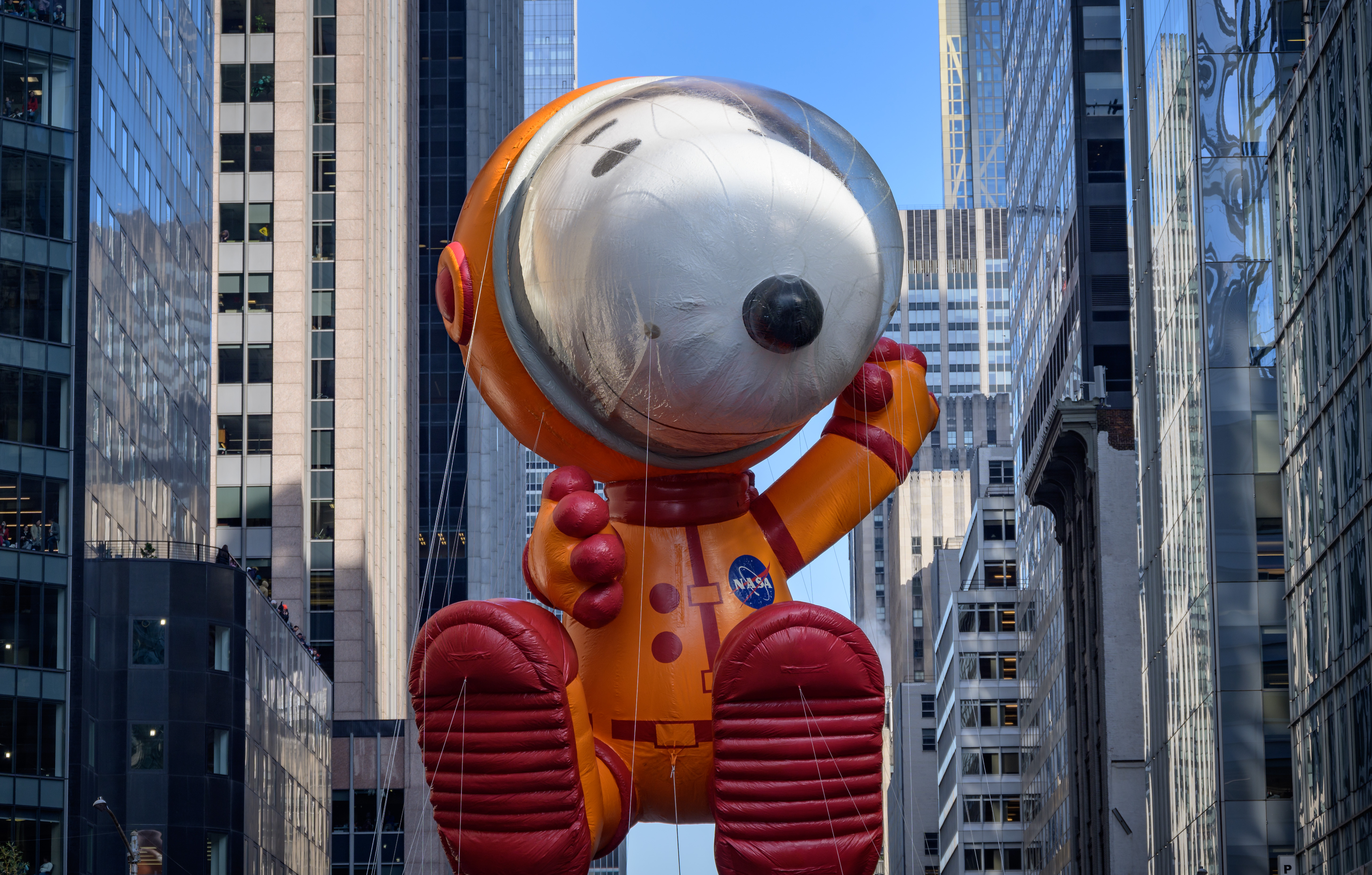
NASA's Astronaut Snoopy at Macy's Thanksgiving Day Parade in New York City
NASA employees, Brandon Hancock, left, Whitney Sheppard, Corinne Edmiston, and Ashley Nelson, right, lead Astronaut Snoopy balloon as it floats along in the Macy's Thanksgiving Day Parade
Snoopy hitches ride to space aboard Artemis I
The Astronaut Snoopy balloon as it floats along in the Macy's Thanksgiving Day Parade on, Thursday, Nov. 24, 2022, in New York City. The Astronaut Snoopy balloon is flying in New York City at the same time that Snoopy also flies around the Moon in the Orion spacecraft as a zero gravity indicator for the Artemis I mission.
Thanksgiving is a federal holiday in the United States, celebrated on the fourth Thursday of November. It is sometimes called American Thanksgiving (outside the United States) to distinguish it from the Canadian holiday of the same name and related celebrations in other regions.
NASA has shared an association with Charles M. Schulz and Snoopy since the Apollo missions and the relationship continues under Artemis. Snoopy was selected as the zero-gravity indicator for the flight because of the inspiration and excitement the character has provided for human spaceflight for more than 50 years.
Waxing Gibbous Moon above Indian Ocean | International Space Station
The waxing gibbous Moon is pictured from the International Space Station as it orbited 271 miles above the Indian Ocean southwest of Australia's island state of Tasmania.
Expedition 68 Crew
Station Commander Sergey Prokopyev of Roscosmos (Russia)
Roscosmos (Russia): Flight Engineers Anna Kikina & Dmitri Petelin
NASA: Flight Engineers Nicole Mann, Frank Rubio & Josh Cassada
JAXA (Japan): Flight Engineer Koichi Wakata
An international partnership of space agencies provides and operates the elements of the International Space Station (ISS). The principals are the space agencies of the United States, Russia, Europe, Japan, and Canada. The ISS has been the most politically complex space exploration program ever undertaken.
Flight Day 6: A camera mounted on one of Orion’s solar array wings captures Earth as it sets behind the Moon ahead of the outbound powered flyby on Nov. 21, 2022, an approximately 2 minute, 30 second burn that committed the spacecraft to a distant retrograde orbit.
The first in a series of increasingly complex missions, Artemis I is an uncrewed flight test that will provide a foundation for human deep space exploration. It will demonstrate NASA's commitment and capability to extend human existence to the Moon and beyond. Orion is completing a 25-day test of all key systems. It will travel 280,000 miles from Earth, thousands of miles beyond the Moon. Orion will stay in space longer than any ship for astronauts has done without docking to a space station and return home faster and hotter than ever before.
On the Artemis III Mission, NASA will land the first woman and the first person of color on the surface of the Moon, paving the way for a long-term lunar presence and serving as a steppingstone on the way to Mars.
Orion continues to travel farther away from the Moon as it prepares to enter a distant retrograde orbit. The orbit is “distant” in the sense that it is at a high altitude from the surface of the Moon, and it is “retrograde” because Orion will travel around the Moon opposite the direction the Moon travels around Earth.
The first in a series of increasingly complex missions, Artemis I is an uncrewed flight test that will provide a foundation for human deep space exploration. It will demonstrate NASA's commitment and capability to extend human existence to the Moon and beyond. Orion is completing a 25-day test of all key systems. It will travel 280,000 miles from Earth, thousands of miles beyond the Moon. Orion will stay in space longer than any ship for astronauts has done without docking to a space station and return home faster and hotter than ever before.
On the Artemis III Mission, NASA will land the first woman and the first person of color on the surface of the Moon, paving the way for a long-term lunar presence and serving as a steppingstone on the way to Mars.
NASA's Artemis I Orion Spacecraft and The Crescent Moon
On the eighth day of the Artemis I mission, a camera mounted on one of Orion’s solar arrays captured the spacecraft and the Moon. Orion continues to travel farther away from the Moon as it prepares to enter a distant retrograde orbit. The orbit is “distant” in the sense that it is at a high altitude from the surface of the Moon, and it is “retrograde” because Orion will travel around the Moon opposite the direction the Moon travels around Earth.
The first in a series of increasingly complex missions, Artemis I is an uncrewed flight test that will provide a foundation for human deep space exploration. It will demonstrate NASA's commitment and capability to extend human existence to the Moon and beyond. Orion is completing a 25-day test of all key systems. It will travel 280,000 miles from Earth, thousands of miles beyond the Moon. Orion will stay in space longer than any ship for astronauts has done without docking to a space station and return home faster and hotter than ever before.
On the Artemis III Mission, NASA will land the first woman and the first person of color on the surface of the Moon, paving the way for a long-term lunar presence and serving as a steppingstone on the way to Mars.
NASA's Space to Ground: It's a Feast | Week of Nov. 25, 2022
NASA's Space to Ground is your weekly update on what's happening aboard the International Space Station. Four Expedition 68 astronauts will relax on Thanksgiving Day as three cosmonauts continue preparing for a spacewalk on Friday. The International Space Station residents are also expecting a space delivery this weekend bringing new roll-out solar arrays and science experiments.
Happy Thanksgiving from the International Space Station!
Thanksgiving is a federal holiday in the United States, celebrated on the fourth Thursday of November. It is sometimes called American Thanksgiving (outside the United States) to distinguish it from the Canadian holiday of the same name and related celebrations in other regions.
Expedition 68 Crew
Station Commander Sergey Prokopyev of Roscosmos (Russia)
Roscosmos (Russia): Flight Engineers Anna Kikina & Dmitri Petelin
NASA: Flight Engineers Nicole Mann, Frank Rubio & Josh Cassada
JAXA (Japan): Flight Engineer Koichi Wakata
An international partnership of space agencies provides and operates the elements of the International Space Station (ISS). The principals are the space agencies of the United States, Russia, Europe, Japan, and Canada. The ISS has been the most politically complex space exploration program ever undertaken.
Happy Thanksgiving from the International Space Station!
Check in with NASA astronauts Frank Rubio, Josh Cassada, Nicole Mann, and JAXA astronaut Koichi Wakata to learn more about what the holiday means to them—and get a look at what Thanksgiving in space is like!
Thanksgiving is a federal holiday in the United States, celebrated on the fourth Thursday of November. It is sometimes called American Thanksgiving (outside the United States) to distinguish it from the Canadian holiday of the same name and related celebrations in other regions.
Expedition 68 Crew
Station Commander Sergey Prokopyev of Roscosmos (Russia)
Roscosmos (Russia): Flight Engineers Anna Kikina & Dmitri Petelin
NASA: Flight Engineers Nicole Mann, Frank Rubio & Josh Cassada
JAXA (Japan): Flight Engineer Koichi Wakata
An international partnership of space agencies provides and operates the elements of the International Space Station (ISS). The principals are the space agencies of the United States, Russia, Europe, Japan, and Canada. The ISS has been the most politically complex space exploration program ever undertaken.
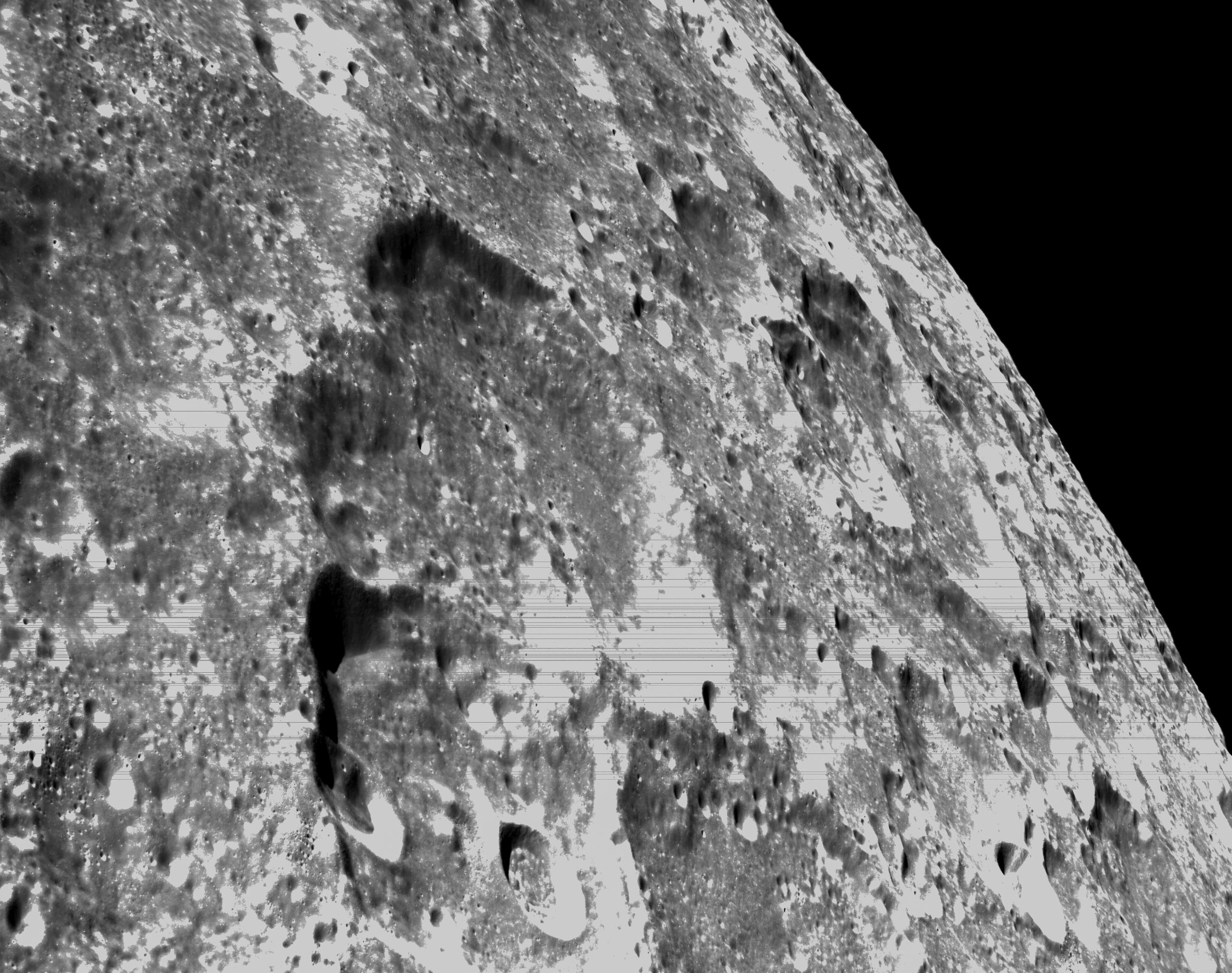
NASA's Artemis I Orion: NAVCAM "Low-res Black & White" Moon Images
On the sixth day of the Artemis I mission, Nov. 21, 2022, Orion’s optical navigation camera captured black-and-white images of craters on the Moon below. Orion uses the optical navigation camera to capture imagery of the Earth and the Moon at different phases and distances, providing an enhanced body of data to certify its effectiveness under different lighting conditions as a way to help orient the spacecraft on future missions with crew.
The first in a series of increasingly complex missions, Artemis I is an uncrewed flight test that will provide a foundation for human deep space exploration. It will demonstrate NASA's commitment and capability to extend human existence to the Moon and beyond. Orion is completing a 25-day test of all key systems. It will travel 280,000 miles from Earth, thousands of miles beyond the Moon. Orion will stay in space longer than any ship for astronauts has done without docking to a space station and return home faster and hotter than ever before.
On the Artemis III Mission, NASA will land the first woman and the first person of color on the surface of the Moon, paving the way for a long-term lunar presence and serving as a steppingstone on the way to Mars.