Friday, July 31, 2026

Spiral Galaxy NGC 772 in Aries | Hubble Space Telescope

Spiral Galaxy NGC 772 in Aries | Hubble Space Telescope

The Universe is simply so vast that it can be difficult to maintain a sense of scale. Many galaxies we see through telescopes, such as this NASA/European Space Agency Hubble Space Telescope picture, look relatively similar: spiraling arms, a glowing center, and a mixture of bright specks of star formation and dark ripples of cosmic dust weaving throughout.

Distance from Earth: 100-130 million light years

This galaxy, a spiral galaxy named NGC 772, is no exception. It actually has much in common with our home galaxy, the Milky Way. Each boasts a few satellite galaxies, small galaxies that closely orbit and are gravitationally bound to their parent galaxies. One of NGC 772’s spiral arms has been distorted and disrupted by one of these satellites (NGC 770—not visible in the image here), leaving it elongated and asymmetrical.

However, the two are also distinct in a few key ways. For one, NGC 772 is a peculiar and an unbarred spiral galaxy; respectively, this means that it is somewhat odd in size, shape, or composition, and that it lacks a central feature known as a bar that we see in many galaxies throughout the cosmos—including the Milky Way. These bars are built of gas and stars, and are thought to funnel and transport material through the galactic core, possibly fueling and igniting various processes, such as star formation.


Credit: ESA/Hubble & NASA, A. Seth et al.
Release Date: Nov. 11, 2019


#NASA #Hubble #Astronomy #Space #Science #Galaxies #NGC772 #PeculiarGalaxies #SpiralGalaxies #UnbarredSpiralGalaxies #AriesConstellation #Cosmos #Universe #HubbleSpaceTelescope #HST #ESA #Europe #GSFC #STScI #UnitedStates #STEM #Education

Thursday, July 30, 2026

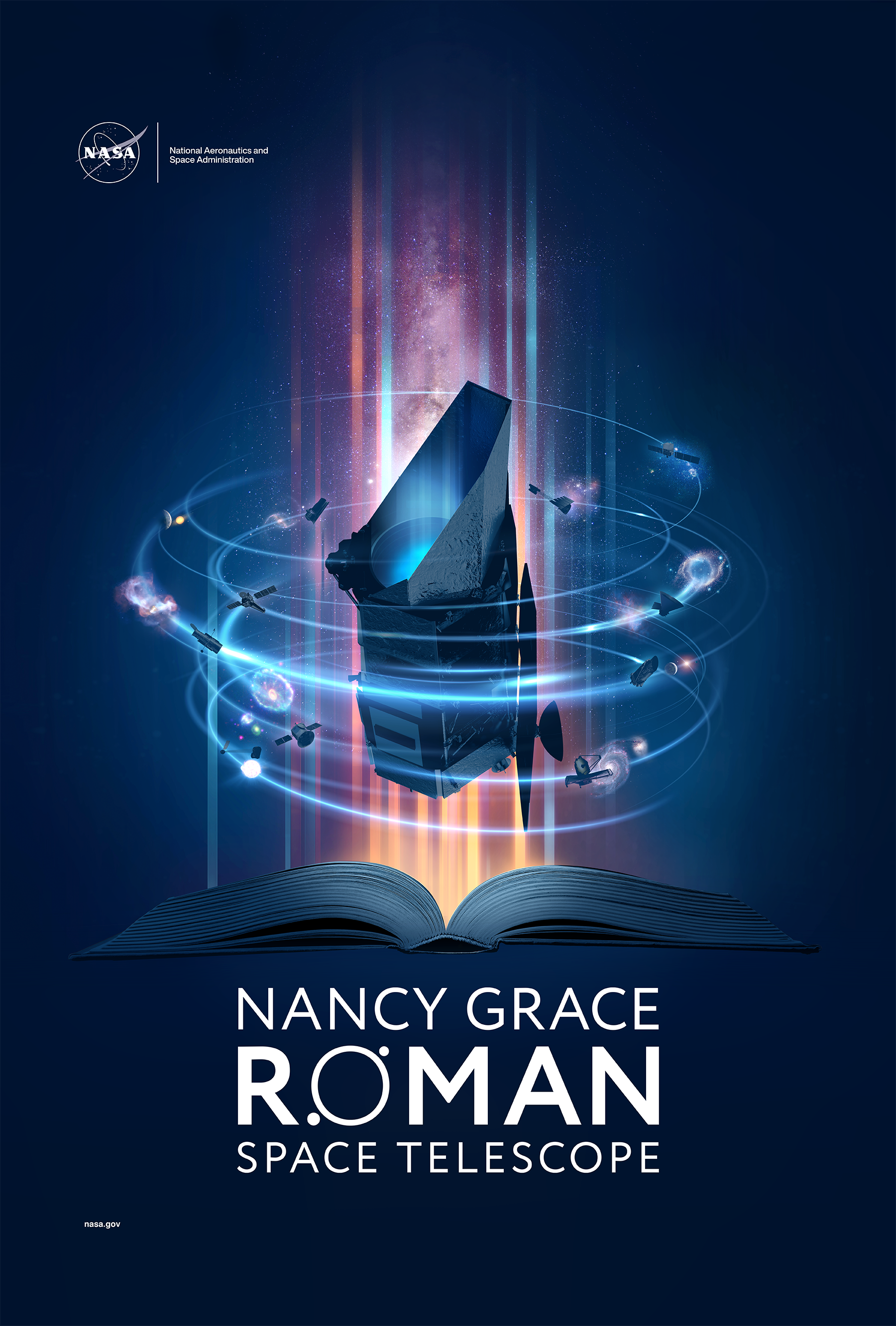
How NASA's Nancy Grace Roman Space Telescope May Change Everything

How NASA's Nancy Grace Roman Space Telescope May Change Everything

How do you build a telescope capable of surveying the universe on an unprecedented scale? 

Join NASA’s Roman Project Scientist, Dr. Julie McEnery, as she explains how the Nancy Grace Roman Space Telescope will discover thousands of new worlds, map billions of galaxies, and investigate the mysteries of dark matter and dark energy. 

Learn why scientists believe Roman could open the door to entirely new discoveries about our universe.

The Roman telescope and the discoveries it will support:
https://www.stsci.edu/roman


Credit: NASA's Goddard Space Flight Center 
Dr. Julie McEnery: Talent
Paul Morris: Producer / Editor
John Philyaw: Camera Operator
Duration: 5 minutes
Release Date: July 30, 2026

#NASA #Space #Astronomy #Science #NASARoman #RomanSpaceTelescope #NancyGraceRomanSpaceTelescope #NancyGraceRoman #Exoplanets #Planets #SolarSystem #Stars #MilkyWayGalaxy #Galaxies #Cosmos #Universe #SpaceTelescopes #NASAGoddard #GSFC #STScI #UnitedStates #STEM #Education #HD #Video

China Launches New Communication Technology Test Satellites from Shanxi

China Launches New Communication Technology Test Satellites from Shanxi


🚀Mission Accomplished! China sent two new communication technology test satellites, TJSW-27A and TJSW-27B, into a highly inclined low Earth orbit from the Taiyuan Satellite Launch Center in north China's Shanxi Province on Thursday, July 30, 2026. The satellites were launched at 9:00 (Beijing Time) (01:00 am Universal Coordinated Time) aboard a modified Long March 6A carrier rocket and entered their planned orbits successfully. They will be mainly used for services, such as satellite communications, broadcasting and television, and data transmission, as well as to carry out related technology tests and verification. 🛰️✨

Like other members of the TJSW fleet, the duo is expected to demonstrate new developments in multi-band, high-throughput communications technologies for radio, television, and data transmission. Their technical development was split between the China Academy of Spaceflight Technology that made 27A and the Shanghai Academy of Spaceflight Technology producing 27B.

TJSW-27A and TJSW-27B are the fifth spacecraft of their series to be launched this year, after 2025’s significant expansion. This year saw TJSW-24 deployed in May, the large TJSW-25 delivered in early June, and the first of a likely subset in late June’s TJSW-26A.

This launch was the 26th mission for the Long March 6A, the 272nd Long March vehicle from the Shanghai Academy of Spaceflight Technology, and the 660th launch of the Long March launch vehicle series. This was also the 53rd launch from China in 2026.


Credit: China Aerospace Science and Technology Corporation, CGTN 
Text Credit: CCTV, Jack C.
Date: July 30, 2026

#NASA #Space #Satellites #CommunicationsSatellites #TJSW27A #通信技术试验卫星二十七号A #TJSW27B #通信技术试验卫星二十七B星 #CAST #SAST #Science #SpaceTechnology #Earth #China #中国 #LongMarch6Rocket #长征六号运载火箭 #LongMarch6AY18 #TaiyuanSatelliteLaunchCenter #TSLC #Taiyuan #Shanxi #山西 #STEM #Education

China Launches New Communication Technology Test Satellites from Shanxi

China Launches New Communication Technology Test Satellites from Shanxi

🚀Mission Accomplished! China sent two new communication technology test satellites, TJSW-27A and TJSW-27B, into a highly inclined low Earth orbit from the Taiyuan Satellite Launch Center in north China's Shanxi Province on Thursday, July 30, 2026. The satellites were launched at 9:00 (Beijing Time) (01:00 am Universal Coordinated Time) aboard a modified Long March 6A carrier rocket and entered their planned orbits successfully. They will be mainly used for services, such as satellite communications, broadcasting and television, and data transmission, as well as to carry out related technology tests and verification. 🛰️✨

Like other members of the TJSW fleet, the duo is expected to demonstrate new developments in multi-band, high-throughput communications technologies for radio, television, and data transmission. Their technical development was split between the China Academy of Spaceflight Technology that made 27A and the Shanghai Academy of Spaceflight Technology producing 27B.

TJSW-27A and TJSW-27B are the fifth spacecraft of their series to be launched this year, after 2025’s significant expansion. This year saw TJSW-24 deployed in May, the large TJSW-25 delivered in early June, and the first of a likely subset in late June’s TJSW-26A.

This launch was the 26th mission for the Long March 6A, the 272nd Long March vehicle from the Shanghai Academy of Spaceflight Technology, and the 660th launch of the Long March launch vehicle series. This was also the 53rd launch from China in 2026.


Credit: CCTV
Text Credit: CCTV/Jack C.
Duration: 27 seconds
Date: July 30, 2026

#NASA #Space #Satellites #CommunicationsSatellites #TJSW27A #通信技术试验卫星二十七号A #TJSW27B #通信技术试验卫星二十七B星 #CAST #SAST #Science #SpaceTechnology #Earth #China #中国 #LongMarch6Rocket #长征六号运载火箭 #LongMarch6AY18 #TaiyuanSatelliteLaunchCenter #TSLC #Taiyuan #Shanxi #山西 #STEM #Education #HD #Video

Command Handover to Meir & Williams Departure | International Space Station

Command Handover to Meir & Williams Departure | International Space Station

NASA astronaut Jessica Meir accepts a ceremonial key from Roscosmos cosmonaut Sergey Kud‑Sverchkov of Russia, signifying the traditional change of command aboard the International Space Station. Meir is leading the Expedition 75 crew until the end of summer. Kud‑Sverchkov was commander of Expedition 74 before concluding his 241‑day mission the following day with NASA astronaut Chris Williams and Roscosmos cosmonaut Sergei Mikaev of Russia (both out of frame), parachuting to a landing in Kazakhstan aboard the Soyuz MS‑28 spacecraft.
NASA astronaut and Expedition 74 flight engineer Chris Williams poses for a portrait inside the International Space Station’s Kibo laboratory module the day before returning to Earth. 
From left, NASA astronaut Chris Williams and Roscosmos cosmonauts Sergey Kud‑Sverchkov and Sergei Mikaev of Russia are seated inside the Russian Soyuz MS‑28 spacecraft docked to the International Space Station. The trio practiced and reviewed the landing procedures they would use a few days later, after undocking from the orbital outpost and parachuting to Earth aboard the Soyuz.
NASA astronaut Jessica Meir poses for a portrait inside the Kibo laboratory module after acccepting command of the International Space Station from Roscosmos cosmonaut Sergey Kud-Sverchkov of Russia (out of frame). Meir will lead the Expedition 75 crew until the end of summer.
NASA astronaut and Expedition 74 flight engineer Anil Menon services a spacesuit and its components inside the International Space Station's Quest airlock.
Expedition 74 emblem
Expedition 75 emblem

NASA astronaut Chris Williams recently completed a 241‑day mission aboard the International Space Station with Roscosmos cosmonauts Sergey Kud‑Sverchkov and Sergei Mikaev of Russia before undocking from the station aboard the Russian Soyuz MS‑28 spacecraft and parachuting to a safe landing in Kazakhstan. 

Expedition 75 officially began and Expedition 74 ended when their Soyuz departed the orbital outpost on July 26, 2026.

Follow Expedition 75:

Expedition 75 Crew
Station Commander: Jessica Meir
Roscosmos (Russia) Flight Engineers:
Andrey Fedyaev,
Anna Kikina, Pyotr Dubrov
European Space Agency Flight Engineer: Sophie Adenot
NASA Flight Engineers: Jack Hathaway, Anil Menon

An international partnership of space agencies provides and operates the elements of the International Space Station (ISS). The principals are the space agencies of the United States, Russia, Europe, Japan, and Canada.


Image Credits: NASA/JSC/J. Meir/Anil Menon
Dates: July 17-25, 2026


#NASA #Space #Science #ISS #Earth #SoyuzMS28 #CrewSpacecraft #Astronauts #ChrisWilliams #JessicaMeir #Cosmonauts #SergeyKudSverchkov #SergeiMikaev #Russia #Россия #Roscosmos #Роскосмос #HumanSpaceflight #Expedition74 #Expedition75 #InternationalCooperation #UnitedStates #STEM #Education

NASA's SpaceX Crew-13: Dragon Training in California | International Space Station

NASA's SpaceX Crew-13: Dragon Training in California | International Space Station

NASA astronaut and SpaceX Crew-13 Commander Jessica Watkins poses in her pressure suit in front of a Dragon spacecraft mockup during a pre-flight training session on Wednesday, June 8, 2026, at SpaceX headquarters in Hawthorne, California.
NASA astronaut and SpaceX Crew-13 Commander Jessica Watkins sits inside a Dragon spacecraft mockup while participating in a pre‑flight training session
Roscosmos cosmonaut and SpaceX Crew-13 Mission Specialist Sergey Teteryatnikov of Russia gestures with his fingers to show the number 13, representing his mission to the International Space Station aboard a Dragon spacecraft. Teteryatnikov poses in his pressure suit in front of a Dragon spacecraft mockup during a pre‑flight training session
Roscosmos cosmonaut and SpaceX Crew‑13 Mission Specialist Sergey Teteryatnikov of Russia sits inside a Dragon spacecraft mockup while participating in a pre‑flight training session
NASA astronaut and SpaceX Crew-13 Pilot Luke Delaney gestures with his fingers to show the number 13, representing his mission to the International Space Station aboard a Dragon spacecraft. Delaney poses in his pressure suit in front of a Dragon spacecraft mockup during a pre-flight training session
NASA astronaut and SpaceX Crew‑13 Pilot Luke Delaney sits inside a Dragon spacecraft mockup while tapping a cockpit screen interface during a pre‑flight training session
Canadian Space Agency (CSA) astronaut and SpaceX Crew-13 Mission Specialist Joshua Kutryk gestures with his fingers to show the number 13, representing his mission to the International Space Station aboard a Dragon spacecraft. Kutryk poses in his pressure suit in front of a Dragon spacecraft mockup during a pre-flight training session
Canadian Space Agency (CSA) astronaut and SpaceX Crew-13 Mission Specialist Joshua Kutryk sits inside a Dragon spacecraft mockup while participating in a pre‑flight training session

Members of NASA's SpaceX Crew-13 Mission are pictured during training at SpaceX headquarters in Hawthorne, California. Four crew members from three space agencies will launch no earlier than mid-September 2026 to the International Space Station for a long-duration science expedition.

NASA astronauts Jessica Watkins and Luke Delaney will serve as spacecraft commander and pilot, respectively. They will be joined by the Canadian Space Agency (CSA) astronaut Joshua Kutryk and Roscosmos cosmonaut Sergey Teteryatnikov of Russia that will serve as mission specialists. After arriving at the orbiting laboratory, Crew-13 will become members of the space station’s Expedition 75.

This flight is the 13th crew rotation with SpaceX to the space station as part of NASA’s Commercial Crew Program (CCP). NASA is advancing the launch date of Crew-13 from November to help increase the frequency of U.S. crew rotation missions to the space station. The crew will conduct scientific investigations and technology demonstrations to help prepare humans for future exploration missions to the Moon and Mars, and benefit people on Earth.

This will be the second flight to the space station for Watkins. She will be the first NASA astronaut to launch aboard a SpaceX Dragon spacecraft twice.

This is the first spaceflight for Delaney, Kutryk, and Teteryatnikov. 

For more than 25 years, people have lived and worked continuously aboard the International Space Station, advancing scientific knowledge and making research breakthroughs that are not possible on Earth. The space station helps NASA understand and overcome the challenges of human spaceflight, expand commercial opportunities in low Earth orbit, and build on the foundation for long-duration missions to the Moon, as part of the Artemis program, and to Mars.

Learn more about International Space Station research and operations at:
https://www.nasa.gov/station

An international partnership of space agencies provides and operates the elements of the International Space Station (ISS). The principals are the space agencies of the United States, Russia, Europe, Japan, and Canada.


Image Credit: SpaceX
Image Date: June 8, 2026


#NASA #Space #Science #Earth #ISS #SpaceXCrew13 #Astronauts #JessicaWatkins #LukeDelaney #JoshuaKutryk #CanadianSpaceAgency #CSA #Canada #SergeyTeteryatnikov #Cosmonauts #Russia #Россия #Roscosmos #Роскосмос #HumanSpaceflight #InternationalCooperation #Expedition75 #Hawthorne #California #UnitedStates #STEM #Education

Nancy Grace Roman Space Telescope Pre-launch: Propellant Loading | NASA Kennedy

Nancy Grace Roman Space Telescope Pre-launch: Propellant Loading | NASA Kennedy

Members of NASA's Nancy Grace Roman Space Telescope propellant, safety, and quality assurance team pose for a photo on Monday July 20, 2026, inside the Payload Hazardous Servicing Facility at NASA’s Kennedy Space Center in Florida, prior to technicians loading propellant into the observatory.
Billy Keim, a senior integration technician for NASA's Nancy Grace Roman Space Telescope wears a Self-Contained Atmospheric Protective Ensemble (SCAPE) suit as he prepares to perform propellant loading operations inside the Payload Hazardous Servicing Facility at NASA’s Kennedy Space Center in Florida Friday, July 24, 2026. The Roman Telescope has fuel tanks capable of carrying about 290 gallons (roughly 1,100 liters) of hydrazine—a monopropellant not requiring a second chemical to combust.
Technicians monitor propellant loading from a control room in the Multi Operations Support Building at NASA’s Kennedy Space Center in Florida Friday, July 24, 2026.
Technicians don Self-Contained Atmospheric Protective Ensemble (SCAPE) suits as they prepare to perform propellant loading operations inside the Payload Hazardous Servicing Facility at NASA’s Kennedy Space Center in Florida for the agency’s Nancy Grace Roman Space Telescope on Thursday, July 23, 2026.
From left, technicians Jacob Stahl and Ryan Renehan don Self-Contained Atmospheric Protective Ensemble (SCAPE) suits as they prepare to perform propellant loading operations inside the Payload Hazardous Servicing Facility at NASA’s Kennedy Space Center in Florida for the agency’s Nancy Grace Roman Space Telescope on Thursday, July 23, 2026.
Ryan Renehan, technician, wears a Self-Contained Atmospheric Protective Ensemble (SCAPE) suit as he prepares to perform propellant loading operations inside the Payload Hazardous Servicing Facility at NASA’s Kennedy Space Center in Florida Thursday, July 23, 2026.
Self-Contained Atmospheric Protective Ensemble (SCAPE) suits hang on a rack the Multi Operations Support Building on Thursday, July 23, 2026, before technicians began operations to load propellant into NASA's Nancy Grace Roman Space Telescope. Once suited up technicians fueled Roman inside the Payload Hazardous Servicing Facility at NASA’s Kennedy Space Center in Florida with about 290 gallons (roughly 1,100 liters) of hydrazine.

These are photos of the Payload Hazardous Servicing Facility at NASA’s Kennedy Space Center in Florida where technicians can be seen loading propellant into the observatory. The Roman Telescope has fuel tanks capable of carrying about 290 gallons (roughly 1,100 liters) of hydrazinea monopropellant not requiring a second chemical to combust. Roman’s primary mission is to settle essential questions about dark energy, exoplanets, and infrared astrophysics by conducting wide-field surveys that explore the universe’s structure, evolution, and composition. 

Liftoff atop a SpaceX Falcon Heavy rocket from NASA Kennedy’s Launch Complex 39A is targeted no earlier than Sunday, Aug. 30, 2026. 

The Roman telescope and the discoveries it will support:
https://www.stsci.edu/roman


Image Credits: NASA/Sydney Rohde (Rocz)/Ben Smegelsky
Image Dates: July 20-24, 2026

#NASA #Space #Astronomy #Science #NASARoman #RomanSpaceTelescope #PropellantLoading #NancyGraceRomanSpaceTelescope #NancyGraceRoman #Exoplanets #Planets #SolarSystem #Stars #MilkyWayGalaxy #Galaxies #Cosmos #Universe #SpaceTelescopes #NASAGoddard #GSFC #STScI #NASAKennedy #Florida #UnitedStates #STEM #Education

NASA Artemis II Moon Mission Astronaut Christina Koch's Message for Students

NASA Artemis II Moon Mission Astronaut Christina Koch's Message for Students

In a special message, NASA Artemis II Moon Mission astronaut Christina Koch addresses the important role students have in the future of space exploration. Our students today are the next wave of engineers, scientists, problem solvers, and mission leaders that will carry our work farther than any of us can imagine.  

We are engaging students in NASA’s exciting missions, broad range of careers, and unique opportunities. Join us as we apply science, technology, engineering, and mathematics to explore space, improve aeronautics, examine Earth, and strive to land the next humans on the Moon with the Artemis program.

NASA STEM resources: https://www.nasa.gov/learning-resources/
Science, Technology, Engineering, Math (STEM) Education

Video Credit: NASA Education
Duration: 2 minutes
Release Date: July 30, 2026

#NASA #Space #Science #Earth #Students #Moon #ArtemisProgram #ArtemisII #OrionSpacecraft #Astronauts #ChristinaKoch #HumanSpaceflight #SolarSystem #SpaceExploration #CSA #Canada #NASAGoddard #GSFC #NASAJohnson #JSC #UnitedStates #STEM #Education

Wednesday, July 29, 2026

NASA’s Curiosity Mars Rover Discovers Field of Honeycomb Textures

NASA’s Curiosity Mars Rover Discovers Field of Honeycomb Textures

A close-up of the polygon fractures discovered by NASA’s Curiosity Mars rover highlights their honeycomb-like textures.
NASA’s Curiosity rover discovered an expanse of terrain covered in surface features called polygons. Scientists have never seen so many of these features in one place and are unsure how they formed. A panoramic view of a sweeping Martian plain covered in patterned fractures leading toward distant hills showcases the terrain explored by NASA's Curiosity rover to investigate the planet's past environment.
NASA’s Curiosity Mars rover captured this sand-capped butte, nicknamed “Miraflores,” estimated to be about 20 feet (6 meters) tall, on June 11, 2026. The surrounding area includes an expanse of terrain covered in surface features called polygons. 
Image DescriptionA layered, rocky mound topped with smooth sand sits amid a vast, rocky expanse on Mars, illustrating the complex geological history being studied by NASA's Curiosity rover.

As NASA’s Curiosity rover recently began climbing up a Martian valley nicknamed “Valle Grande,” it sent back images that were a familiar sight to mission scientists—honeycomb-like textures called polygonal fractures, each one about 1.5 to 3 inches (4 to 8 centimeters) across. The mission has spotted small patches of these geometric shapes several times before, but nothing at the scale discovered in Valle Grande. Mission scientists have never seen so many of the many-sided geologic features in one place on the Red Planet.

In a 360-degree panorama that the rover captured on June 19 and 20, 2026, the 4,930th and 4,931st Martian days, or sols, of the mission, the polygonal shapes spread in all directions for as far as the rover can see. They even wrap around the sides of a nearby butte nicknamed “Miraflores” that stands 20 feet (6 meters) tall and is topped with a thick cap of sand.

“We’ve seen a lot of fascinating landscapes through Curiosity’s eyes, but this sea of polygons took our breath away,” said the mission’s project scientist, Ashwin Vasavada of NASA’s Jet Propulsion Laboratory in Southern California. “We measured their shapes and chemistry carefully and are hopeful there are clues in the data as to how these features formed.”

Cases of polygons that the mission has spotted in the past clearly formed as mud cracks, although a variety of processes can contribute to their honeycomb textures, including cycles of warm and cold temperatures or compression that squeezed water out of the sediment when the surface was buried.

These newly discovered polygons are among the many surprises Curiosity has trundled across since landing on Mars 14 years ago, on Aug. 5, 2012. Besides sulfur crystals, shiny meteorites, and other interesting geologic features, the rover has made major discoveries about the ancient Martian environment—most importantly, that it had the water, chemistry, and nutrients to support microbial life.

Billions of years ago, lakes and streams dappled the lower foothills of Mount Sharp, a 3-mile-tall (5-kilometer-tall) mountain that Curiosity has been ascending since 2014. The rover has previously uncovered chemistry left over from Mars’ watery history, including carbon-based molecules believed to be precursors to RNA and DNA, two nucleic acids that carry genetic information. Scientists have no way of knowing whether these organic molecules were created by biologic or geologic processes—either path is possible—but their discovery reconfirmed that ancient Mars had the right chemistry to support life.

Managed by Caltech in Pasadena, JPL built Curiosity and leads the mission on behalf of NASA’s Science Mission Directorate in Washington as part of the agency’s Mars Exploration Program portfolio.

Celebrating 13+ Years on Mars (2012-2026)

Mission Name: Mars Science Laboratory (MSL)
Rover Name: Curiosity
Main Job: To determine if Mars was ever habitable to microbial life. 
Launch: Nov. 6, 2011
Landing Date: Aug. 5, 2012, Gale Crater, Mars

To learn more about Curiosity, visit:
https://science.nasa.gov/mission/msl-curiosity


Image Credit: NASA/JPL-Caltech/MSSS
Release Date: July 29, 2026

#NASA #Space #Astronomy #Science #Planets #Mars #Astrobiology #Geology #CuriosityRover #MSL #MountSharp #GaleCrater #Robotics #SpaceTechnology #SpaceEngineering #MSSS #JPL #Caltech #UnitedStates #SpaceExploration #SolarSystem #STEM #Education

China Long March 7 Rocket Launches Tianlian-3 Communications Satellite in Hainan

China Long March 7 Rocket Launches Tianlian-3 Communications Satellite in Hainan


A Long March 7A lifted off from Launch Complex 201 at the Wenchang Space Launch Site in China's southern Hainan island province at 7:50 pm China Standard Time (CST) (11:50 am Universal Coordinated Time) on July 29, 2026, bringing a Tianlian-3 (third generation) relay satellite towards a geostationary orbit.

The Tianlian-3-01 communications and data relay satellite will serve China's Tiangong Space Station and visiting spacecraft. The new relay is the first of the third-generation. It will boost throughput between the orbiting laboratory and Earth-based ground stations while further reducing communications dead zones.

In charge of developing the new generation communications series and its first satellite is the China Academy of Space Technology. Tianlian-3-01 required a Long March 7A since it made use of the Dongfanghong-4E satellite bus that can weigh about 6,000 kilograms. Advantages of using that bus are up to 10 kilowatts of usable power, from 13.5 kilowatts generated, for communication systems, improved multi-user parallel transmission capabilities, and a fifteen-year usable lifespan.

Tianlian-3-01 is the twelfth relay satellite launched in support of the orbiting laboratory. Between April 2008 and July 2021, five first-generation satellites were deployed, followed by six second-generation ones between March 2019 and July 23, 2026.

Four Long March 7 missions have taken place this year so far with a fifth under preparation to fly next month. The frequency of these missions is being supported by a second vehicle assembly building and another mobile launch platform dedicated to this launch vehicle in Hainan. 

Today’s mission was the 17th launch of a Long March 7A vehicle, the 28th launch of the Long March 7 series, and the 659th launch of the Long March launch vehicle series. This was also the 52nd launch from China in 2026.


Image Credits: China Academy of Launch Vehicle Technology (CALT), China National Radio, China Aerospace Science and Technology Corporation (CASC)
Text Credit: Jack C.
Date: July 29, 2026


#NASA #Space #Science #Earth #Satellites #Tianlian301 #天链三号01星 #China #中国 #Rockets #LongMarch7AY29 #LongMarch7Rockets #长征七号运载火箭 #MediumLiftRockets #CASC #CAST #SpaceTechnology #CommercialSpace #Spaceports #Wenchang #Hainan #STEM #Education

China Long March 7 Rocket Launches Tianlian-3 Communications Satellite in Hainan

China Long March 7 Rocket Launches Tianlian-3 Communications Satellite in Hainan

A Long March 7A lifted off from Launch Complex 201 at the Wenchang Space Launch Site in China's southern Hainan island province at 7:50 pm China Standard Time (CST) (11:50 am Universal Coordinated Time) on July 29, 2026, bringing a Tianlian-3 (third generation) relay satellite towards a geostationary orbit.

The Tianlian-3-01 communications and data relay satellite will serve China's Tiangong Space Station and visiting spacecraft. The new relay is the first of the third-generation. It will boost throughput between the orbiting laboratory and Earth-based ground stations while further reducing communications dead zones.

In charge of developing the new generation communications series and its first satellite is the China Academy of Space Technology. Tianlian-3-01 required a Long March 7A since it made use of the Dongfanghong-4E satellite bus that can weigh about 6,000 kilograms. Advantages of using that bus are up to 10 kilowatts of usable power, from 13.5 kilowatts generated, for communication systems, improved multi-user parallel transmission capabilities, and a fifteen-year usable lifespan.

Tianlian-3-01 is the twelfth relay satellite launched in support of the orbiting laboratory. Between April 2008 and July 2021, five first-generation satellites were deployed, followed by six second-generation ones between March 2019 and July 23, 2026.

Four Long March 7 missions have taken place this year so far with a fifth under preparation to fly next month. The frequency of these missions is being supported by a second vehicle assembly building and another mobile launch platform dedicated to this launch vehicle in Hainan. 

Today’s mission was the 17th launch of a Long March 7A vehicle, the 28th launch of the Long March 7 series, and the 659th launch of the Long March launch vehicle series. This was also the 52nd launch from China in 2026.


Video Credit: China Academy of Launch Vehicle Technology
Text Credit: Jack C.
Duration: 28 seconds
Release Date: July 29, 2026


#NASA #Space #Science #Earth #Satellites #Tianlian301 #天链三号01星 #China #中国 #Rockets #LongMarch7AY29 #LongMarch7Rockets #长征七号运载火箭 #MediumLiftRockets #CAST #SpaceTechnology #CommercialSpace #Spaceports #Wenchang #Hainan #STEM #Education #HD #Video

SpaceX Starship Flight Test#13 Photo Collection | Starbase Texas

SpaceX Starship Flight Test#13 Photo Collection | Starbase Texas


Starlink satellite view

The thirteenth flight test of Starship successfully launched Friday, July 24, 2026, at 5:51 p.m. Central Time (CT). This was the second flight of the Starship and Super Heavy V3 vehicles and the first Starship flight to deploy "next generation" Starlink V3 satellites.

Watch the launch broadcast and read the full flight report here: 

The flight test began with Super Heavy igniting all 33 Raptor 3 engines and ascending over the Gulf of Mexico. The successful first-stage ascent was followed by a hot-staging maneuver with Starship’s upper stage igniting its six Raptor engines to continue its flight to space.

Following stage separation, the Super Heavy booster performed a directional flip maneuver. The startup sequence was modified for this flight to be more robust to timing variability in engine startup and flip in the desired direction. This is done to increase overall performance. The booster successfully completed the high thrust portion of the boostback burn with all 33 engines, the first time with a Super Heavy V3, before ending the burn early. It attempted to relight its engines for the landing burn with a subset successfully igniting before experiencing a hard splashdown in the Gulf.

After completing a full-duration ascent burn on all six Raptor engines, Starship achieved its planned velocity and trajectory. Starship then successfully deployed all 20 Starlink V3 satellites. SpaceX engineers were able to successfully communicate with every satellite using radio frequency and laser links and downloaded key telemetry from the satellites. The Starlink satellites were deployed on the pre-planned trajectory and are expected to have demised upon reentry approximately 20 minutes after deployment.

The vehicle also reignited a single Raptor engine in an in-space demonstration of a core capability for future orbital missions.

Starship re-entered the Earth’s atmosphere and was able to gather critical data on the performance of its heatshield before executing a dynamic banking move to mimic the trajectory that future missions returning to Starbase will fly. Starship then guided itself using its four flaps to the pre-planned splashdown zone in the Indian Ocean. After relighting all three Raptor engines, Starship executed a landing flip, landing burn, and soft splashdown, coming to rest intact in the Indian Ocean and providing critical views of an intact heatshield for the first time.

NASA plans to use a lunar lander version of Starship to deliver astronauts and cargo to the Moon during the Artemis IV mission and beyond through the Human Landing System (HLS) Program.

Download the Free Starship User Guide (PDF):
https://www.spacex.com/media/starship_users_guide_v1.pdf

Image Credit: Space Exploration Technologies Corporation (SpaceX)
Date: July 24, 2026

#NASA #SpaceX #Space #Earth #Mars #Moon #ArtemisProgram #ArtemisIII #ArtemisIV #Starship #StarshipV3 #FlightTest13 #ReusableSpacecraft #SuperHeavyBooster #SuperHeavyV3 #ElonMusk #Engineering #SpaceTechnology #HumanSpaceflight #CommercialSpace #SpaceExploration #StarbaseTexas #UnitedStates #STEM #Education