Nancy Grace Roman Space Telescope Pre-launch | NASA Kennedy
Members of NASA's Nancy Grace Roman Space Telescope propellant, safety, and quality assurance team pose for a photo on Monday July 20, 2026, inside the Payload Hazardous Servicing Facility at NASA’s Kennedy Space Center in Florida, prior to technicians loading propellant into the observatory.
Billy Keim, a senior integration technician for NASA's Nancy Grace Roman Space Telescope wears a Self-Contained Atmospheric Protective Ensemble (SCAPE) suit as he prepares to perform propellant loading operations inside the Payload Hazardous Servicing Facility at NASA’s Kennedy Space Center in Florida Friday, July 24, 2026. The Roman Telescope has fuel tanks capable of carrying about 290 gallons (roughly 1,100 liters) of hydrazine—a monopropellant not requiring a second chemical to combust.
Technicians monitor propellant loading from a control room in the Multi Operations Support Building at NASA’s Kennedy Space Center in Florida Friday, July 24, 2026.
Technicians monitor propellant loading from a control room in the Multi Operations Support Building at NASA’s Kennedy Space Center in Florida Friday, July 24, 2026.
Technicians don Self-Contained Atmospheric Protective Ensemble (SCAPE) suits as they prepare to perform propellant loading operations inside the Payload Hazardous Servicing Facility at NASA’s Kennedy Space Center in Florida for the agency’s Nancy Grace Roman Space Telescope on Thursday, July 23, 2026.
From left, technicians Jacob Stahl and Ryan Renehan don Self-Contained Atmospheric Protective Ensemble (SCAPE) suits as they prepare to perform propellant loading operations inside the Payload Hazardous Servicing Facility at NASA’s Kennedy Space Center in Florida for the agency’s Nancy Grace Roman Space Telescope on Thursday, July 23, 2026.
Ryan Renehan, technician, wears a Self-Contained Atmospheric Protective Ensemble (SCAPE) suit as he prepares to perform propellant loading operations inside the Payload Hazardous Servicing Facility at NASA’s Kennedy Space Center in Florida Thursday, July 23, 2026.
Self-Contained Atmospheric Protective Ensemble (SCAPE) suits hang on a rack the Multi Operations Support Building on Thursday, July 23, 2026, before technicians began operations to load propellant into NASA's Nancy Grace Roman Space Telescope. Once suited up technicians fueled Roman inside the Payload Hazardous Servicing Facility at NASA’s Kennedy Space Center in Florida with about 290 gallons (roughly 1,100 liters) of hydrazine.
These are photos of the Payload Hazardous Servicing Facility at NASA’s Kennedy Space Center in Florida where technicians can be seen loading propellant into the observatory. The Roman Telescope has fuel tanks capable of carrying about 290 gallons (roughly 1,100 liters) of hydrazine—a monopropellant not requiring a second chemical to combust. Roman’s primary mission is to settle essential questions about dark energy, exoplanets, and infrared astrophysics by conducting wide-field surveys that explore the universe’s structure, evolution, and composition.
Liftoff atop a SpaceX Falcon Heavy rocket from NASA Kennedy’s Launch Complex 39A is targeted no earlier than Sunday, Aug. 30, 2026.
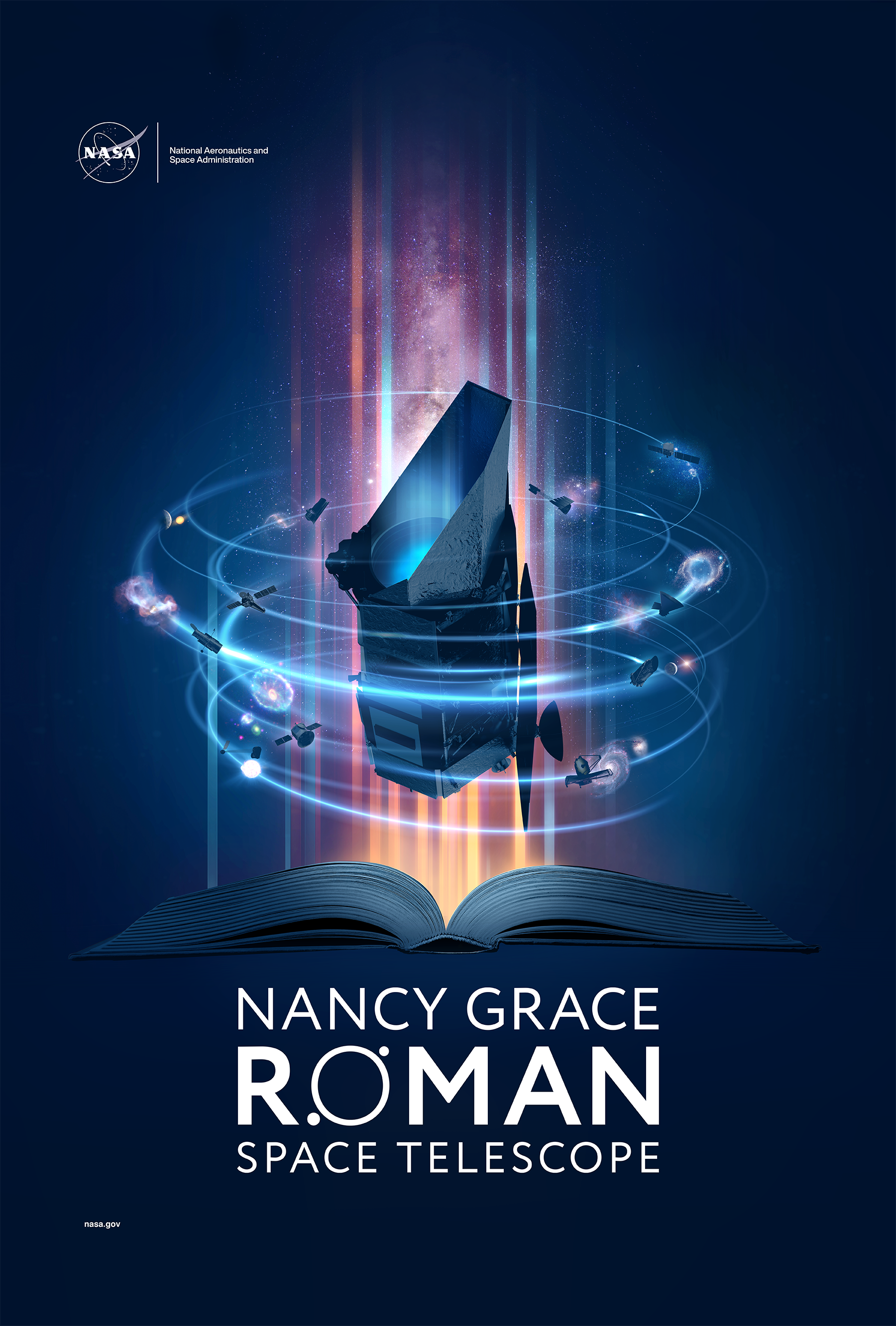
Download the free Nancy Grace Roman Space Telescope poster here:
Image Credits: NASA/Sydney Rohde (Rocz)/Ben Smegelsky
Image Dates: July 20-24, 2026
#NASA #Space #Astronomy #Science #NASARoman #RomanSpaceTelescope #PropellantLoading #NancyGraceRomanSpaceTelescope #NancyGraceRoman #Exoplanets #Planets #SolarSystem #Stars #MilkyWayGalaxy #Galaxies #Cosmos #Universe #SpaceTelescopes #NASAGoddard #GSFC #STScI #NASAKennedy #Florida #UnitedStates #STEM #Education


No comments:
Post a Comment