NASA's Nancy Grace Roman Space Telescope Moved from Goddard to Kennedy
The Nancy Grace Roman Space Telescope was assembled and tested at NASA’s Goddard Space Flight Center in Greenbelt, Maryland. Once that work was finished, Roman had to travel to NASA’s Kennedy Space Center in Florida for its launch. The transport process was long, delicate, and painstaking.
Inside Goddard’s largest clean room, technicians moved Roman into a specially-built portable clean room called the Conditioned Housing for Air, Road, Imaging optics assembly, and Observatory Transport (CHARIOT). They lifted Roman into the lower portion, and then put an inner lid over it and covered the protruding antenna dish. Then they lowered an outer cover onto it with attachments for the air conditioning to keep Roman at a safe temperature.
Once in the CHARIOT, techs pushed Roman out of the clean room and attached an advanced wheel system to allow a semi truck to pull it. The system features independent driving at the back and the ability to raise and lower over or under obstacles.
Starting in the evening of June 12, a team of engineers, police, and utility workers spent 13 hours slowly driving Roman from Goddard to the port of Baltimore. At 16 feet tall, the CHARIOT could not fit under many highway overpasses, so the carefully planned route snaked its way on secondary roads, through Baltimore city, and around to the port, often traveling only two miles an hour.
At the port, the CHARIOT was loaded into NASA’s special transport barge, called Pegasus. The semi detached and drove back out, and the CHARIOT was carefully chained to the deck. Over the next eight days, Pegasus was towed by a pair of tugboats from Baltimore down to Port Canaveral. Special new tugboats took over and pulled Pegasus up the Banana River to the Turn Basin at Kennedy.
With Pegasus secured to the dock, opened up, and the CHARIOT unchained from the deck, a semi pulled Roman out and onto dry land. Designed for this kind of transport, the Kennedy roads allowed faster, easier transport to the Payload Hazardous Servicing Facility. Once inside the airlock chamber, technicians removed the driving hardware and moved the CHARIOT on a cushion of pressurized air. They cleaned the CHARIOT, removed the outer lid, and pushed it into the inner clean room where the inner lid could come off. Roman was lifted out of the CHARIOT and attached to a device that could tilt it vertical. Roman was now ready for the final stages of preparation for launch.
https://www.stsci.edu/roman
https://science.nasa.gov/people/nancy-roman/
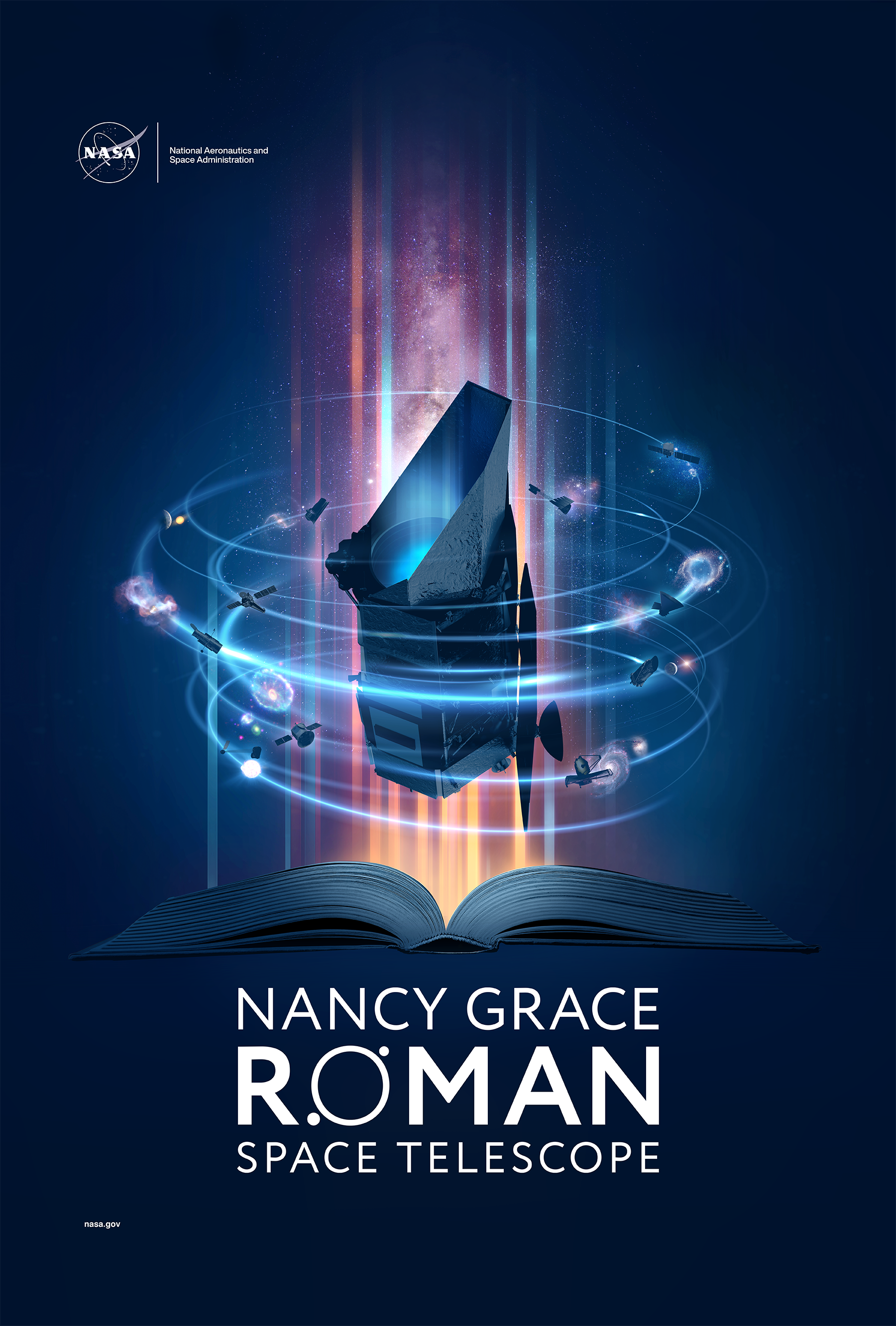
Download the free Nancy Grace Roman Space Telescope poster here:
https://assets.science.nasa.gov/content/dam/science/missions/rst/science/ROMAN-poster-24x36-2026.pdf
https://assets.science.nasa.gov/content/dam/science/missions/rst/science/ROMAN-poster2026.png
https://assets.science.nasa.gov/content/dam/science/missions/rst/science/ROMAN-poster2026-web.png
Producer: Scott Wiessinger (eMITS)
Videographers: Sophia Roberts (eMITS)
Scott Wiessinger (eMITS)
Rob Andreoli (eMITS)
John Philyaw (eMITS)
Jolearra Tshiteya (ASRC Federal)
Sydney Rohde (ASRC Federal)
Kim Shiflett (KSC)
Drone Pilots: Christopher Albert, Rob Fortunato
Editor: Scott Wiessinger (eMITS)
Duration: 2 minutes, 23 seconds
Release Date: July 28, 2026


No comments:
Post a Comment